H&M HOME opens new store concept on Drottninggatan in Stockholm
Prestaged visits the newly reopened flagship at Drottninggatan 50 – the first store in the world to feature H&M HOME's new retail concept.
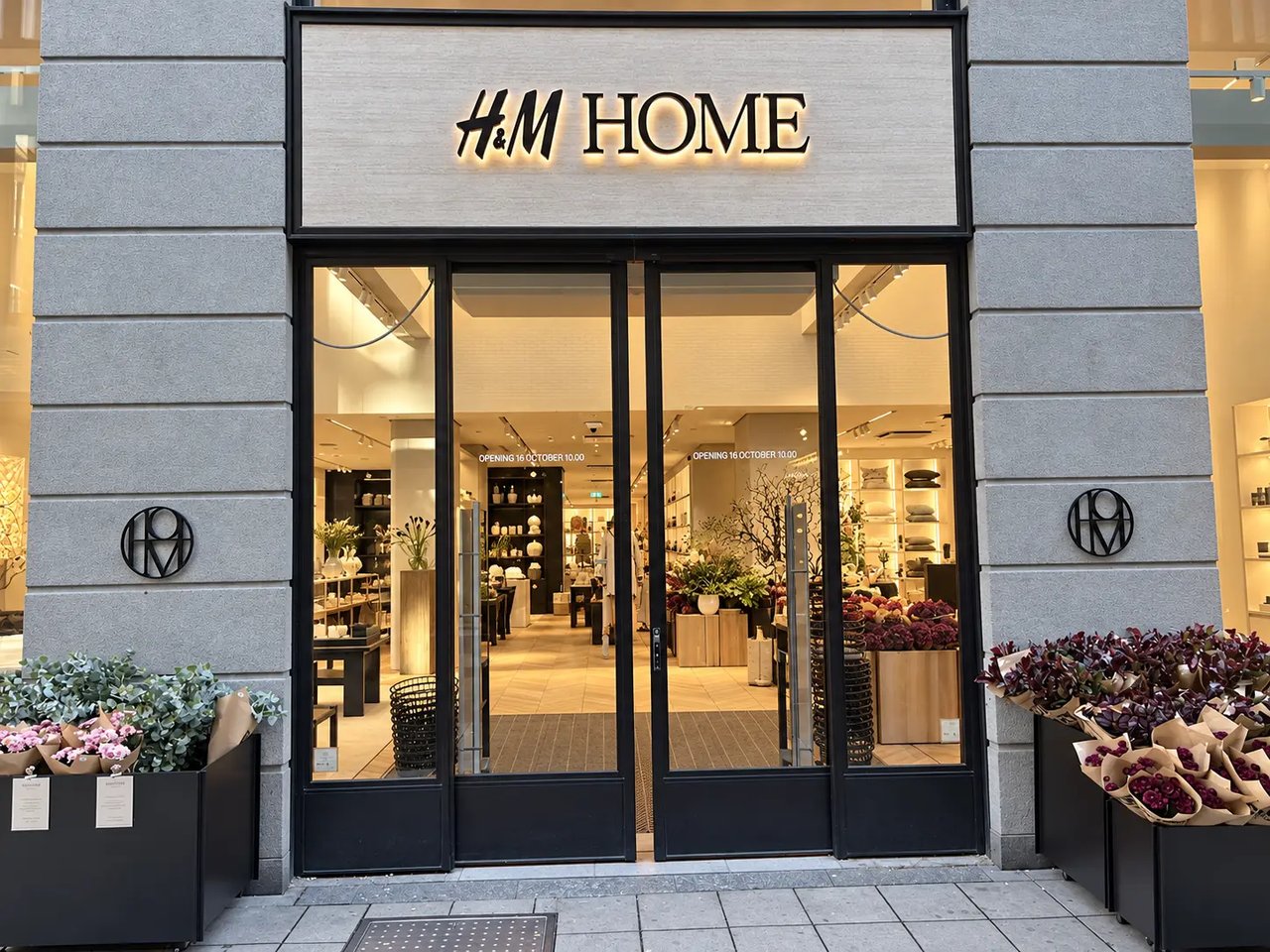
Following an extensive renovation, H&M HOME has reopened its doors at Drottninggatan 50. Prestaged visited the newly opened flagship – the first store in the world to feature H&M HOME's new retail concept.
H&M HOME has reopened its store at Drottninggatan 50 in central Stockholm. The store opened on 16 October and is the first globally to showcase the brand's new store concept and updated visual identity.
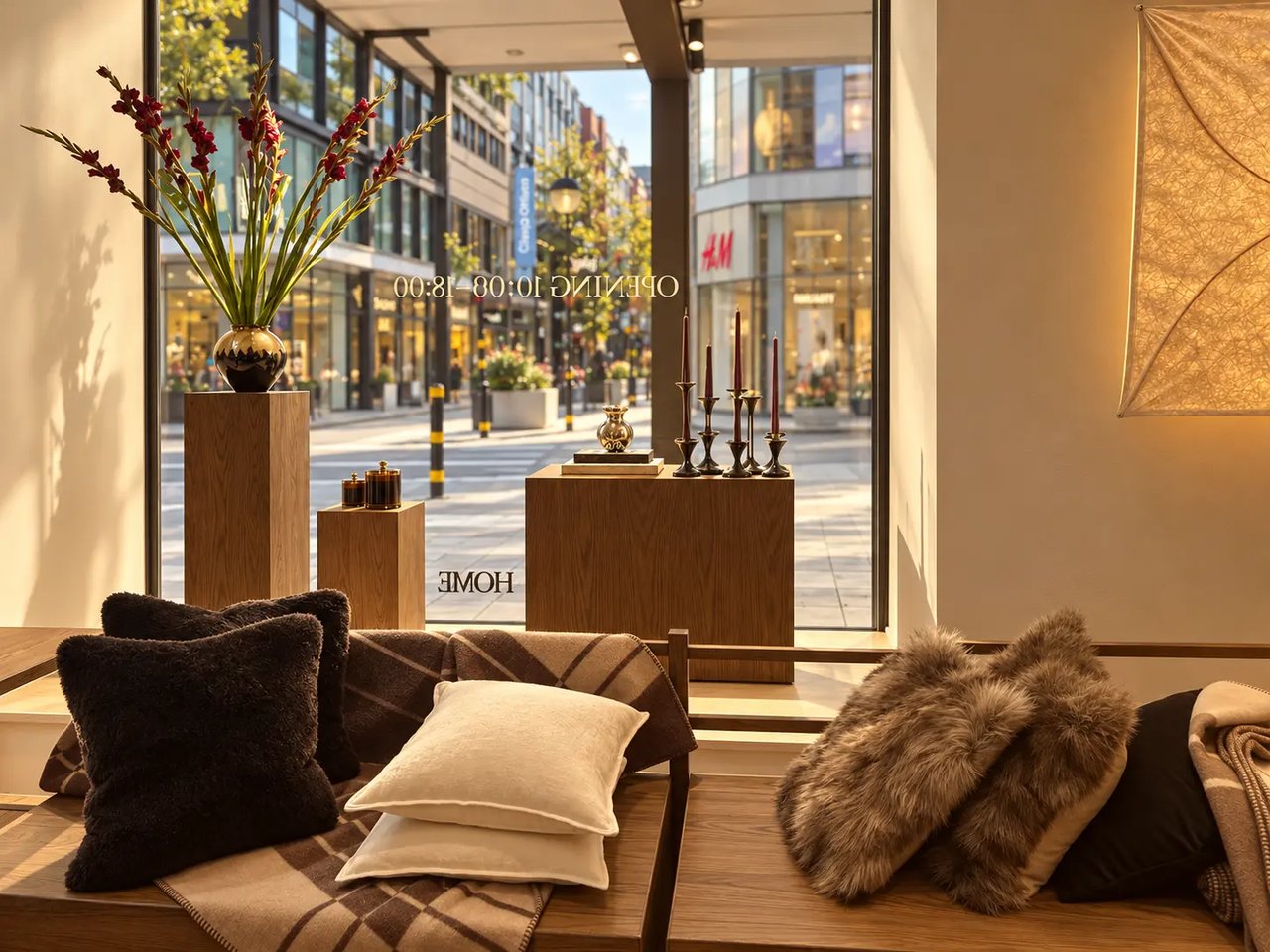
When Prestaged visits a few days after the opening, the change is clear from the street. Behind the large windows, dark wood, polished metals, textiles and tall floral arrangements come together in a space that feels considerably more like a furnished destination than a traditional shop.
From shop to room
The new store spans 383 square metres and has been designed as a series of connected rooms. H&M HOME itself describes the concept as inspired by modernist architecture, with clean lines, warm materials, dark woods and clear contrasts.
The range moves between living room, dining area, bedroom and bathroom rather than being presented strictly product category by product category.
You notice it in how the store is built, too. Furniture, textiles and smaller objects are used to create small settings that give the products a context. A made bed stands against dark wood and lit shelving. Polished metal cuts across soft textiles. Further in, smaller objects and fragrance products sit against black tiles.
It gives the store a calmer rhythm than many larger home-furnishing shops. The eye is allowed to rest on materials, shapes and combinations instead of being met by as much product as possible all at once.
Prestaged notes
Prestaged notes: The most interesting thing is not any single product but how clearly H&M HOME uses the store itself as an editorial tool. The products are shown less as stock and more as parts of a setting.
White, dark wood and polished metal
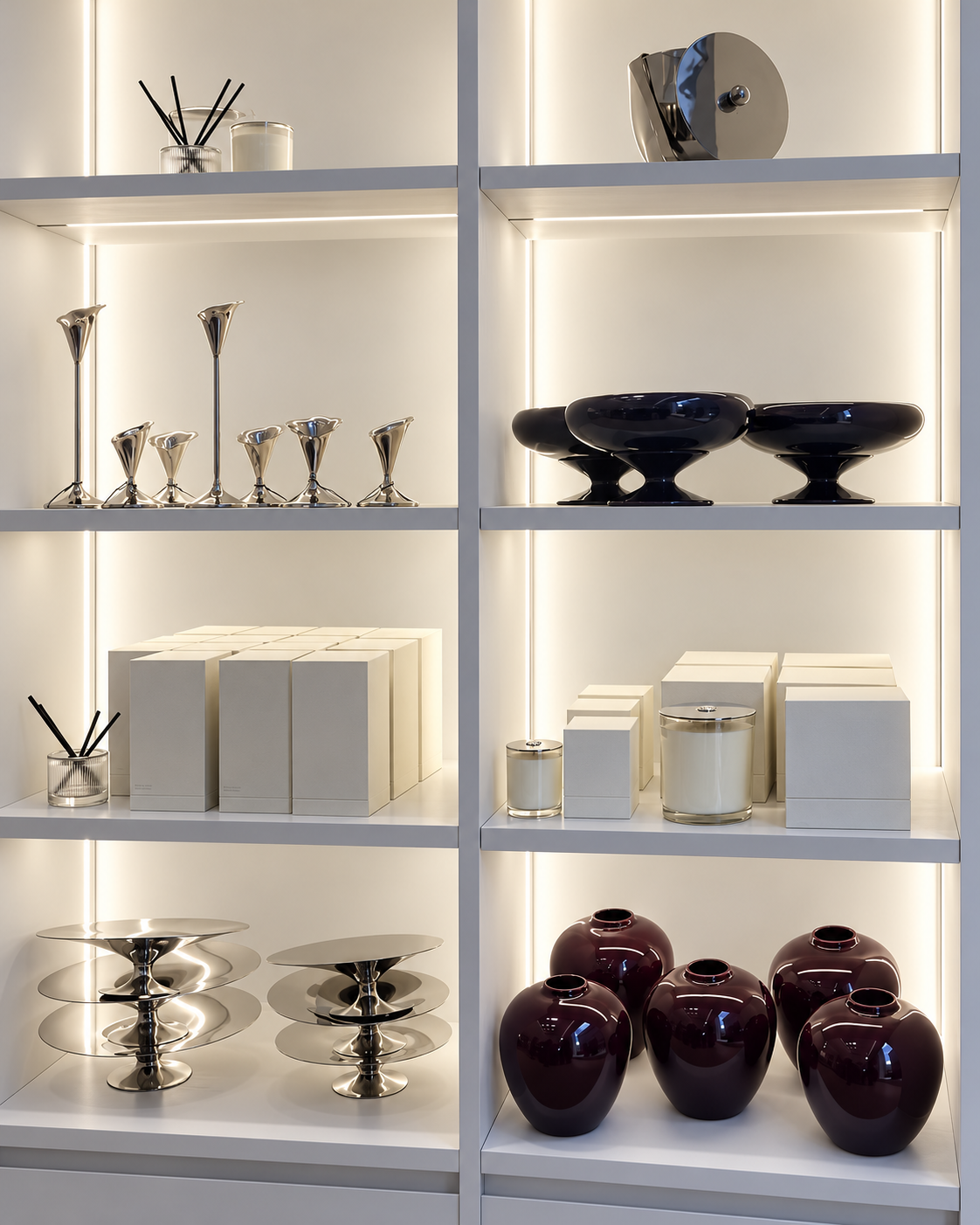
The material palette holds much of the store together. The light walls and illuminated shelving create a neutral backdrop, while dark wood, black tiles and polished silvery surfaces provide contrast.
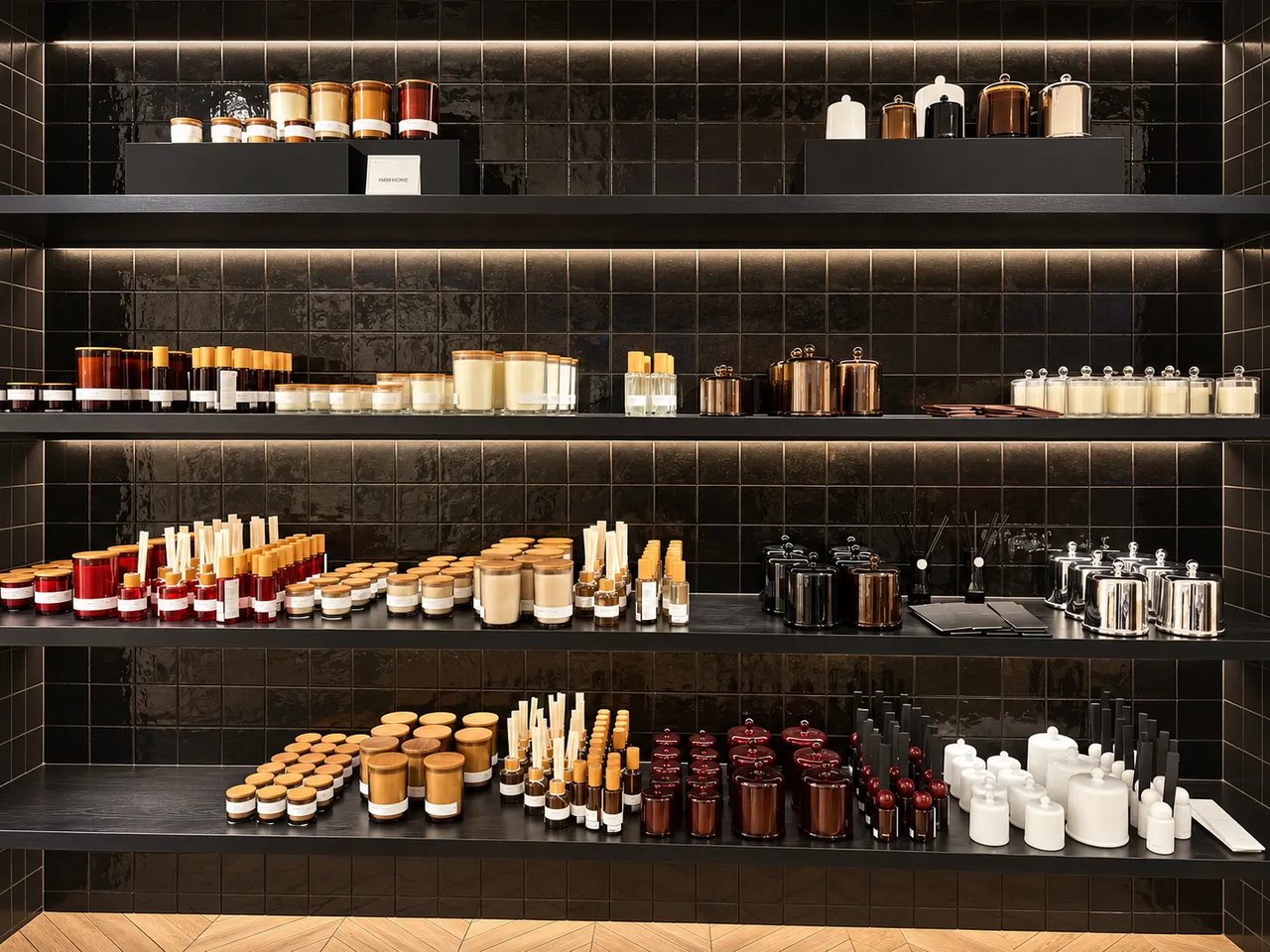
The metal objects in particular command attention: candlesticks, bowls and other small pieces in a chrome-like finish recur throughout the store. Together with glass, deep red tones and warm woods, the expression becomes something more polished than the beige minimalism that has long characterised much of Scandinavian home furnishing.
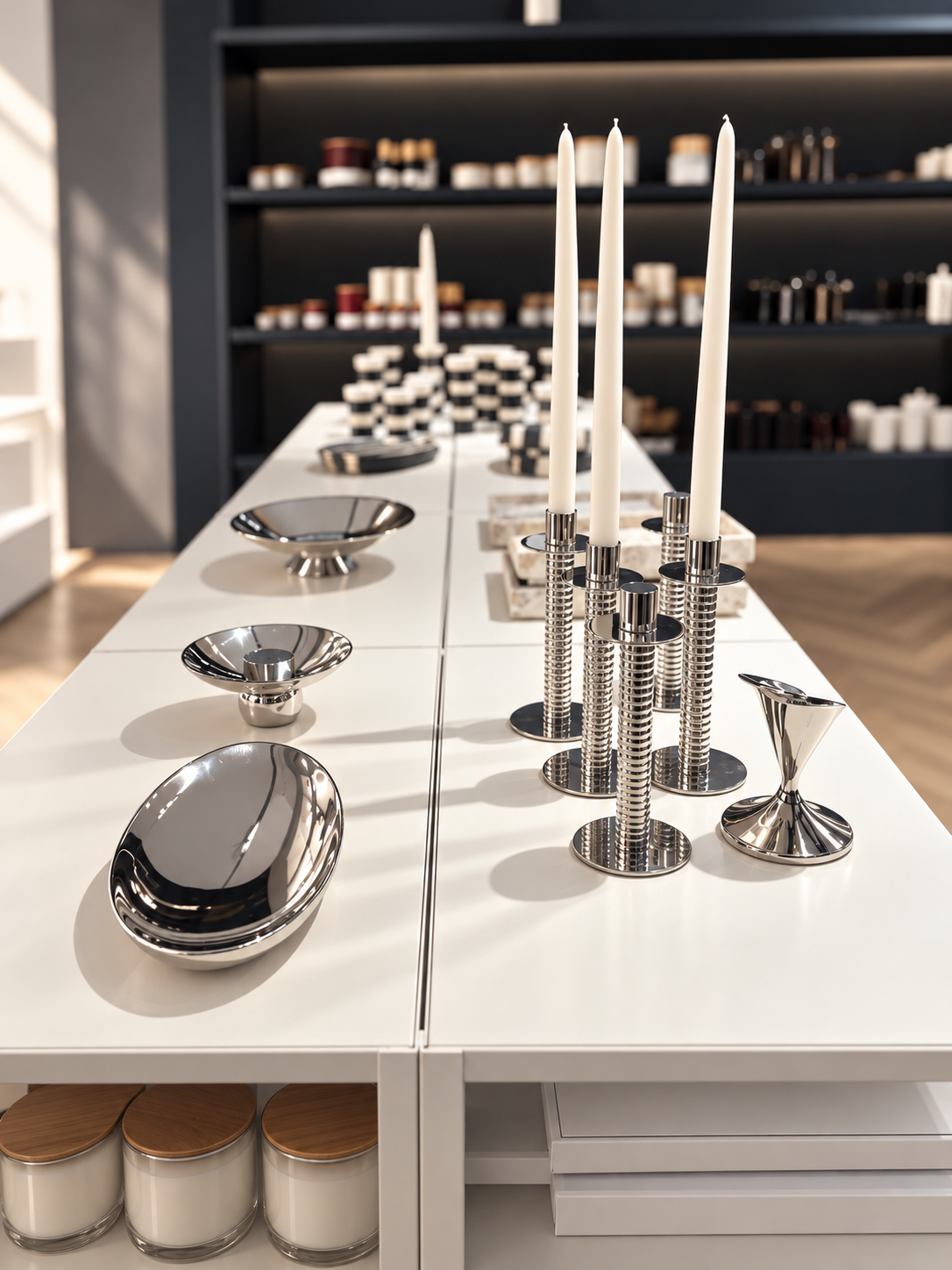
It is still restrained, but not anonymous.
The flowers become part of the experience
One of the clearest additions is the florist section, run in collaboration with Bunchery. H&M HOME also highlights a monogram service as part of the store's new offering.
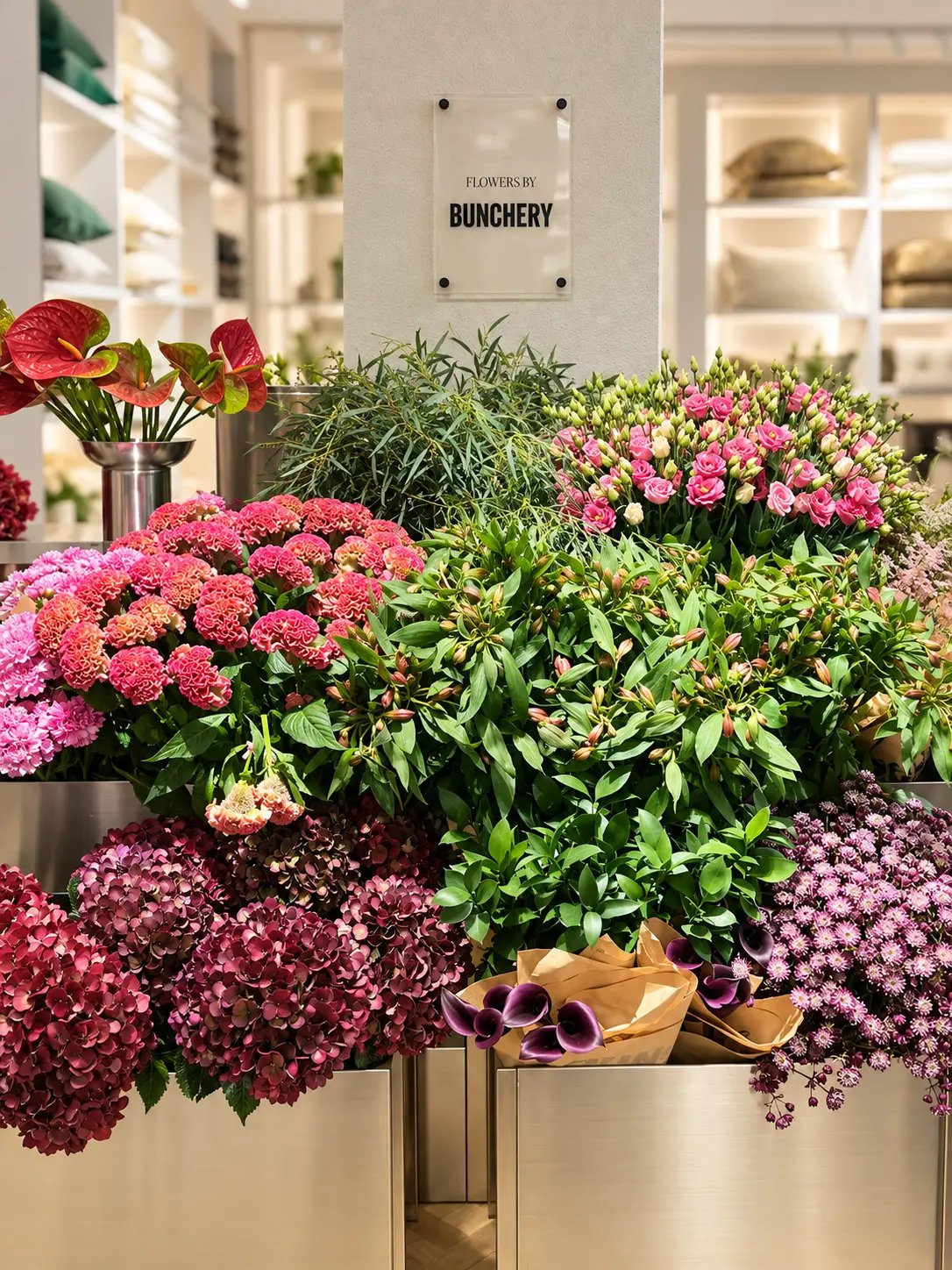
At the time of our visit, large quantities of cut flowers, berries, hydrangeas and tall branches were gathered in metal vessels in the middle of the store. It adds something that is difficult to create with finished products alone: movement, scent and season.
The flowers also become part of the store's visual identity. The large arrangements recur in the window display and throughout the settings, making the space feel less static.
A smaller but more curated range
The physical store carries textiles, kitchen and tableware, bed linen, bathroom products, decorative objects, smaller lamps and special collections, among other things. Larger parts of the range – including children's interiors, additional lighting and furniture – remain available online.
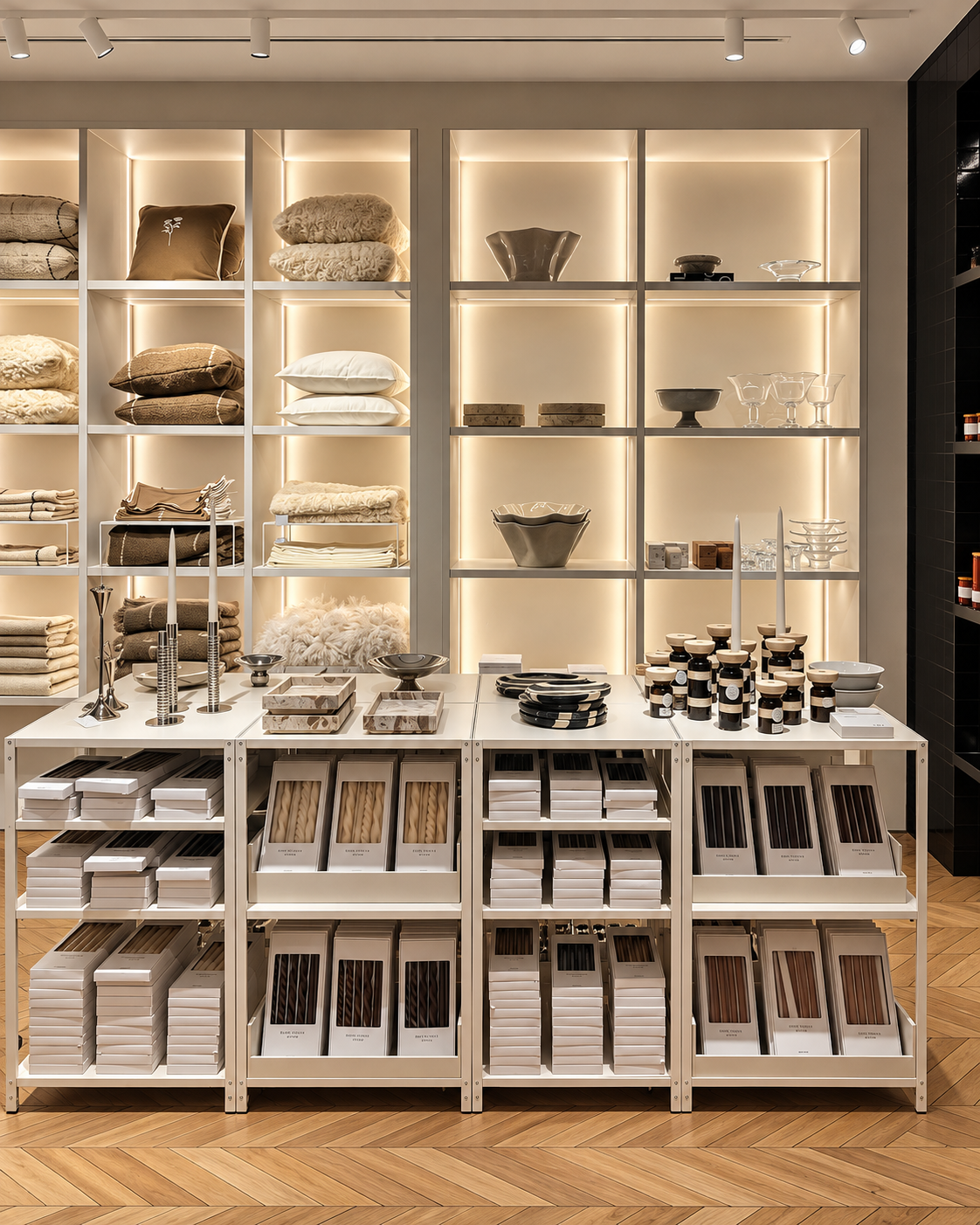
It is an important choice.
Rather than trying to squeeze the entire H&M HOME range into 383 square metres, the store becomes more of a selection. It also gives the settings greater significance. You do not necessarily come here to see everything – but to see how things can be put together.
Prestaged visits: what works best?
The strongest aspect of the new concept is the contrast between the commercial and the almost gallery-like.
The illuminated shelving works particularly well for glass, metal and smaller objects. The dark tiles around the fragrance range create an entirely different feeling and break away from the lighter sections. The textile department feels softer and more residential, while the flower section brings in a more changeable element.
The window facing Drottninggatan also works unusually well as part of the store. The products stand on dark wooden plinths in front of the city life outside, which almost makes Stockholm part of the scenography.
At the same time, there is something deliberately spare about the whole. This is not a store built around maximum inspiration in every square metre. Rather, it is a store that tries to give each group of products more air.
A sign of where H&M HOME is heading
H&M HOME launched online in 2009 and has since grown into an international home-furnishing brand. In October 2026, the brand is present in 60 markets, with more than 480 shop-in-shop units and 23 standalone H&M HOME stores.
The fact that Stockholm of all places receives the first example of the new store concept therefore makes Drottninggatan 50 more than just a renovated Swedish shop. It serves as a first physical version of how H&M HOME wants to present itself going forward.
And perhaps that is the most interesting thing about the visit.
Not that everything is new – but that the presentation has taken on greater importance.
Practical details
AddressH&M HOMEDrottninggatan 50, Stockholm
Reopened16 October 2026
Size383 m²
The store also houses a florist in collaboration with Bunchery, as well as a monogram service.
Sources & further reading
- H&M HOME, 2026. Read the source Official source for the brand, market presence and store concept.