Colour & materials
Linen & natural textiles
Textiles soften sound, filter light and make a room feel finished. Linen, wool and bouclé in practice.
Read the guideOne of Sweden's most common interior colours is also one of the hardest to get right. Three levels of lightness are enough to create depth.
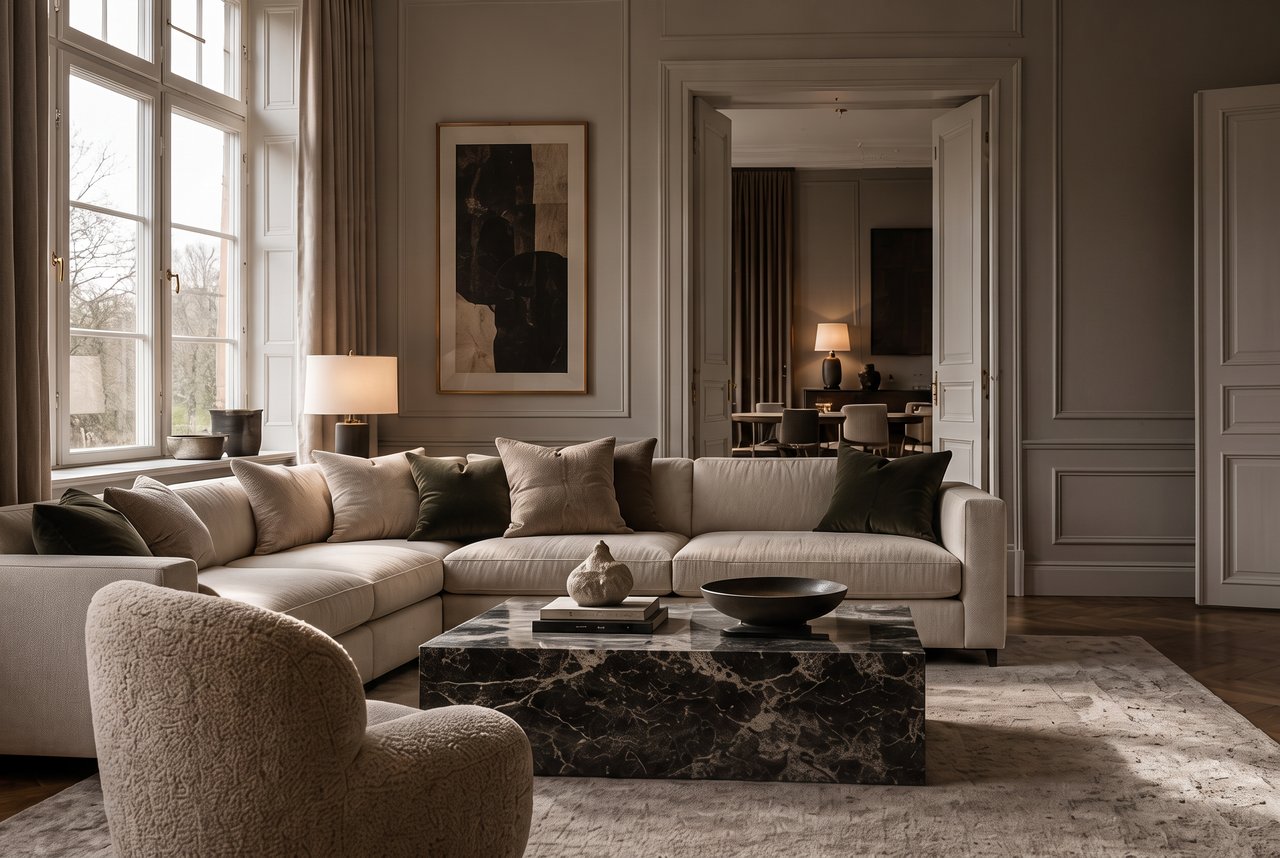
Beige is one of the most common colours in Swedish homes and one of the hardest to get right. Without variation, the room falls flat; with the right contrasts, it becomes warm.
When the wall, sofa, rug and curtains all sit in the same shade of beige, the depth disappears. The eye needs a difference in lightness or texture to read the room as a three-dimensional space.
Work in three steps: a light base, a mid-tone and one dark point. The mid-tone can be greige, the dark point brown or black. The difference does not need to be dramatic — it simply needs to exist.
Bouclé, wool and linen create three very different beiges at the same level of lightness. Add wood, preferably light oak, and a stone with visible character such as travertine or limestone.
No published interiors with these details yet. Explore the full archive under Inspiration.
Filter in InspirationTextiles soften sound, filter light and make a room feel finished. Linen, wool and bouclé in practice.
Read the guideBrown brings warmth where black brings severity. How to use it across large surfaces without weighing down the room.
Read the guideLight, wood and function before decoration. What actually makes a room feel Scandinavian.
Read the guide