Colour & materials
Dark oak – warmth with character
Visible grain, a hard-wearing surface and enough weight to anchor a room without making it dark. How to combine dark oak.
Read the guideTravertine, limestone and marble belong to the same family but behave very differently. How to choose the right one.
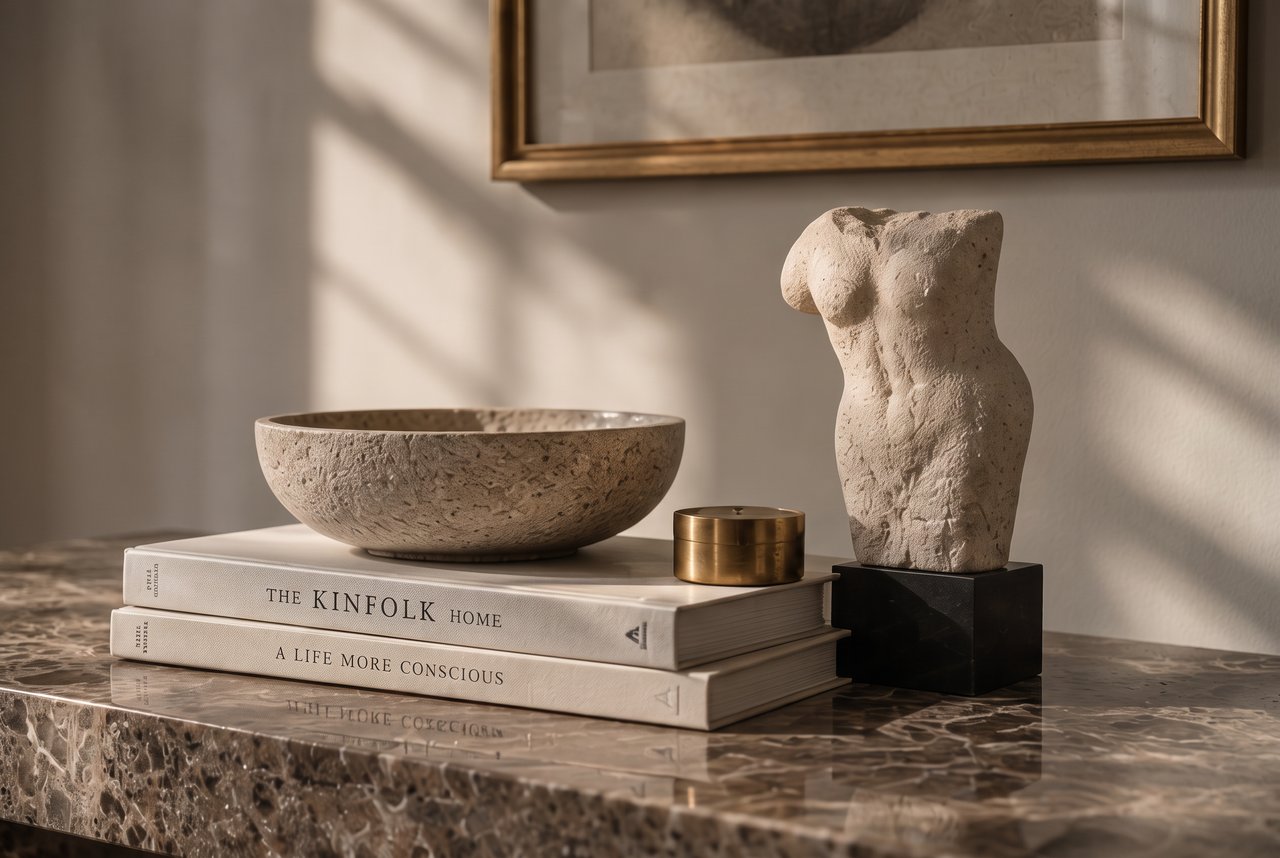
Natural stone gives a room something no composite can: a surface that is different everywhere. Travertine, limestone and marble belong to the same family but behave in very different ways.
Travertine has open pores and a warm, sandy character. Limestone is more even and matt, with a muted grey or beige tone. Marble has pronounced veining and a glossier surface, which gives it a more formal feel.
As a worktop, coffee table or single detail. Covering an entire room in stone can easily feel cold; one stone surface in a room of wood and textiles instead becomes a focal point.
Beige and off-white bring out the stone's tone. Dark oak creates contrast. Brass adds warmth, black metal adds definition. Wool and linen are needed as a counterweight to the hard surface.
No published interiors with these details yet. Explore the full archive under Inspiration.
Filter in InspirationVisible grain, a hard-wearing surface and enough weight to anchor a room without making it dark. How to combine dark oak.
Read the guideOne of Sweden's most common interior colours is also one of the hardest to get right. Three levels of lightness are enough to create depth.
Read the guideStucco, panelled doors and herringbone parquet already do the work. The rest is about not competing with them.
Read the guide