Colour & materials
Dark oak – warmth with character
Visible grain, a hard-wearing surface and enough weight to anchor a room without making it dark. How to combine dark oak.
Read the guideOak, walnut and an inherited teak piece in the same room. Undertone, quantity and contrast decide whether it works.
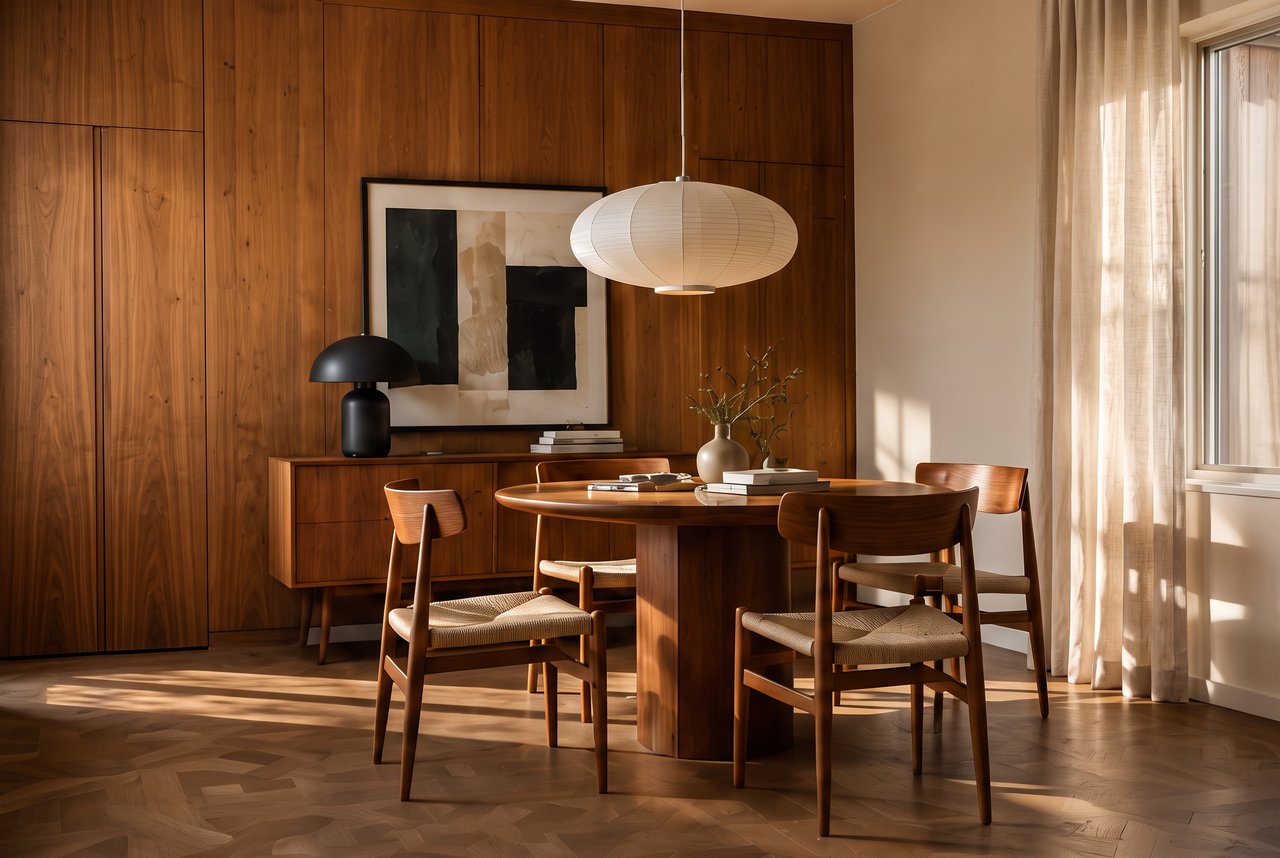
Oak, walnut, birch, pine and an inherited teak piece in the same room. It can work beautifully — as long as you follow a few simple rules.
What matters most is not how dark the wood is, but whether it leans yellow, red or grey. Two woods with the same undertone can work together even if one is much darker than the other. Yellow-toned wood against reddish wood almost always clashes.
A room rarely handles more. Choose one dominant wood — often the floor — and add one, at most two, others.
Treat the floor separately. Matching furniture exactly to the floor often gives a flat result. Contrast with the floor is usually better than an almost-match, which tends to look like a failed attempt.
A single walnut object can look forgotten. If walnut appears in both the coffee table and a shelf, it reads as a deliberate choice.
Stone, metal or textile between the different woods gives the eye a pause and stops the materials competing with one another. A stone top or a wool rug is enough.
Visible grain, a hard-wearing surface and enough weight to anchor a room without making it dark. How to combine dark oak.
Read the guideMuted colours, dark wood and pronounced materials. The Nordic tradition with depth instead of brightness.
Read the guideSeating, lighting and a correctly sized rug matter more than colour. How to plan a living room that works all week.
Read the guide