Style guide
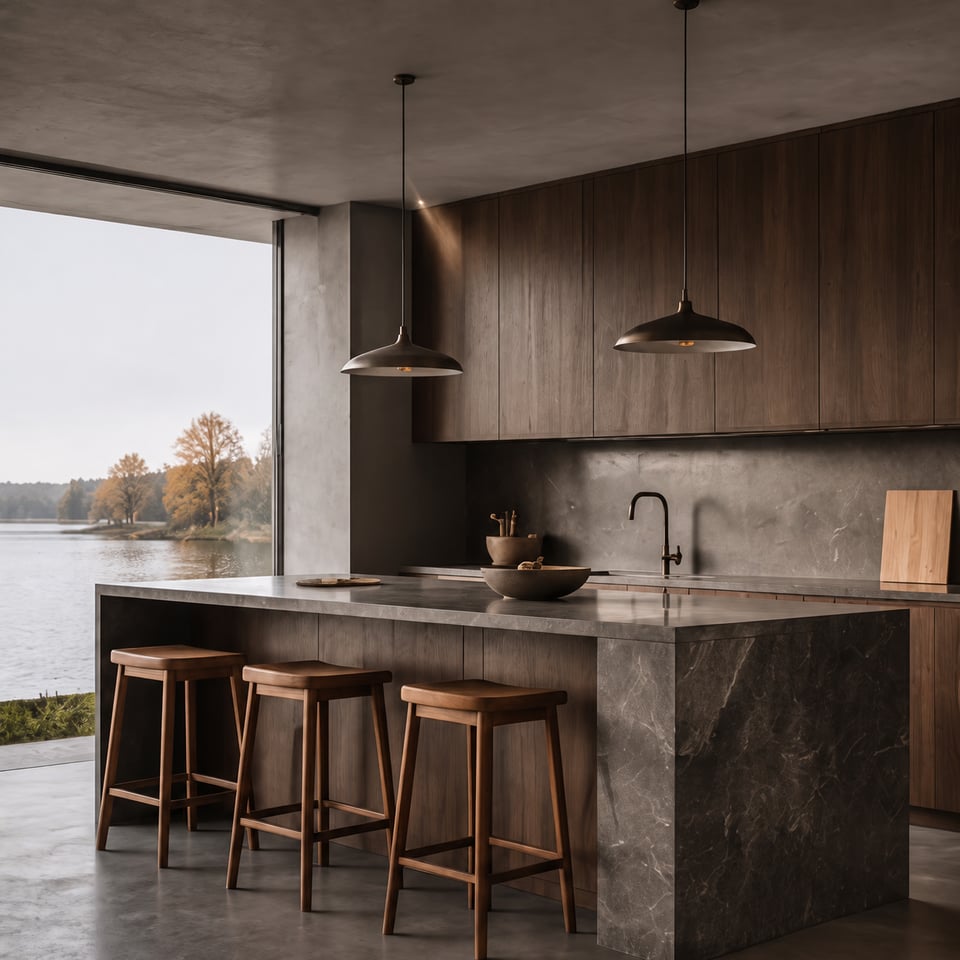
New Nordic – darker, warmer Nordic interiors
Muted colours, dark wood and pronounced materials. The Nordic tradition with depth instead of brightness.
Table size, the number of chairs and pendant height determine whether a dining area works every day or only at weekends.
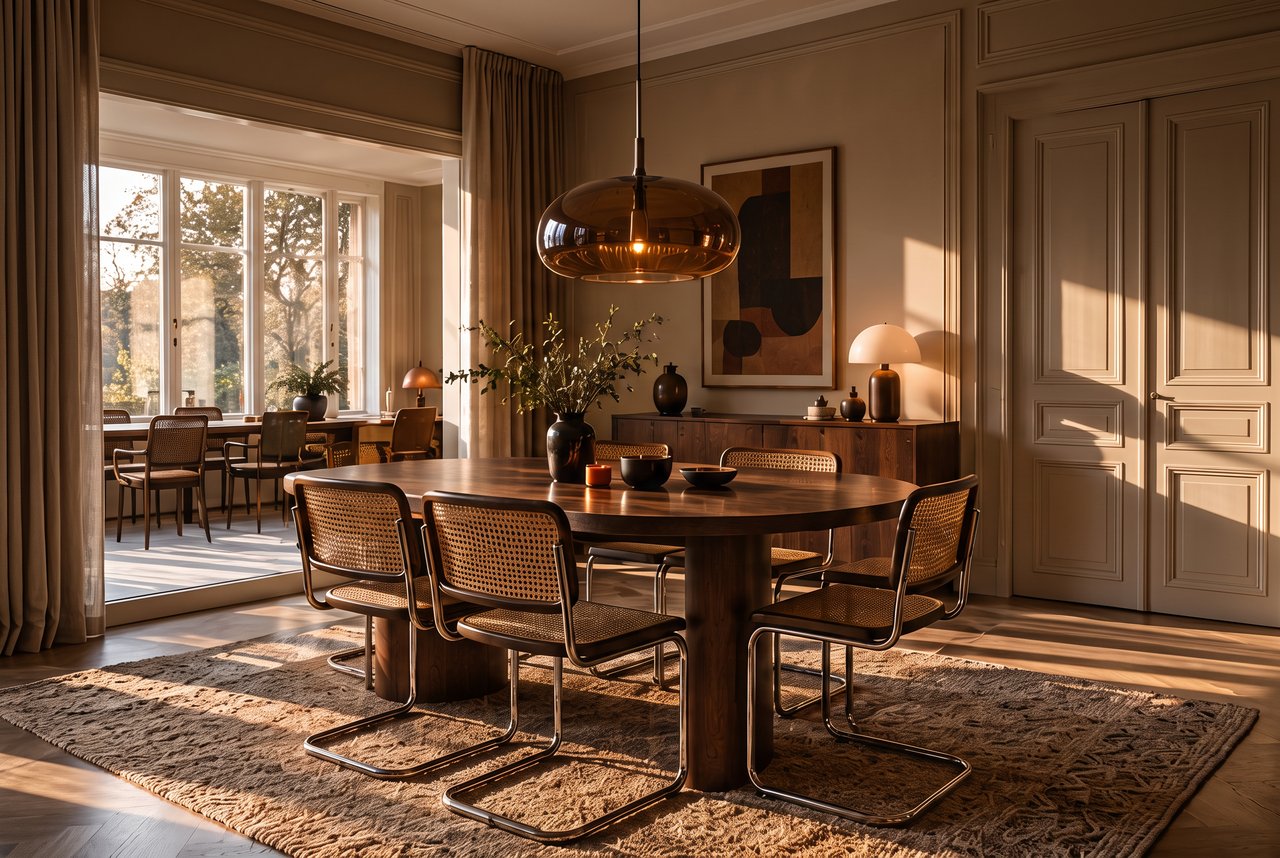
A dining area is either used every day or almost never, and three things often decide which: the size of the table, chairs that are genuinely comfortable and the light above the table. Style comes afterwards.
A separate dining room, a spot in the kitchen or part of the living room each make different demands. In a kitchen, the best position is outside the working zone; in an open plan, the table should align with something — a window axis, an island — or it can look randomly placed.
Allow roughly 60 cm of table edge per person and at least 80 cm of clear floor behind each chair so people can stand up. A table of 180 × 90 cm seats six comfortably. Better a table a few centimetres smaller with air around it than the other way round.
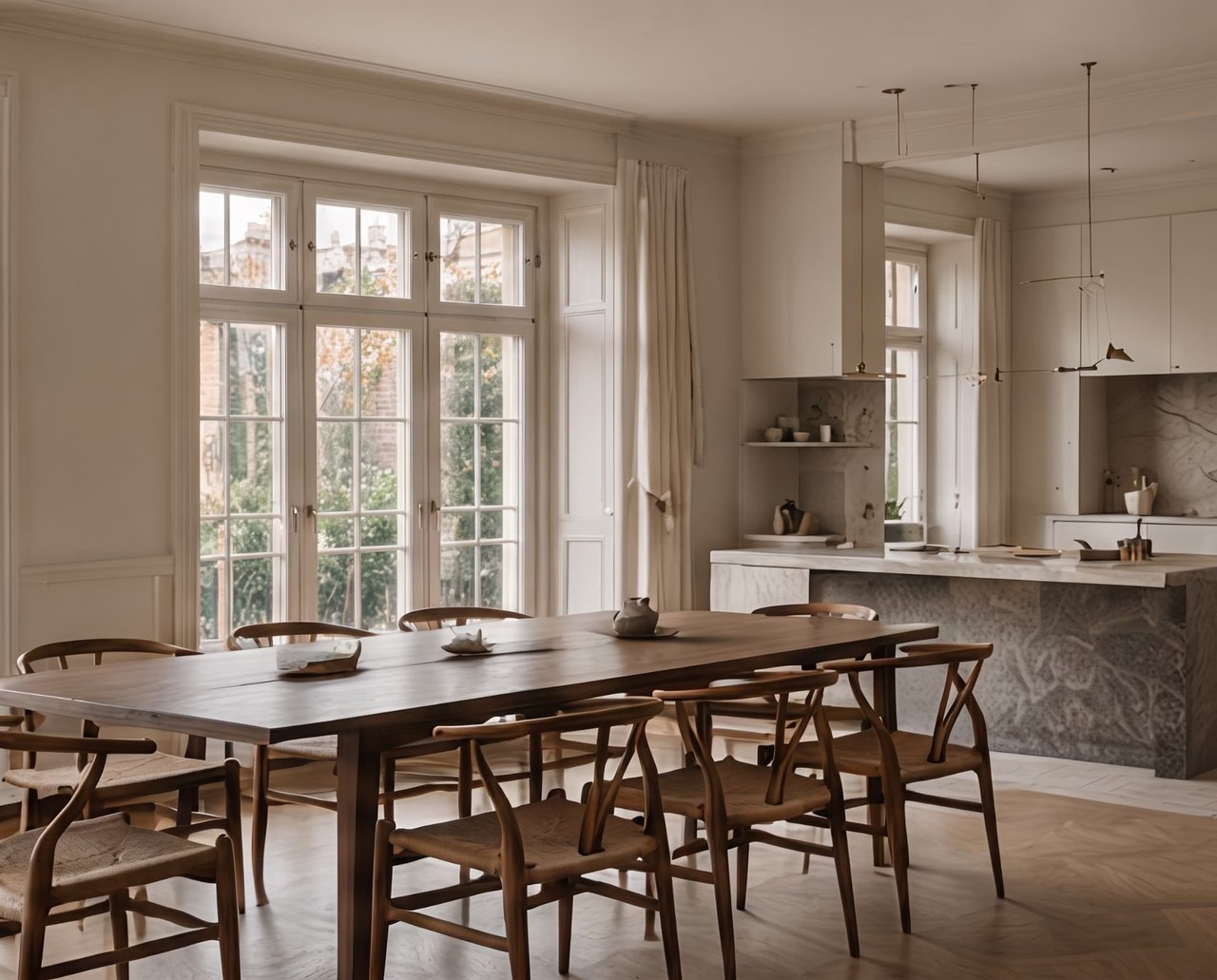
Round tables are better for conversation and for tight rooms, since nobody sits at a corner and you can move around them. Rectangular tables seat more people per square metre and suit long, narrow rooms. A round table over 140 cm becomes hard to reach across.
Chairs decide how long a dinner lasts. Sit in them for more than a minute before buying, and aim for a seat height of around 45 cm against a table height of around 75 cm. Mixing chairs works well as long as something holds them together — the same height, the same timber or the same tone — and makes the table feel less like a catalogue and more like a home.
Hang the pendant around 60–70 cm above the table top: low enough to create intimacy, high enough for everyone to see one another. The light should fall on the table, not in your eyes, and should always be dimmable. A long table usually needs two or three fittings rather than one.
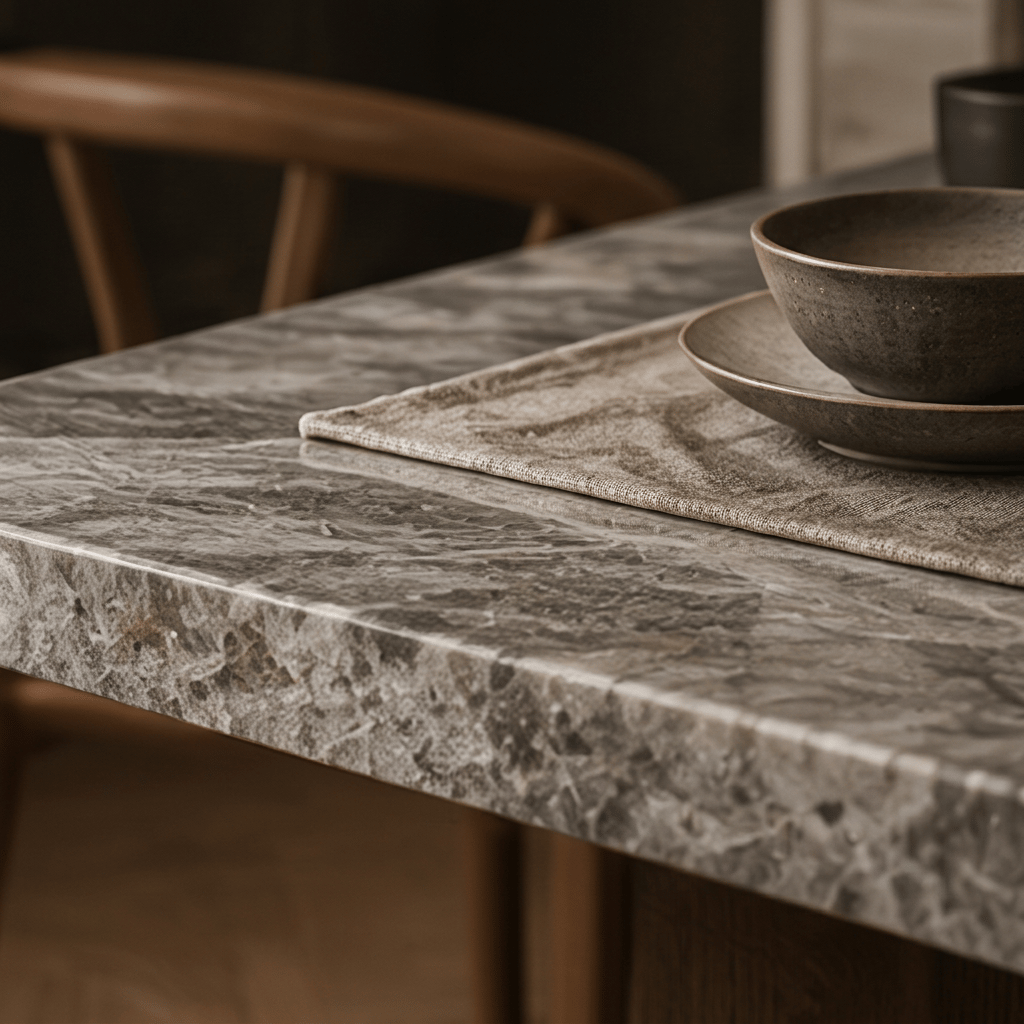
Solid timber takes marks and can be sanded — it ages instead of breaking. Limestone and marble are beautiful and sensitive and will stain; decide in advance whether you can live with that. Laminate and linoleum are underrated choices for a dining table that sees heavy everyday use.
A sideboard or low cabinet beside the dining area turns laying the table into one movement instead of four. It holds china, glass, candles and textiles, and its top becomes a landing place when serving.
Muted colours, dark wood and pronounced materials. The Nordic tradition with depth instead of brightness.
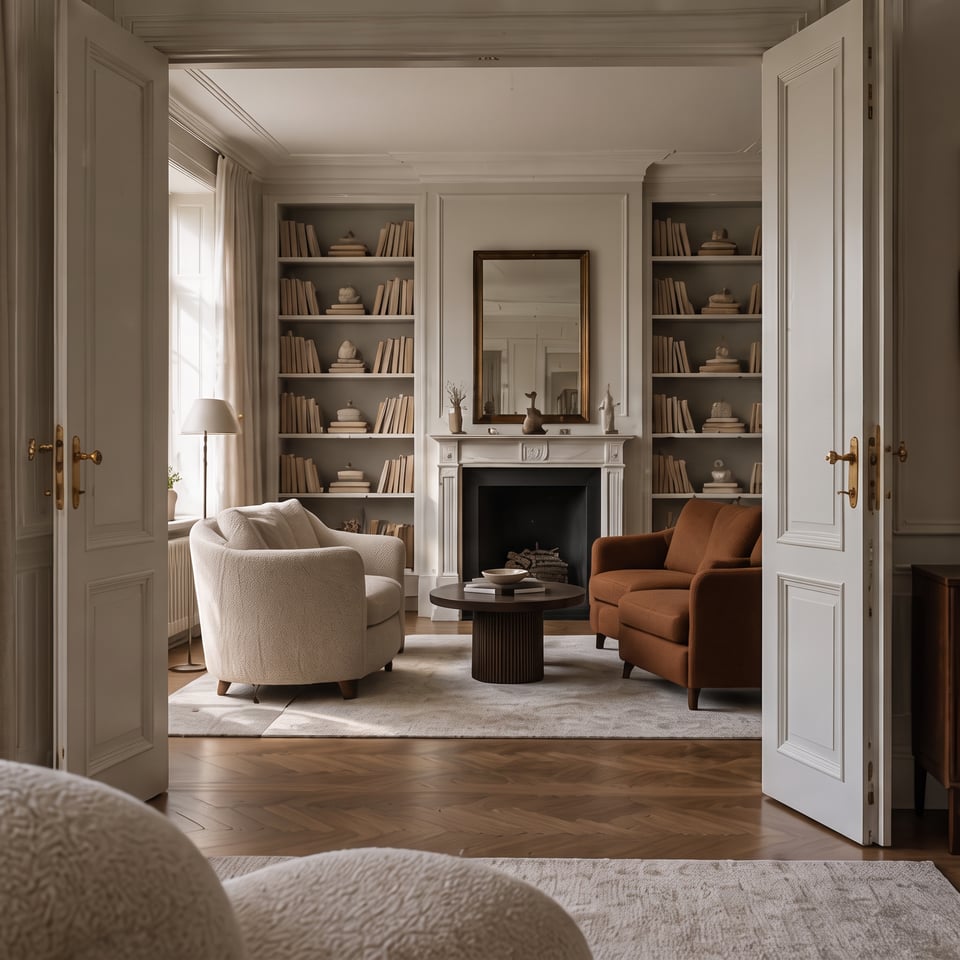
Stucco, panelled doors and herringbone parquet already do the work. The rest is about not competing with them.
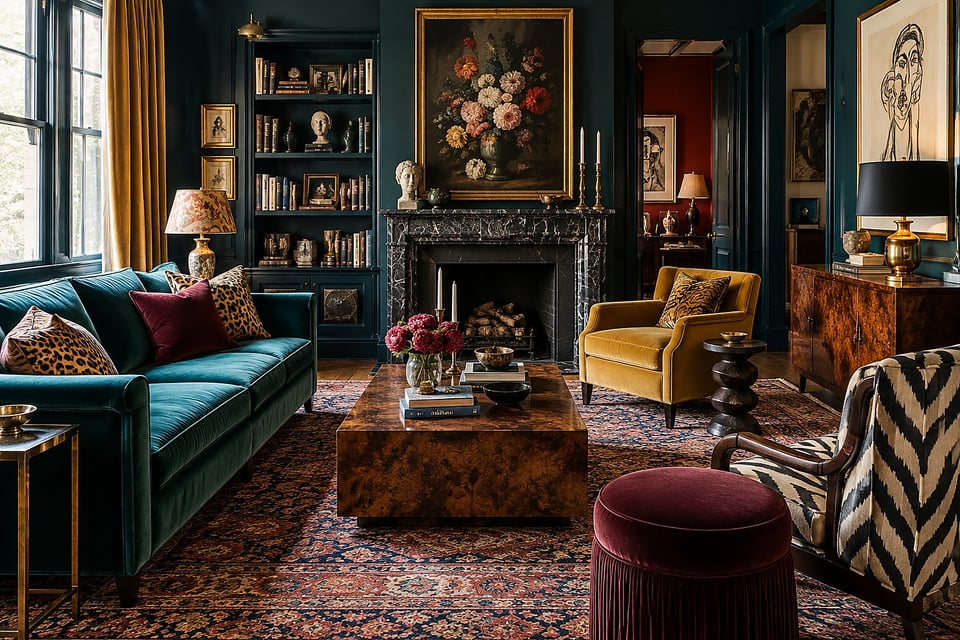
Inherited pieces, finds and new purchases in the same room. What holds it together is rarely the style — it is the palette.
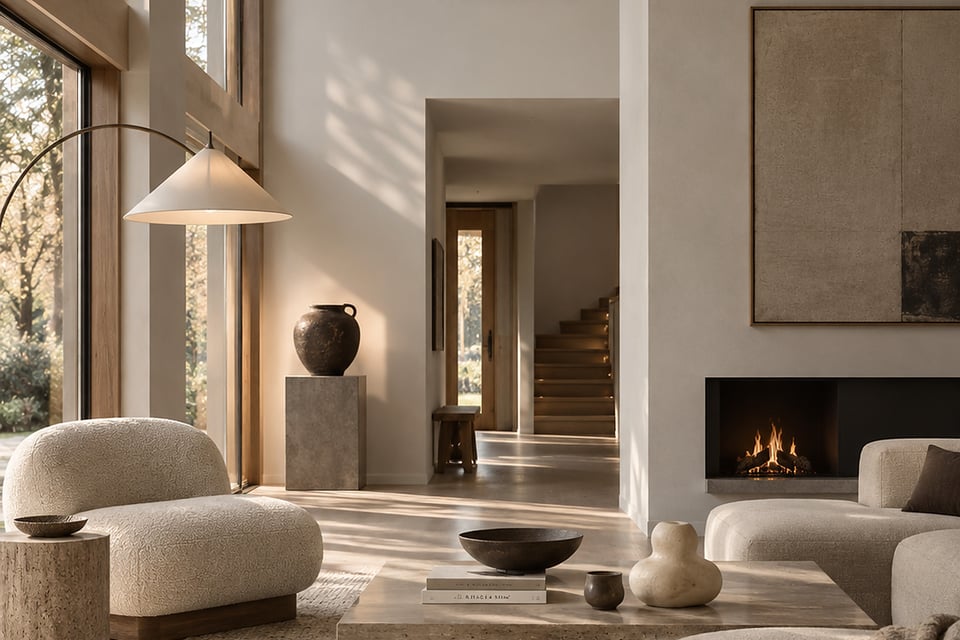
Minimalism is rarely about owning little. It is about choosing what is allowed to remain visible.
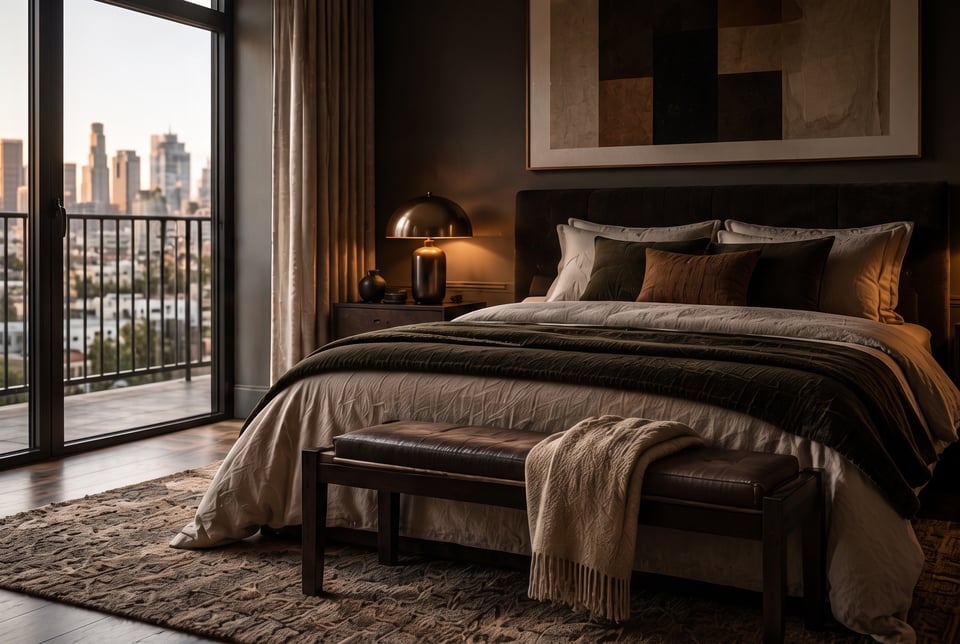
Brown brings warmth where black brings severity. How to use it across large surfaces without weighing down the room.
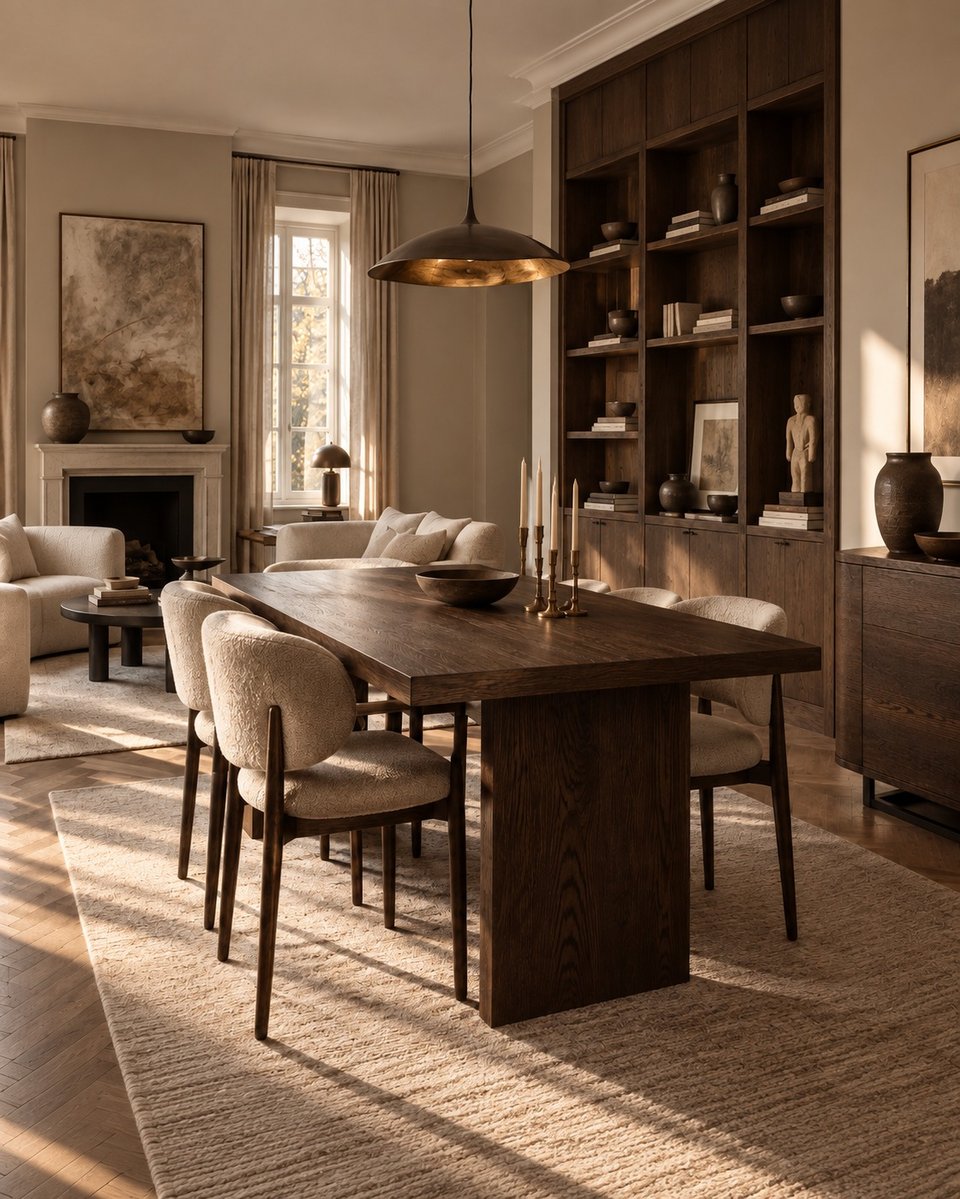
Visible grain, a hard-wearing surface and enough weight to anchor a room without making it dark. How to combine dark oak.
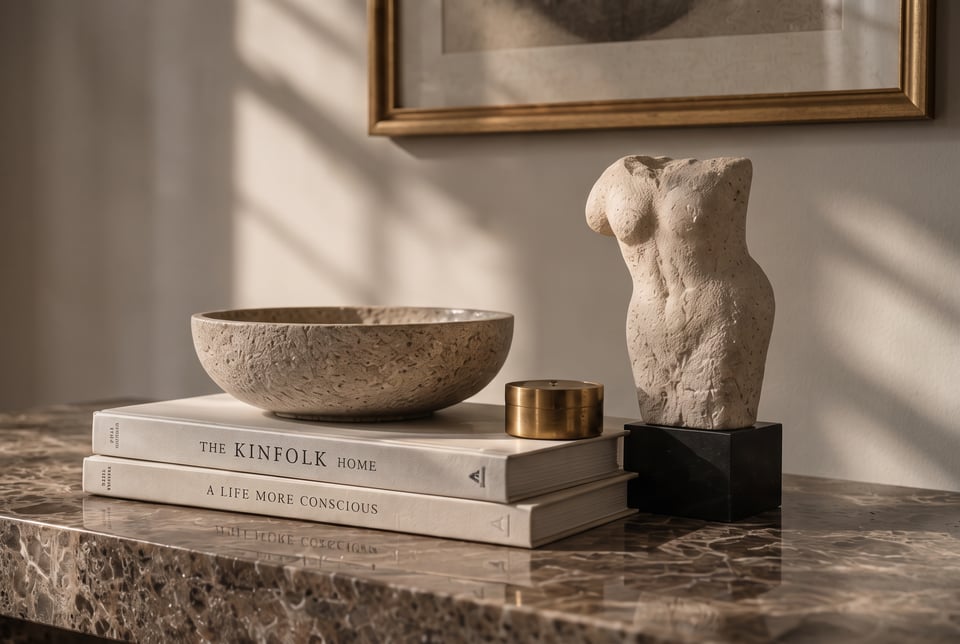
Travertine, limestone and marble belong to the same family but behave very differently. How to choose the right one.
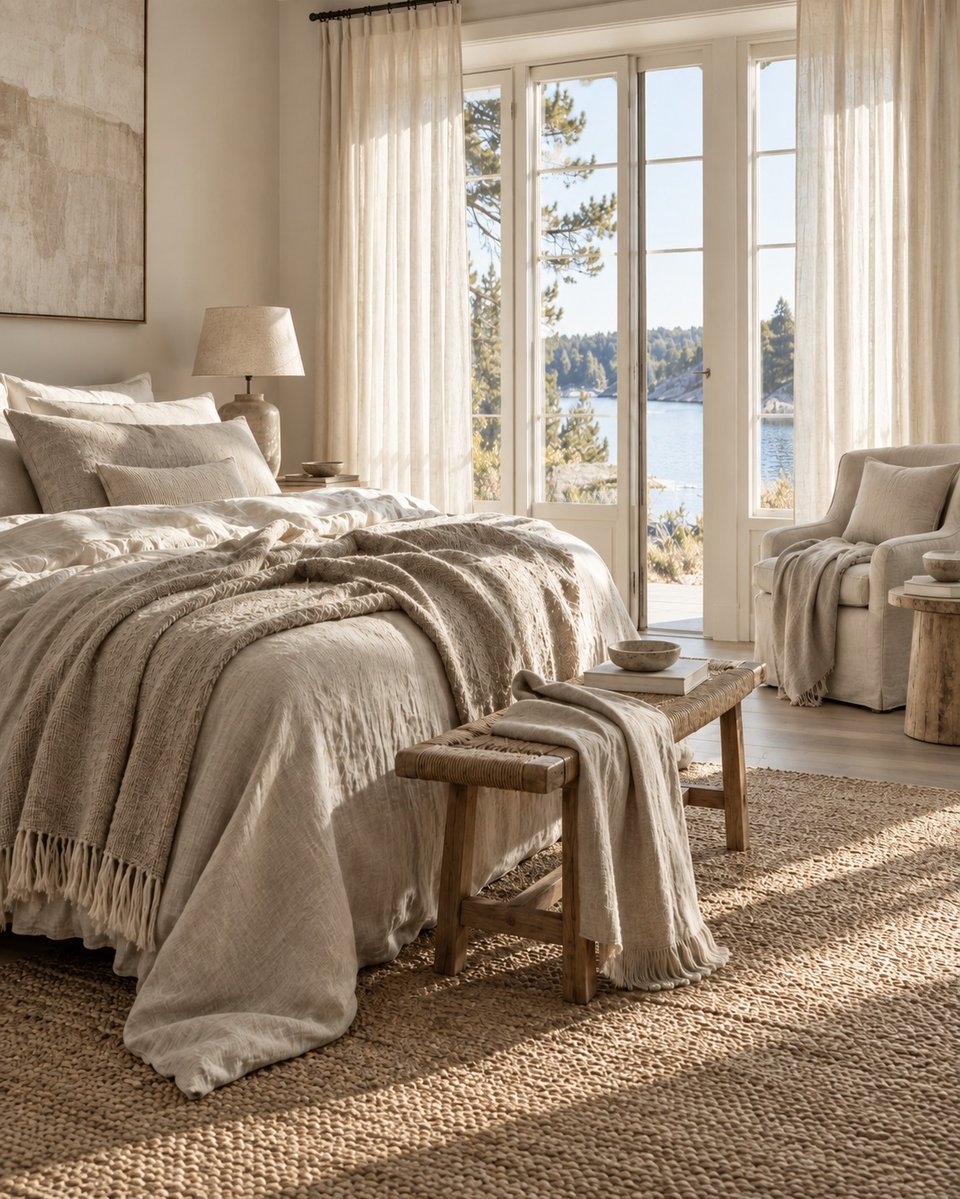
Textiles soften sound, filter light and make a room feel finished. Linen, wool and bouclé in practice.
Visible grain, a hard-wearing surface and enough weight to anchor a room without making it dark. How to combine dark oak.
Read the guideInherited pieces, finds and new purchases in the same room. What holds it together is rarely the style — it is the palette.
Read the guideTravertine, limestone and marble belong to the same family but behave very differently. How to choose the right one.
Read the guide