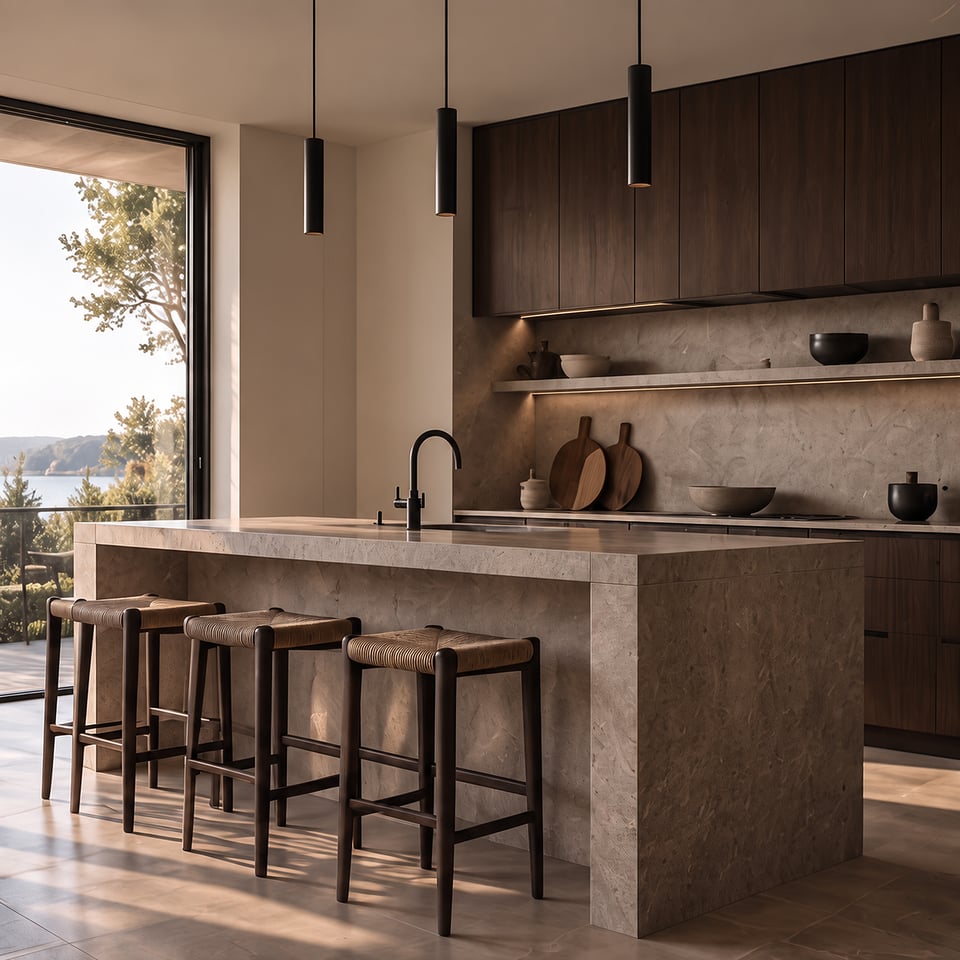
Style guide
Japandi – where Scandinavian meets Japanese
Fewer objects, longer lifespans and materials that are allowed to age visibly. How to create a Japandi room that lasts.
Seating, lighting and a correctly sized rug matter more than colour. How to plan a living room that works all week.
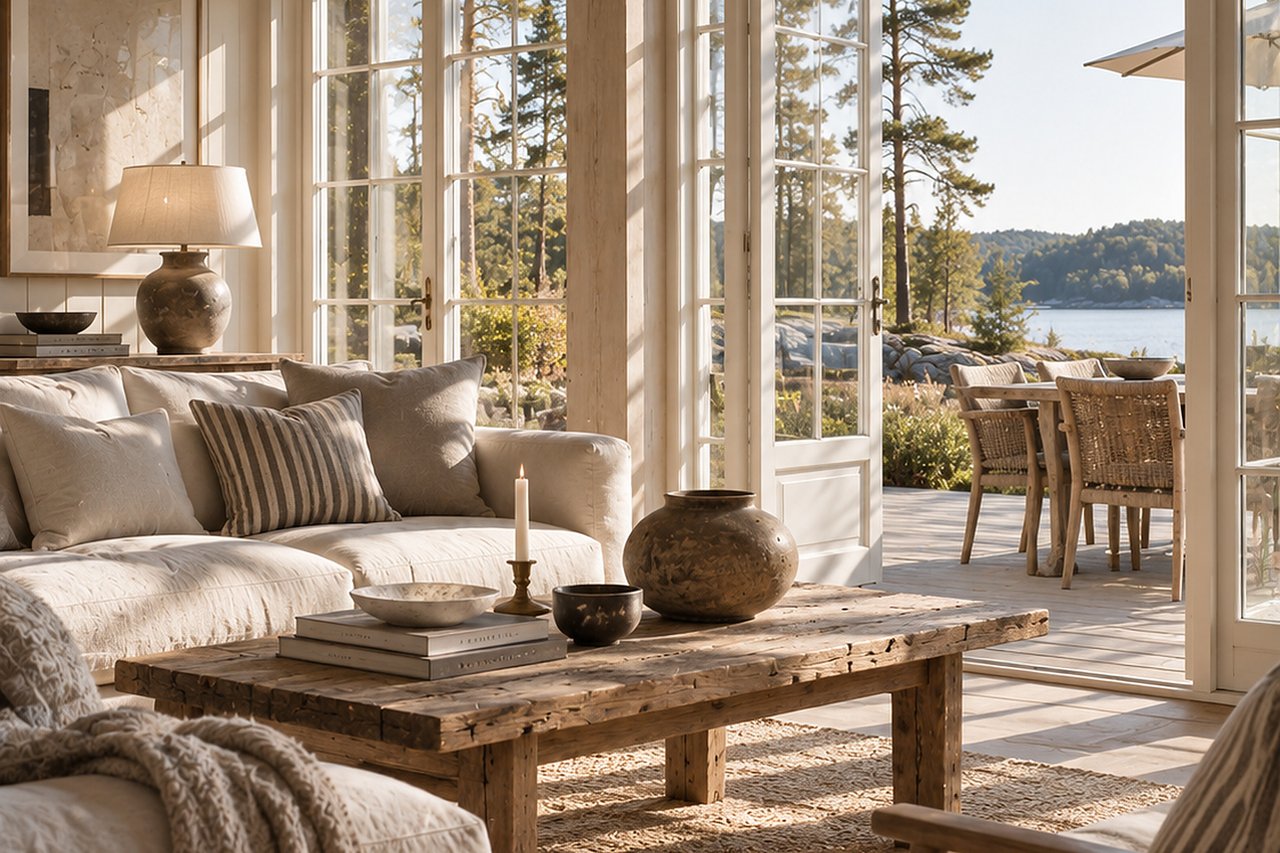
The living room is often the most-used and least-planned room in the home. It has to handle a Saturday dinner for eight, a Tuesday evening alone on the sofa and an afternoon with the floor covered in toys. Solutions that only work in a photograph never last here.
Seating comes before colour and material. Count how many people usually sit down together in an ordinary week, not how many you can fit in at Christmas. A sofa and two armchairs almost always beat one larger sofa: they create more directions in the room and make conversation easier across the seating group.
Leave roughly 40–45 cm between sofa and coffee table. Any wider and the table stops being useful; any narrower and you feel wedged in.
A living room feels calmer when one element is allowed to lead: the wall, the rug or the sofa. Choose a large, understated sofa and the wall can take more colour. If the wall is dark, the sofa should stay calm. When everything wants to be the lead, the room feels restless even when it is tidy.
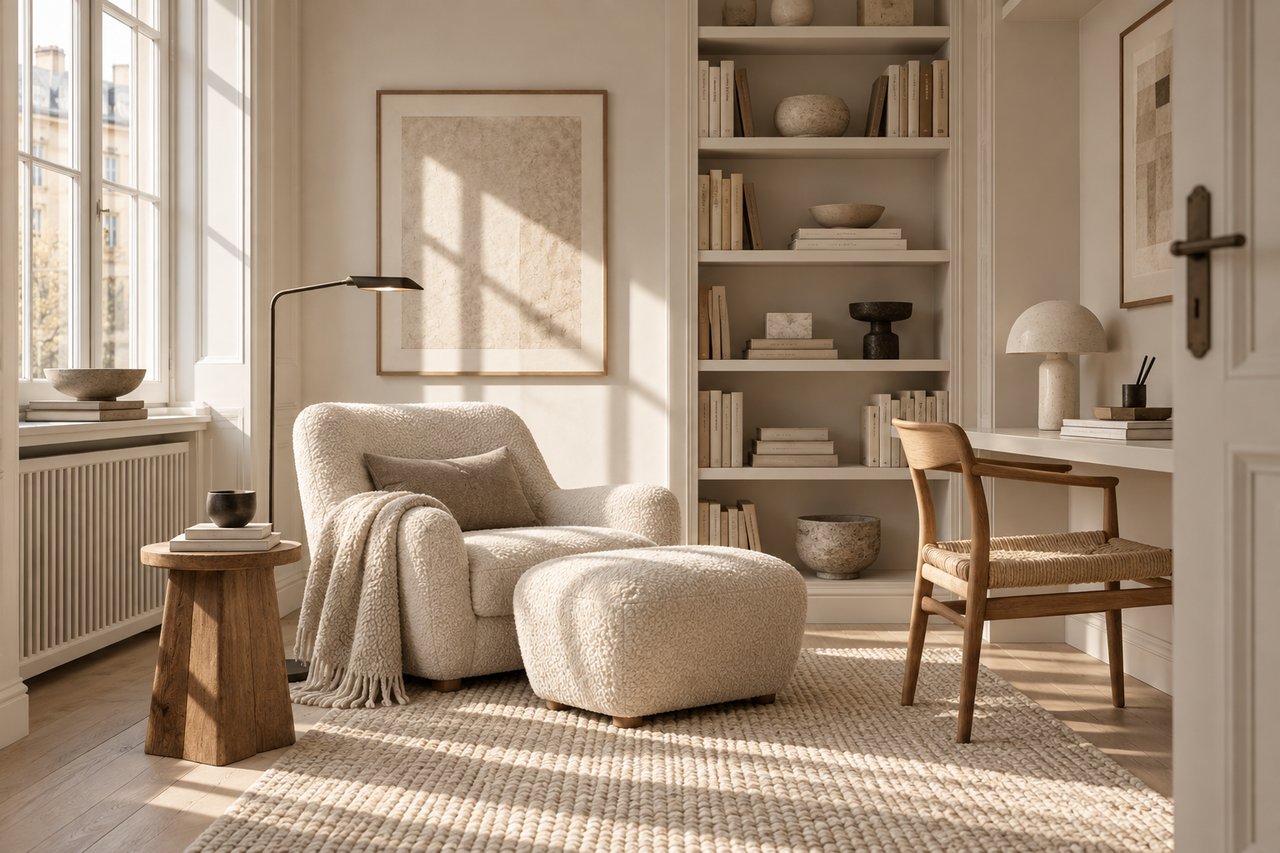
Nordic living rooms are used most when it is dark outside. Plan for at least three light sources at different heights — a floor lamp by the seating, a small lamp on a shelf or chest of drawers, and a wall or ceiling light used only when needed. Warm light, dimmers where possible, and never a single ceiling light straight from above.
The most common mistake. The rug should reach in under the front legs of the sofa, and ideally under the armchairs too. A rug floating like a postage stamp in the middle of the floor makes the whole room feel smaller. Wool handles wear well and softens sound; jute and natural fibres add texture but feel rougher underfoot.
Living rooms can carry personal things — books, art, a collection — as long as they have a place. Closed storage along one wall and open surfaces for what you actually want to see works better than shelving everywhere.
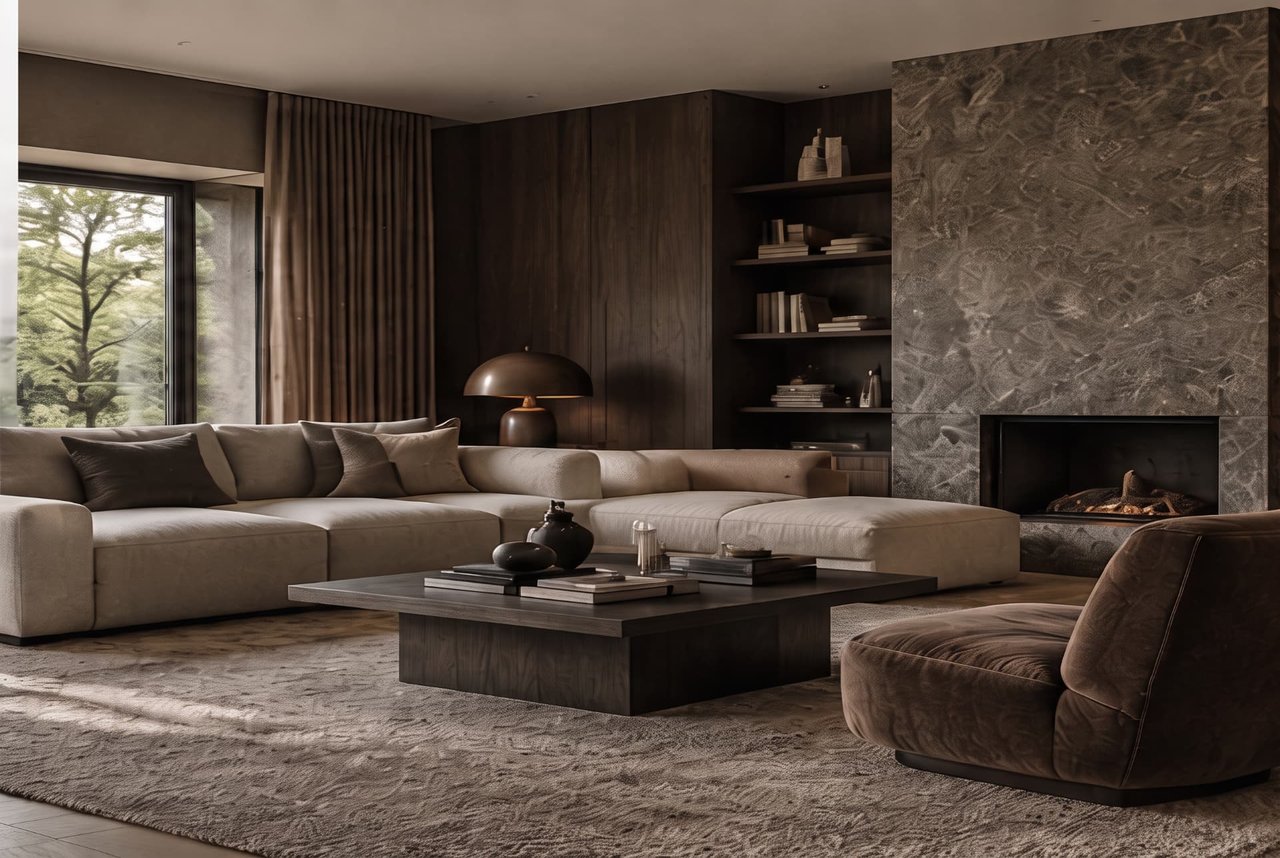
Fewer objects, longer lifespans and materials that are allowed to age visibly. How to create a Japandi room that lasts.
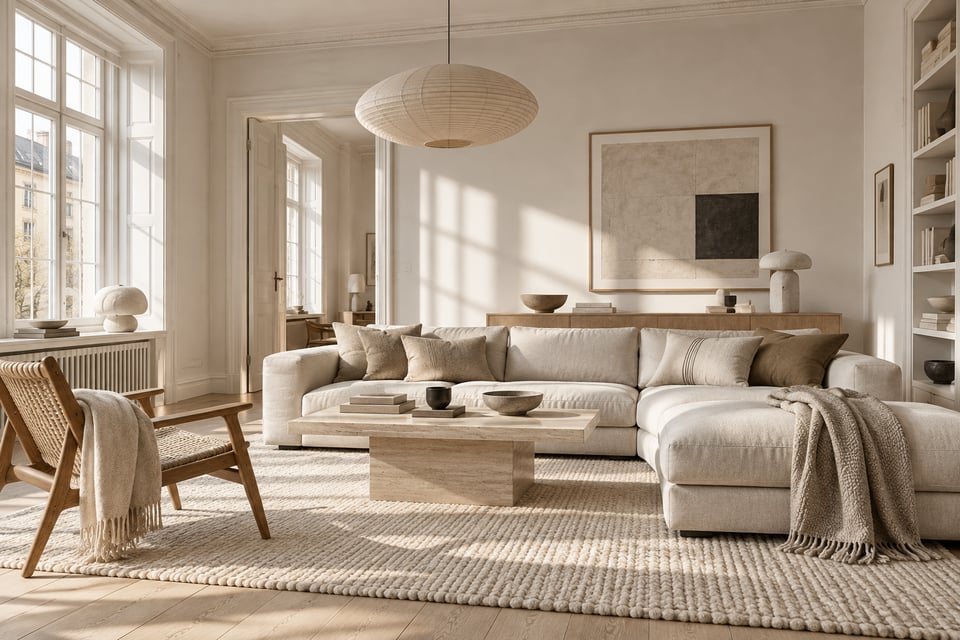
Light, wood and function before decoration. What actually makes a room feel Scandinavian.
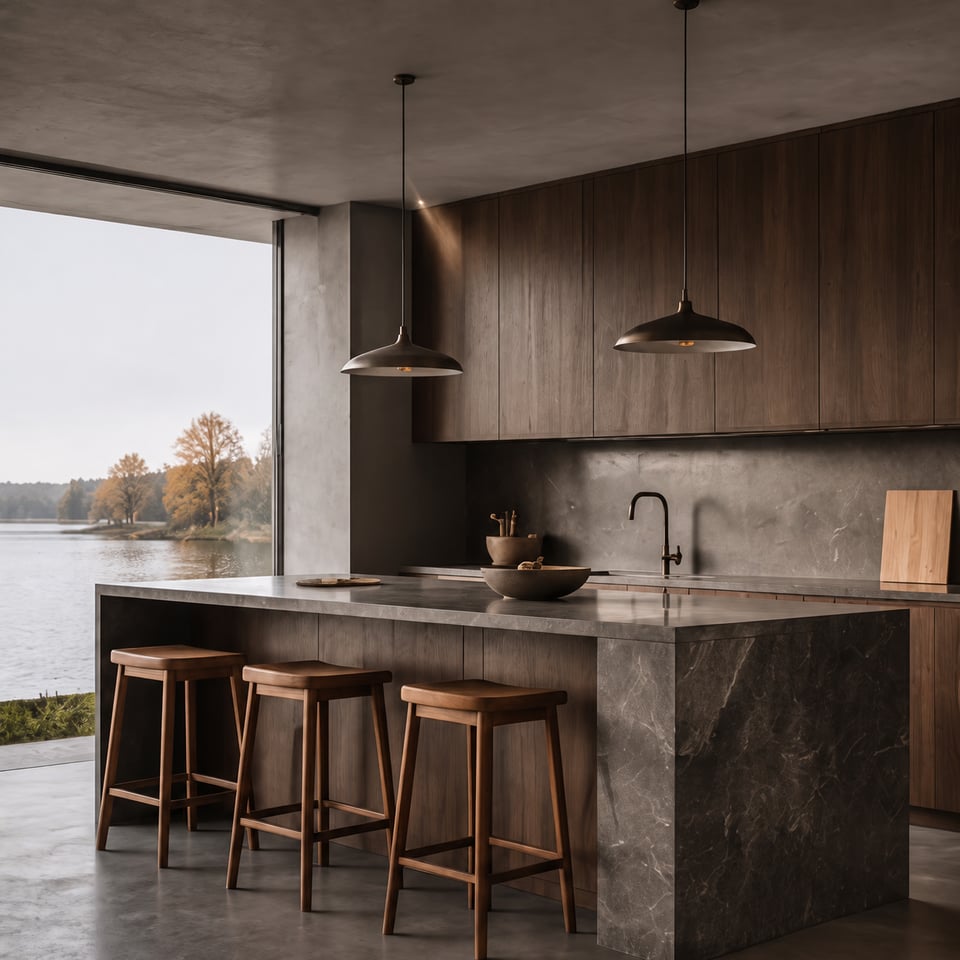
Muted colours, dark wood and pronounced materials. The Nordic tradition with depth instead of brightness.
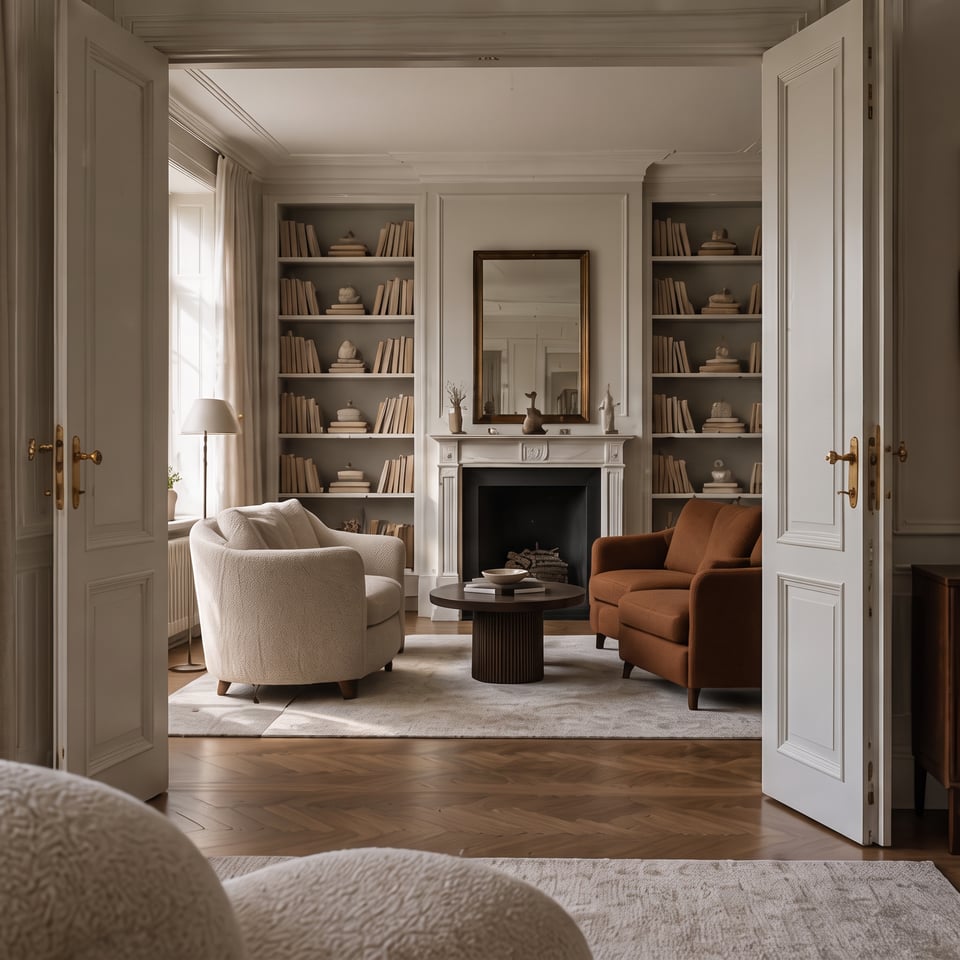
Stucco, panelled doors and herringbone parquet already do the work. The rest is about not competing with them.
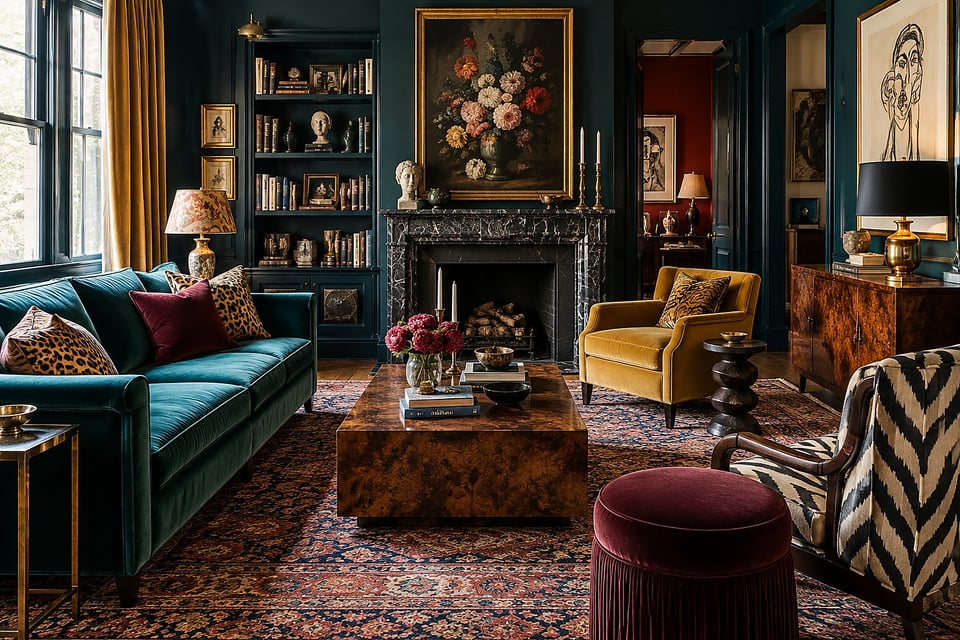
Inherited pieces, finds and new purchases in the same room. What holds it together is rarely the style — it is the palette.
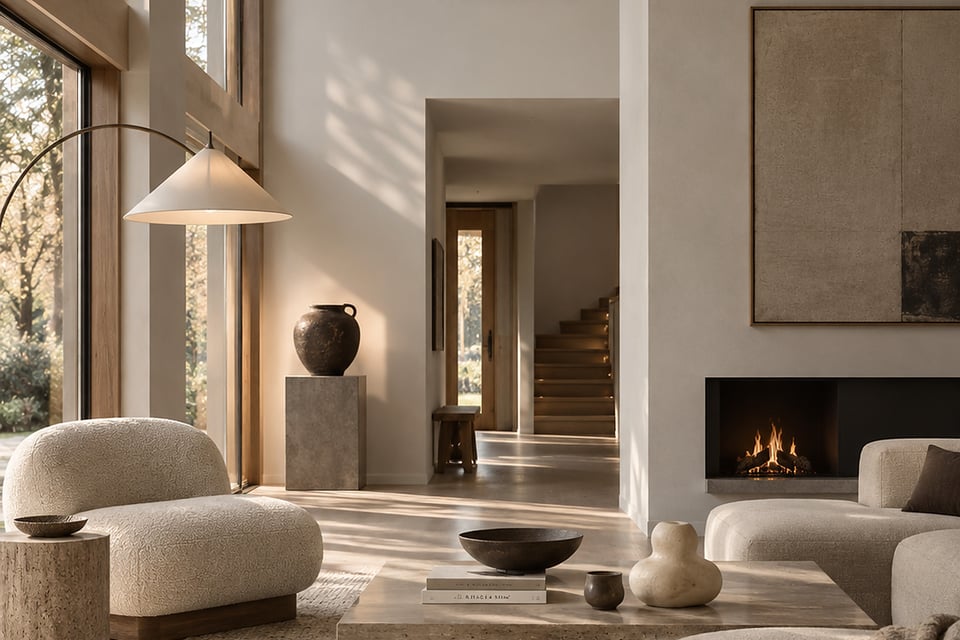
Minimalism is rarely about owning little. It is about choosing what is allowed to remain visible.
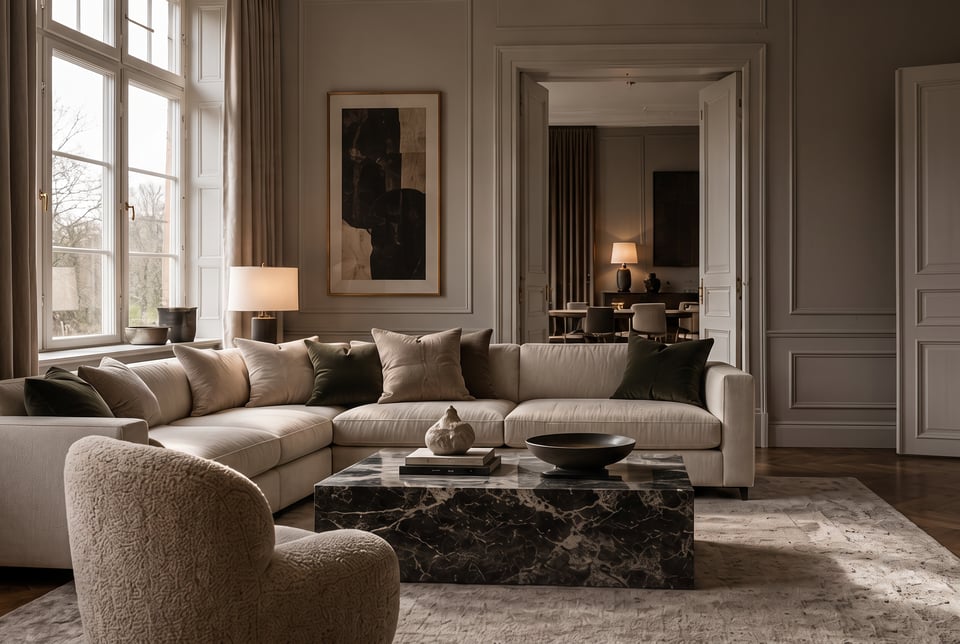
One of Sweden's most common interior colours is also one of the hardest to get right. Three levels of lightness are enough to create depth.
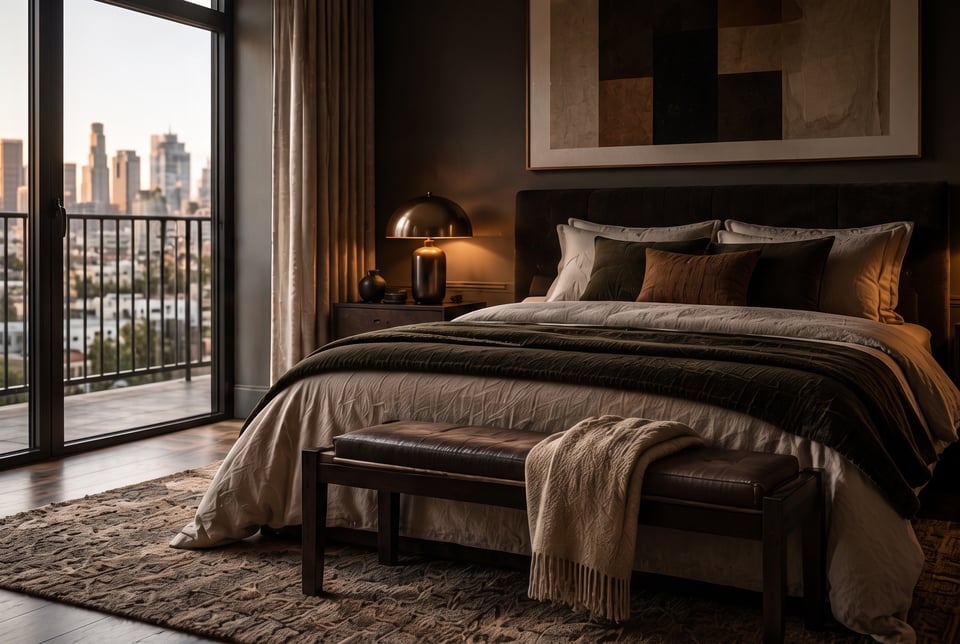
Brown brings warmth where black brings severity. How to use it across large surfaces without weighing down the room.
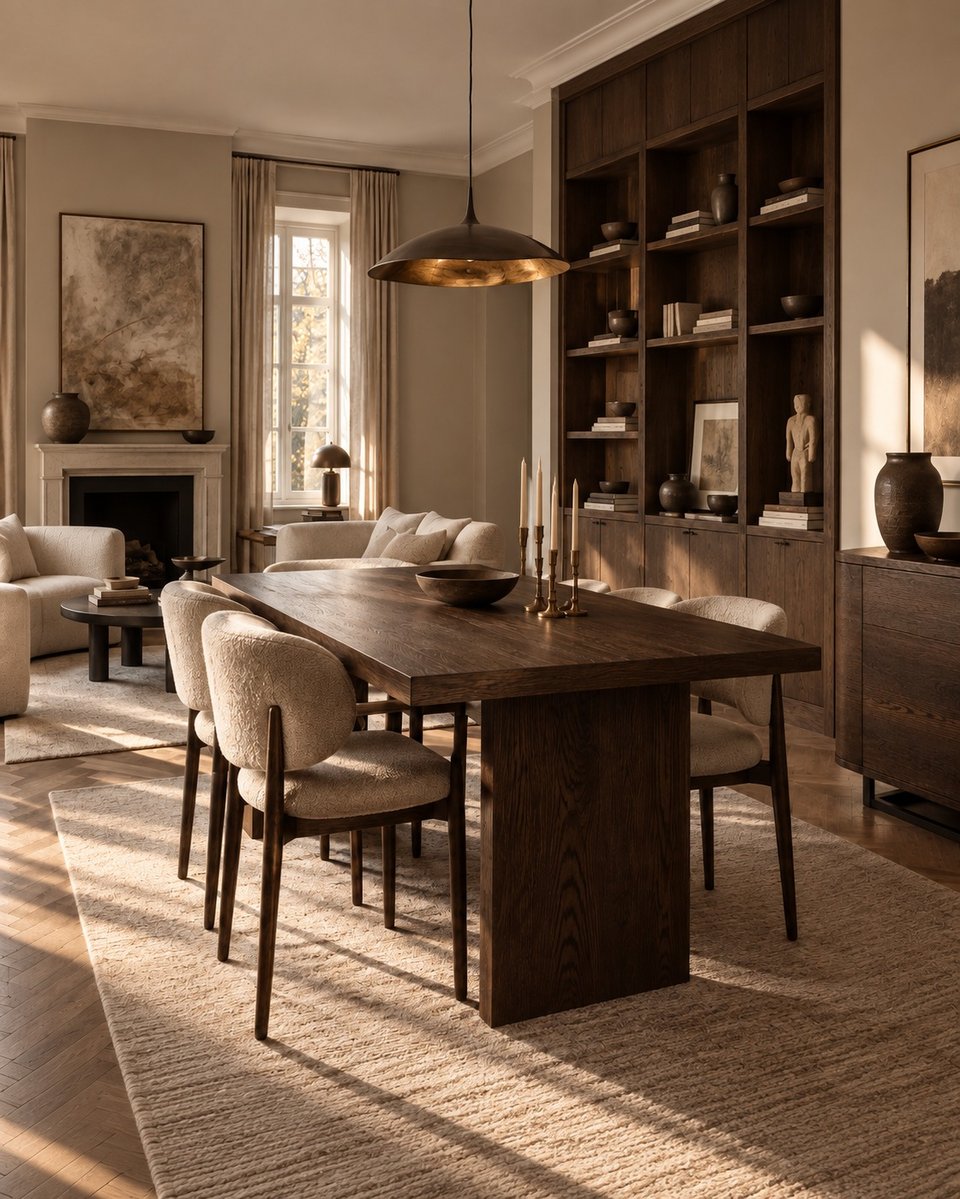
Visible grain, a hard-wearing surface and enough weight to anchor a room without making it dark. How to combine dark oak.
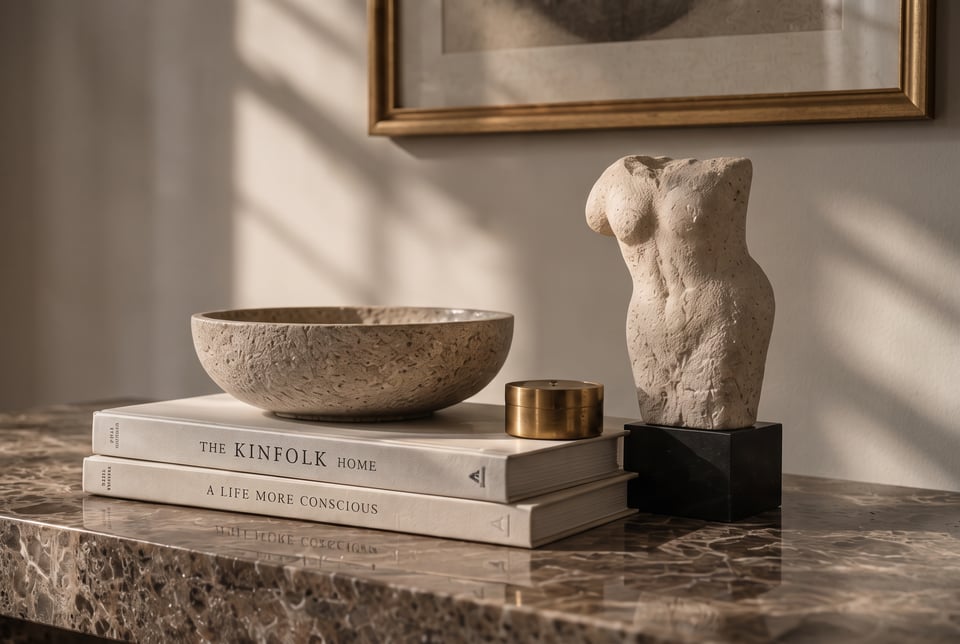
Travertine, limestone and marble belong to the same family but behave very differently. How to choose the right one.
Light, wood and function before decoration. What actually makes a room feel Scandinavian.
Read the guideFewer objects, longer lifespans and materials that are allowed to age visibly. How to create a Japandi room that lasts.
Read the guideTextiles soften sound, filter light and make a room feel finished. Linen, wool and bouclé in practice.
Read the guide