Style guide
Minimalist interiors – order before quantity
Minimalism is rarely about owning little. It is about choosing what is allowed to remain visible.
Read the guideJapandi brings together Japanese restraint and Scandinavian warmth. Here are rooms where the palette and the materials carry the space.
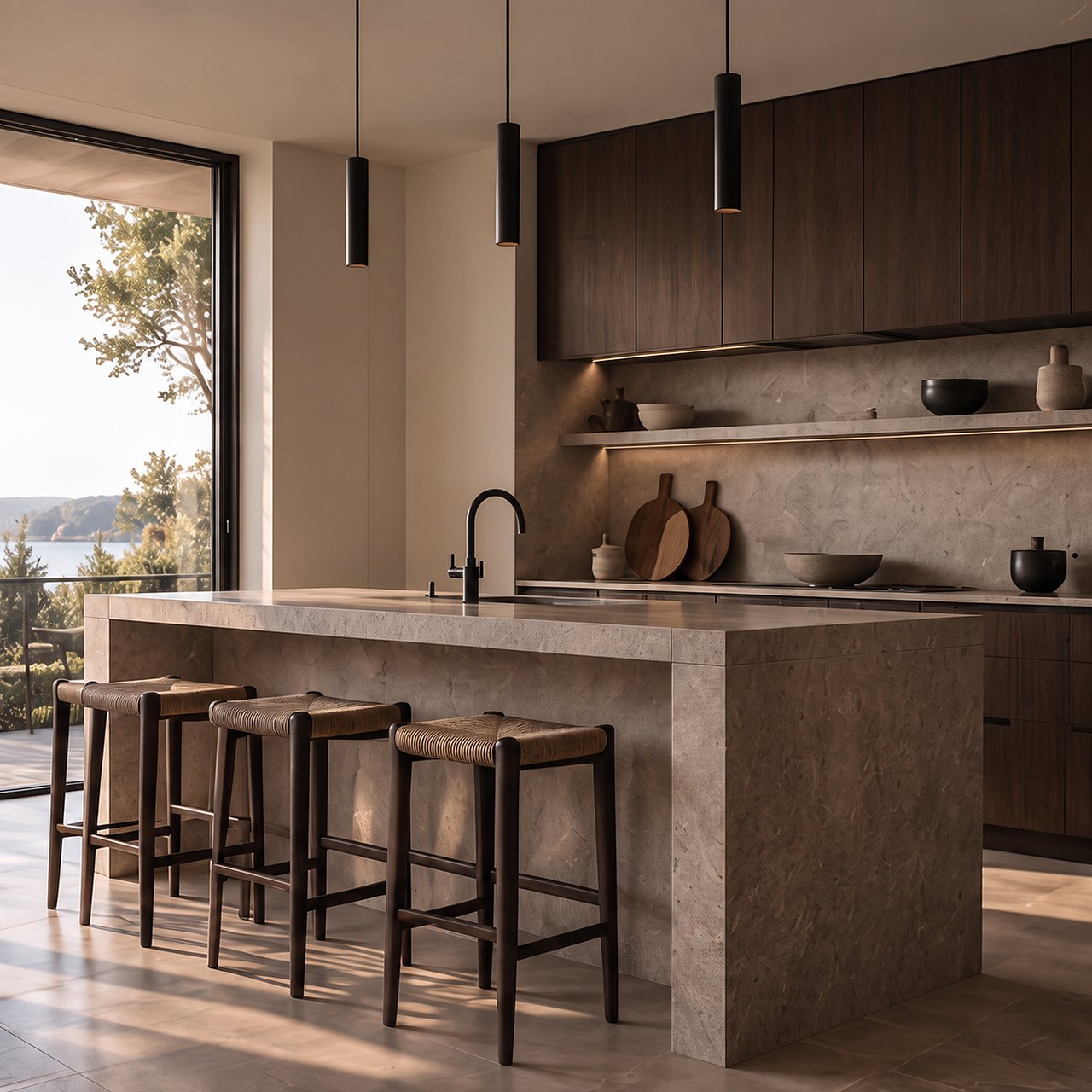
Japandi is not a decorative style but a way of thinking. Japanese restraint meets Scandinavian warmth: fewer objects, longer lifespans and materials that are allowed to age visibly.
The room should feel calm before it is even fully furnished. Low silhouettes, empty surfaces that are allowed to stay empty, and a palette kept within only a few steps. It is the contrast between pale paper and dark wood that carries the look, not the amount of decoration.
Use off-white, beige or greige as the base on the walls. Against it, add black and brown in small amounts — the back of a chair, a lamp shade, a ceramic bowl. Avoid spreading the dark tones evenly; let them gather at a few points in the room.
Dark oak and walnut add weight. Linen and wool soften the room. Paper, ceramics and untreated stone add irregularity, which is what separates Japandi from pure minimalism.
No published interiors in this category yet. Explore the full archive under Inspiration.
Minimalism is rarely about owning little. It is about choosing what is allowed to remain visible.
Read the guideVisible grain, a hard-wearing surface and enough weight to anchor a room without making it dark. How to combine dark oak.
Read the guideTextiles soften sound, filter light and make a room feel finished. Linen, wool and bouclé in practice.
Read the guide