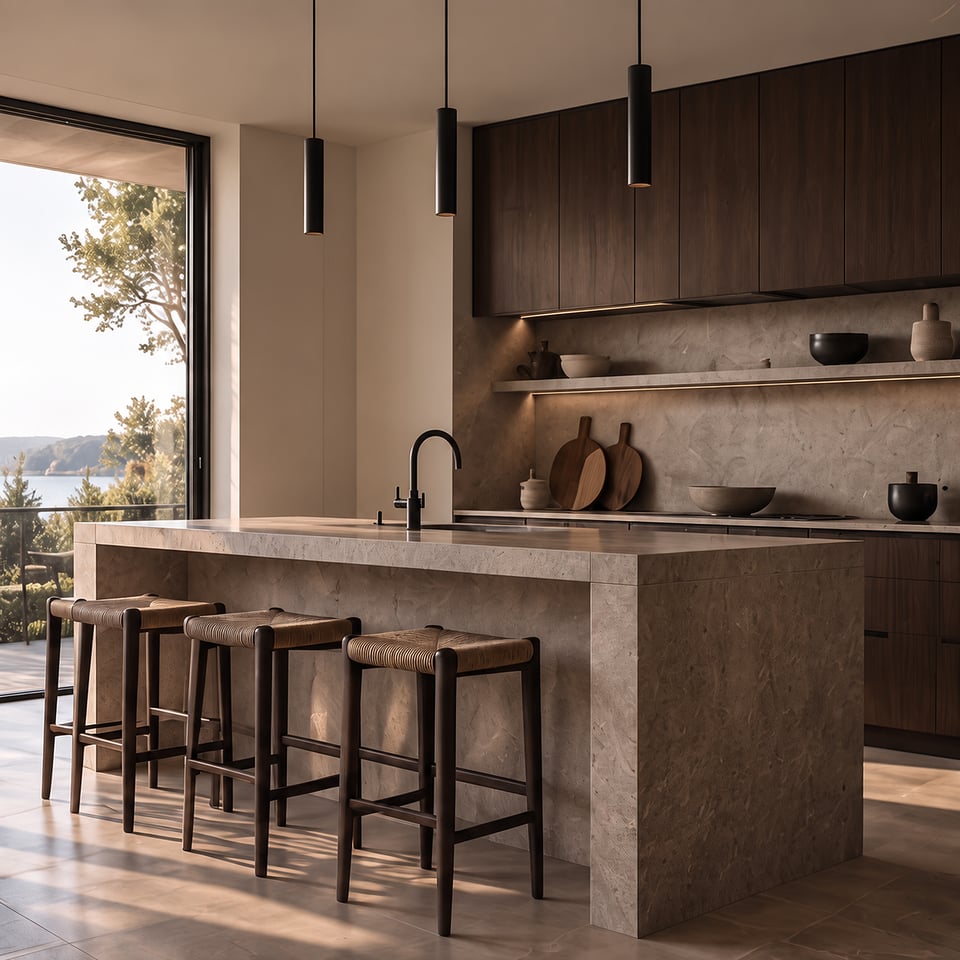
Style guide
Japandi – where Scandinavian meets Japanese
Fewer objects, longer lifespans and materials that are allowed to age visibly. How to create a Japandi room that lasts.
Blackout, a headboard and layered lighting shape how the room works. How to plan a bedroom around sleep first, appearance second.
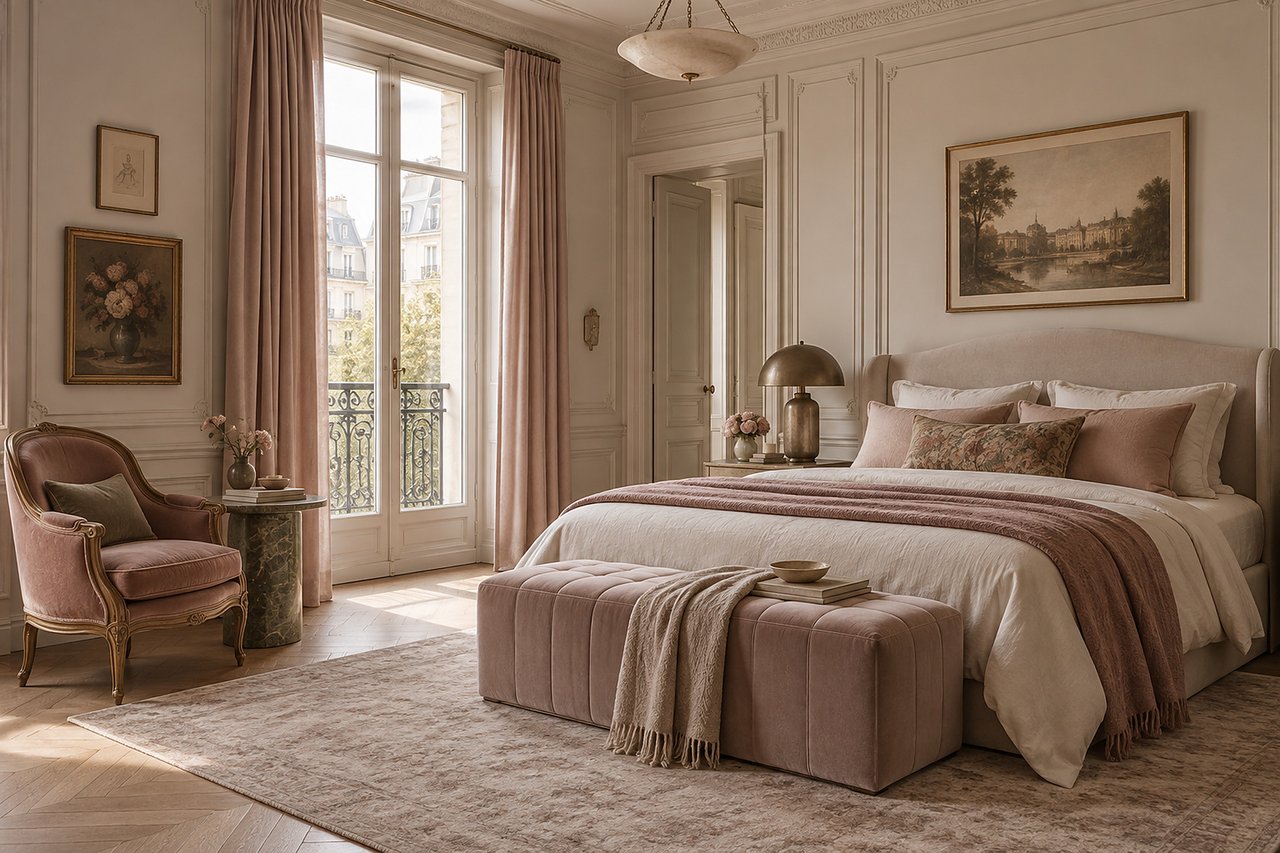
The bedroom is often the least-planned room, despite how much it affects everyday life. A room planned for sleep first and looks second almost always turns out more beautiful anyway — fewer pieces of furniture, quieter surfaces and light you can turn down.
Start with the bed and the space to walk around it. Allow at least 60–70 cm of clear passage on both sides if there are two of you. Place the bed against a full wall, not under a window if that can be avoided, and not wedged into a corner — a bed you can only make from one side never gets made properly.
The headboard is the largest vertical surface in the room and the cheapest way to give it character. An upholstered headboard in wool or linen dampens sound and feels soft against your back. Timber gives cleaner lines. A built-in panel or painted panelling behind the bed works where the room lacks architecture.
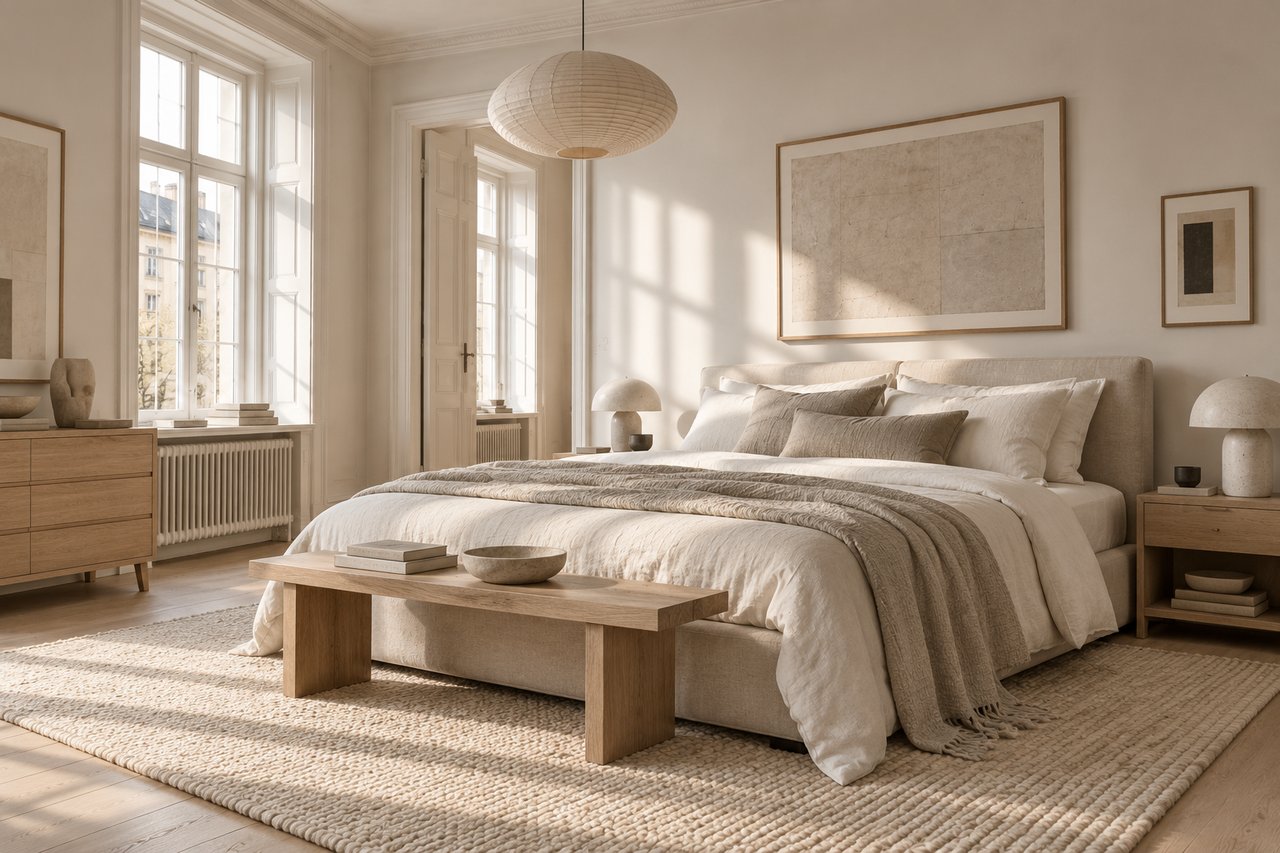
The ceiling light in a bedroom is rarely used and should not be the main light. Plan instead for reading lights on both sides of the bed, at a height where the light falls on the page rather than on the face of whoever is asleep. Add one low light source elsewhere in the room for the evening, and dimmers where possible.
Blackout and window textiles solve two different things and need not be the same thing. The functional part — a roller blind, pleated blind, blackout lining or dense slats — controls the light. The decorative part frames the window and softens the room. They can be combined, with a lighter curtain hanging outside a functional solution, but a densely woven, lined fabric can just as well do both jobs on its own. What suits you depends on the orientation, the depth of the window and how sensitive to light you are.
Linen breathes and improves with washing but creases; cotton sateen is cooler and smoother; wool across the foot of the bed adds warmth without weight. Choose by how warm you sleep, not by how the bed looks freshly made. In practice, count on two sets per bed.
Wardrobes flush with the wall, in the same shade as the wall, disappear. Freestanding furniture in the middle of a small bedroom makes it tighter than it is. The top of the bedside table should sit roughly level with the mattress, or it is awkward to reach from lying down.
Saturated, muted tones work particularly well in the bedroom — dark green, brown, deep blue-grey — because the room is usually seen in lower light and softened by textiles. An all-white bedroom easily turns cold in the evening.
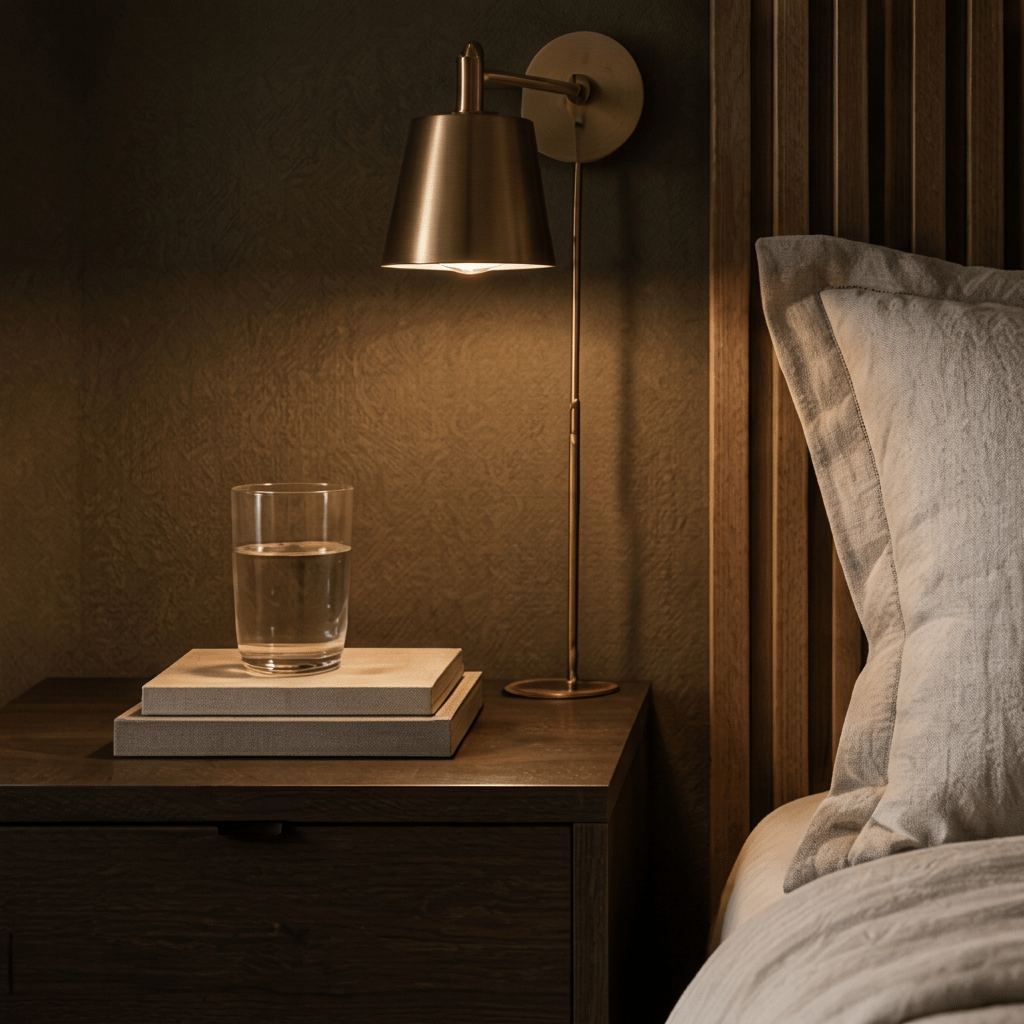
Fewer objects, longer lifespans and materials that are allowed to age visibly. How to create a Japandi room that lasts.
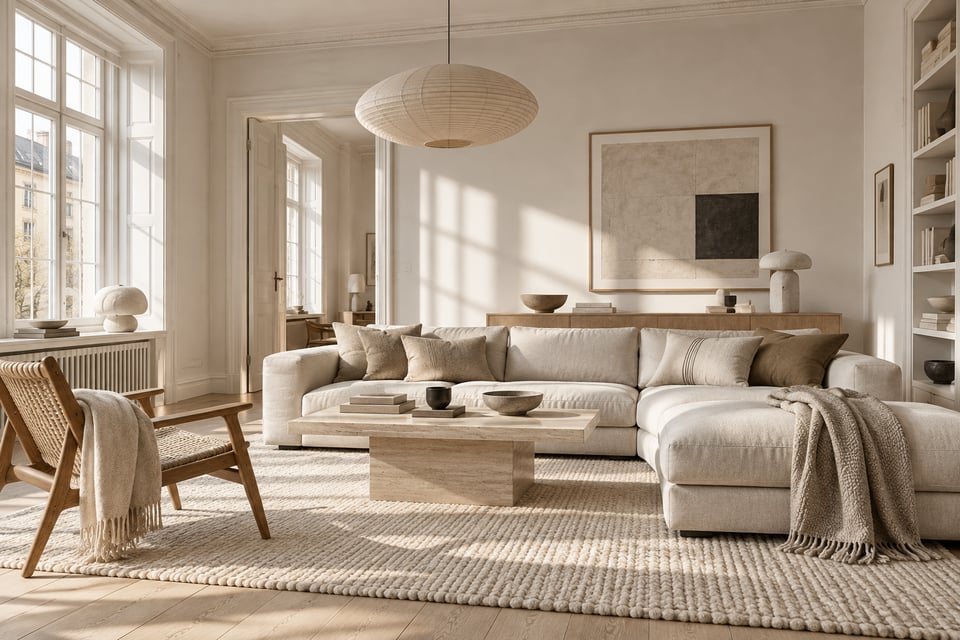
Light, wood and function before decoration. What actually makes a room feel Scandinavian.
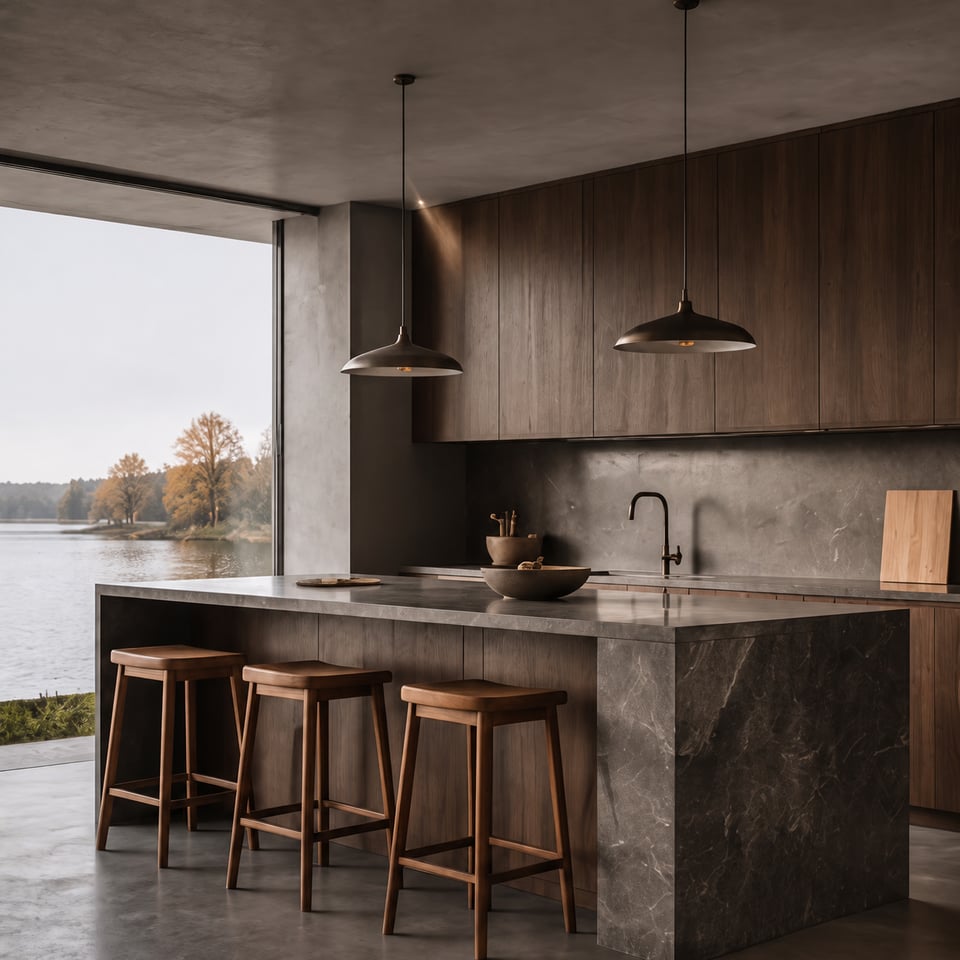
Muted colours, dark wood and pronounced materials. The Nordic tradition with depth instead of brightness.
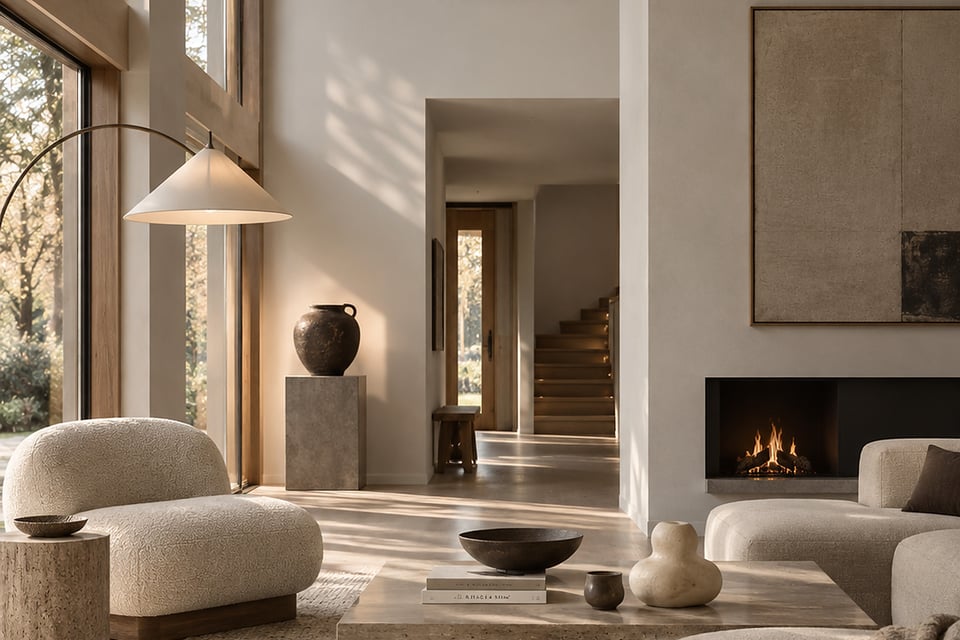
Minimalism is rarely about owning little. It is about choosing what is allowed to remain visible.
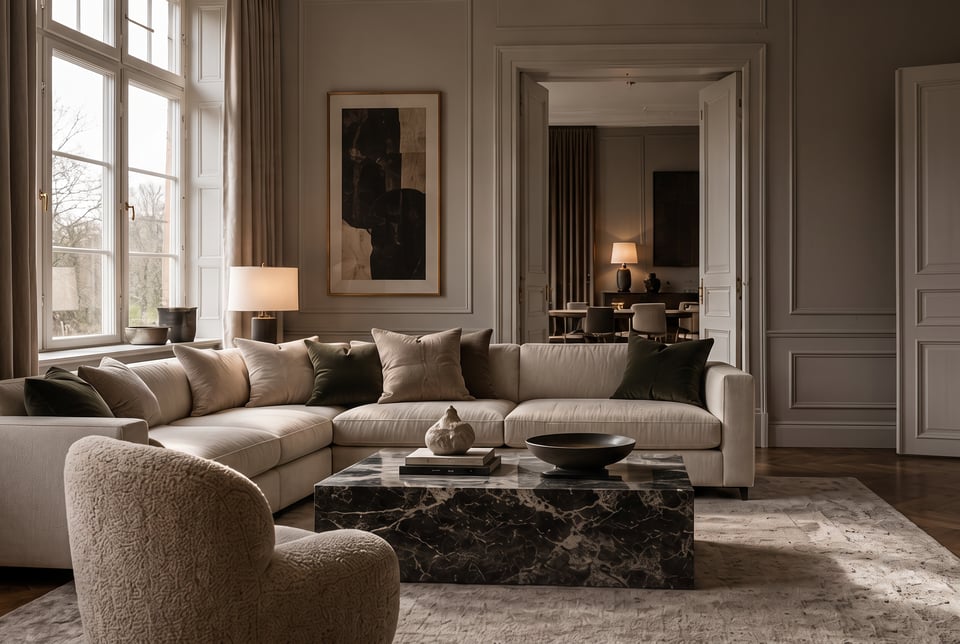
One of Sweden's most common interior colours is also one of the hardest to get right. Three levels of lightness are enough to create depth.
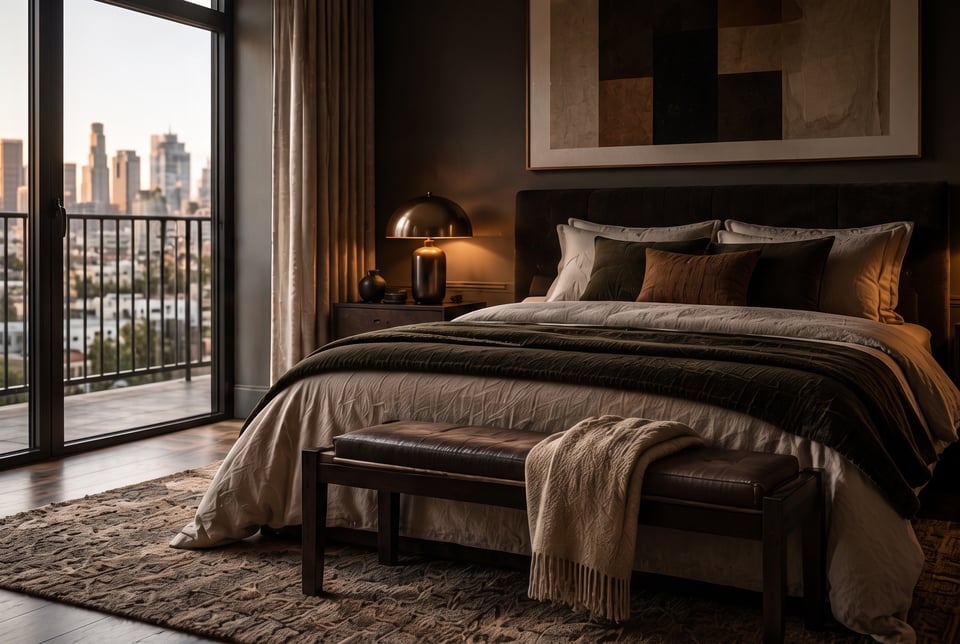
Brown brings warmth where black brings severity. How to use it across large surfaces without weighing down the room.
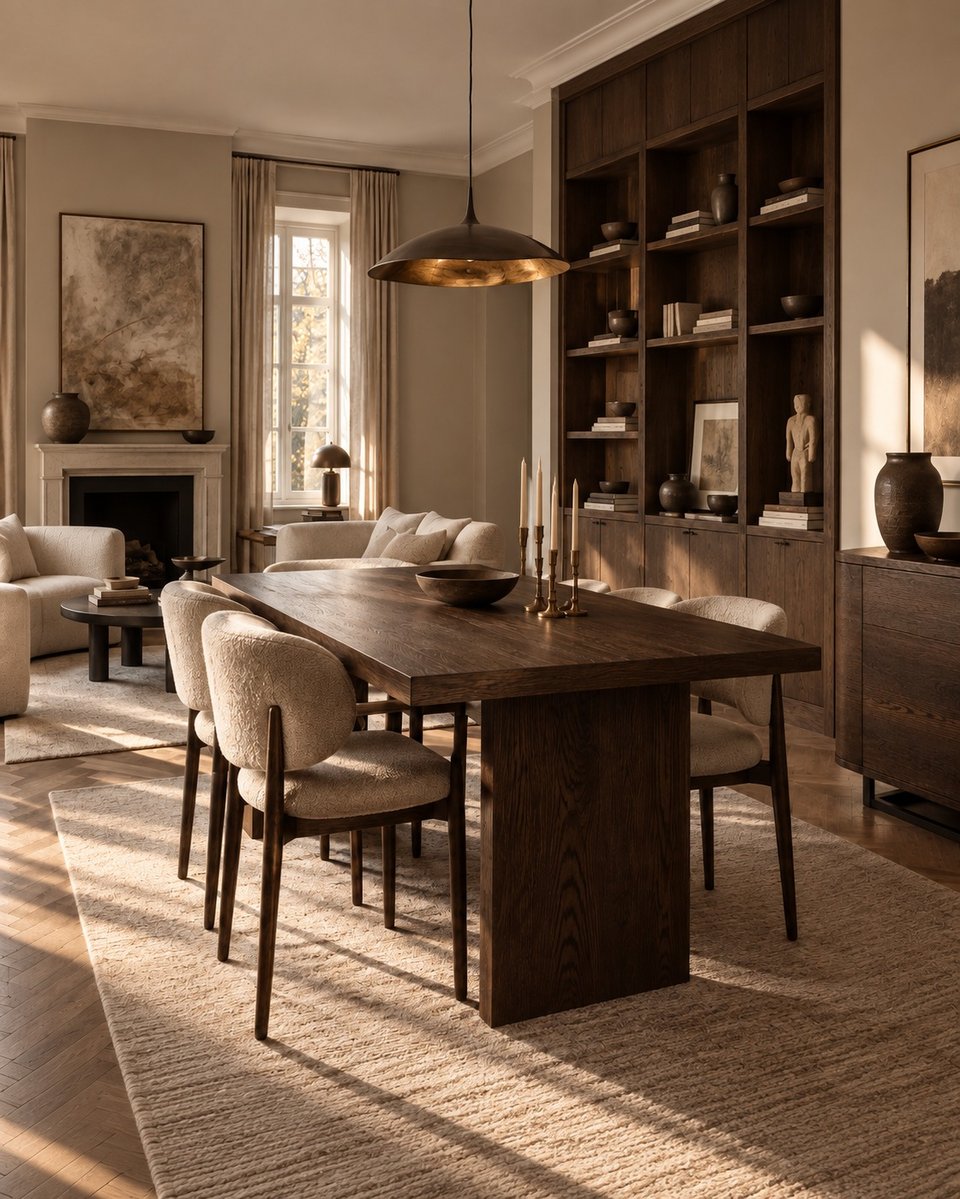
Visible grain, a hard-wearing surface and enough weight to anchor a room without making it dark. How to combine dark oak.

Textiles soften sound, filter light and make a room feel finished. Linen, wool and bouclé in practice.
Fewer objects, longer lifespans and materials that are allowed to age visibly. How to create a Japandi room that lasts.
Read the guideTextiles soften sound, filter light and make a room feel finished. Linen, wool and bouclé in practice.
Read the guideBrown brings warmth where black brings severity. How to use it across large surfaces without weighing down the room.
Read the guide