Style guide
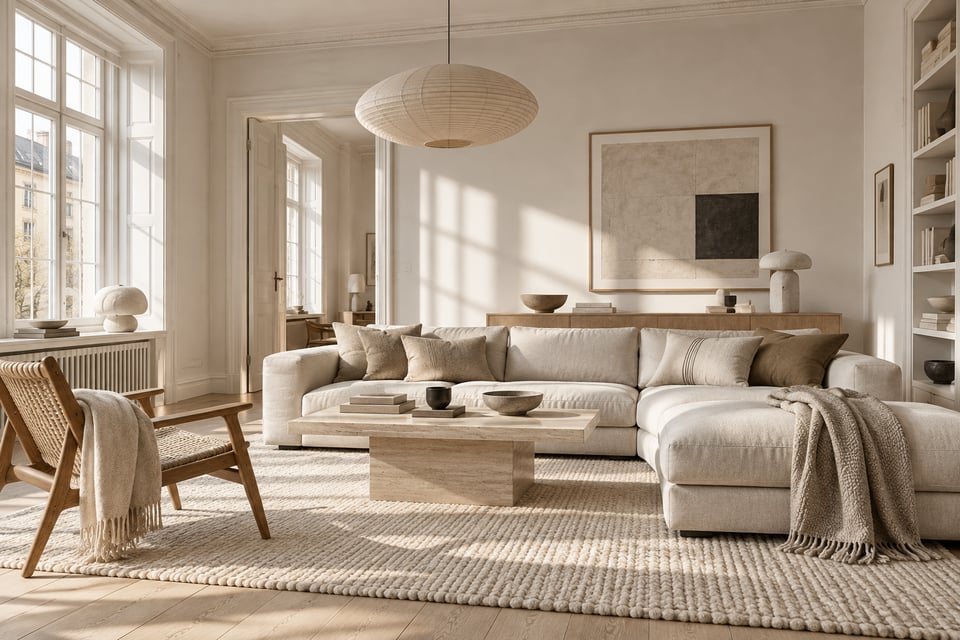
Scandinavian interiors – light comes first
Light, wood and function before decoration. What actually makes a room feel Scandinavian.
The hallway has the least floor space and the most functions. How to solve storage, hard-wearing floors and lighting in just a few square metres.
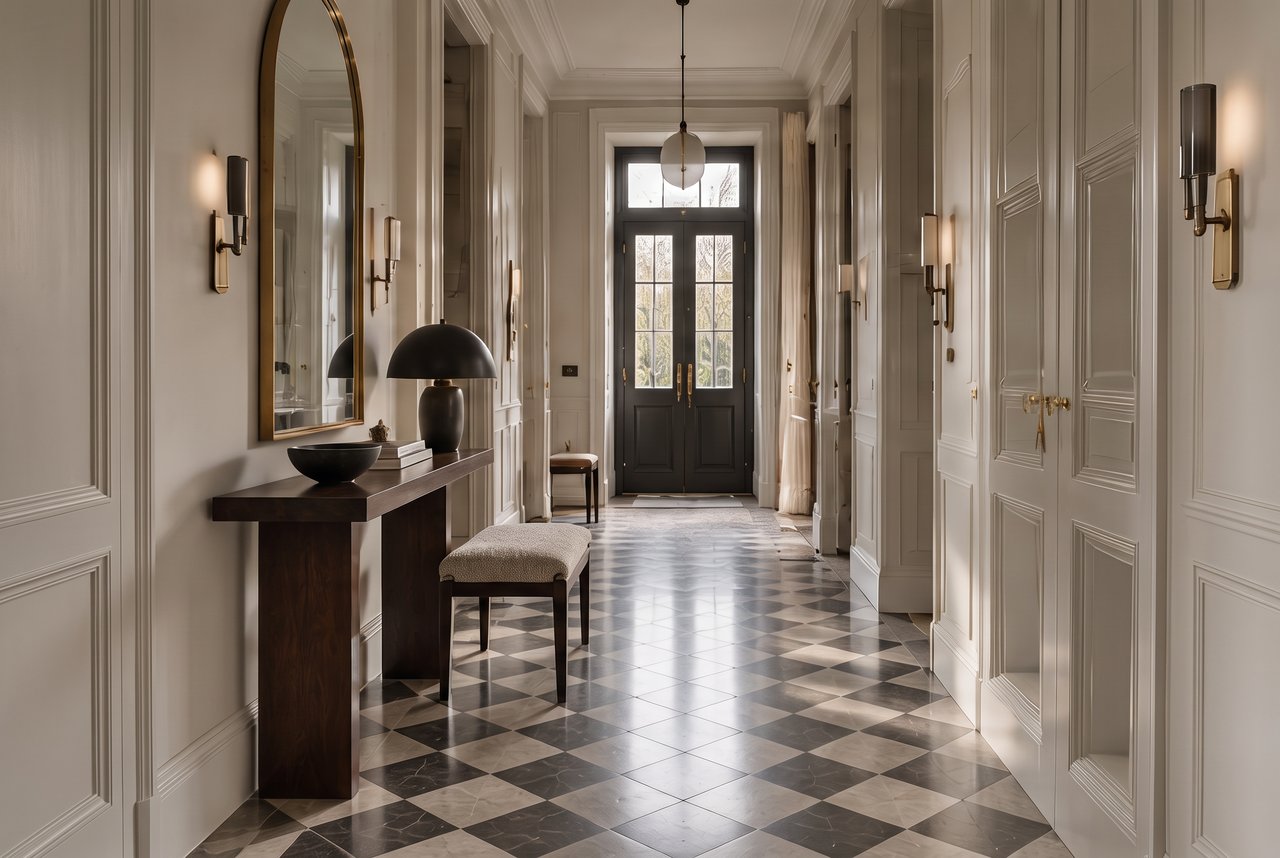
The hall has the smallest floor area and the most functions of any room in the home. It has to take coats, shoes, bags, post and keys, cope with wet and grit, and still be the first thing you see. It can work beautifully, but not without careful measurements.
Write down what really needs to fit on an ordinary weekday: the number of coats left hanging, the shoes in use, one bag per person, post and keys. That is very different from the empty hall we tend to design for. Halls often fail because they were planned for how they look when nothing is in them.
A wardrobe needs 60 cm of depth for clothes to hang straight; 40 cm is enough if you hang on a front-facing rail. Clear passage should be at least 80 cm, preferably more where the front door swings inwards. Check the door swing and the consumer unit before anything is drawn — they govern more than taste does.
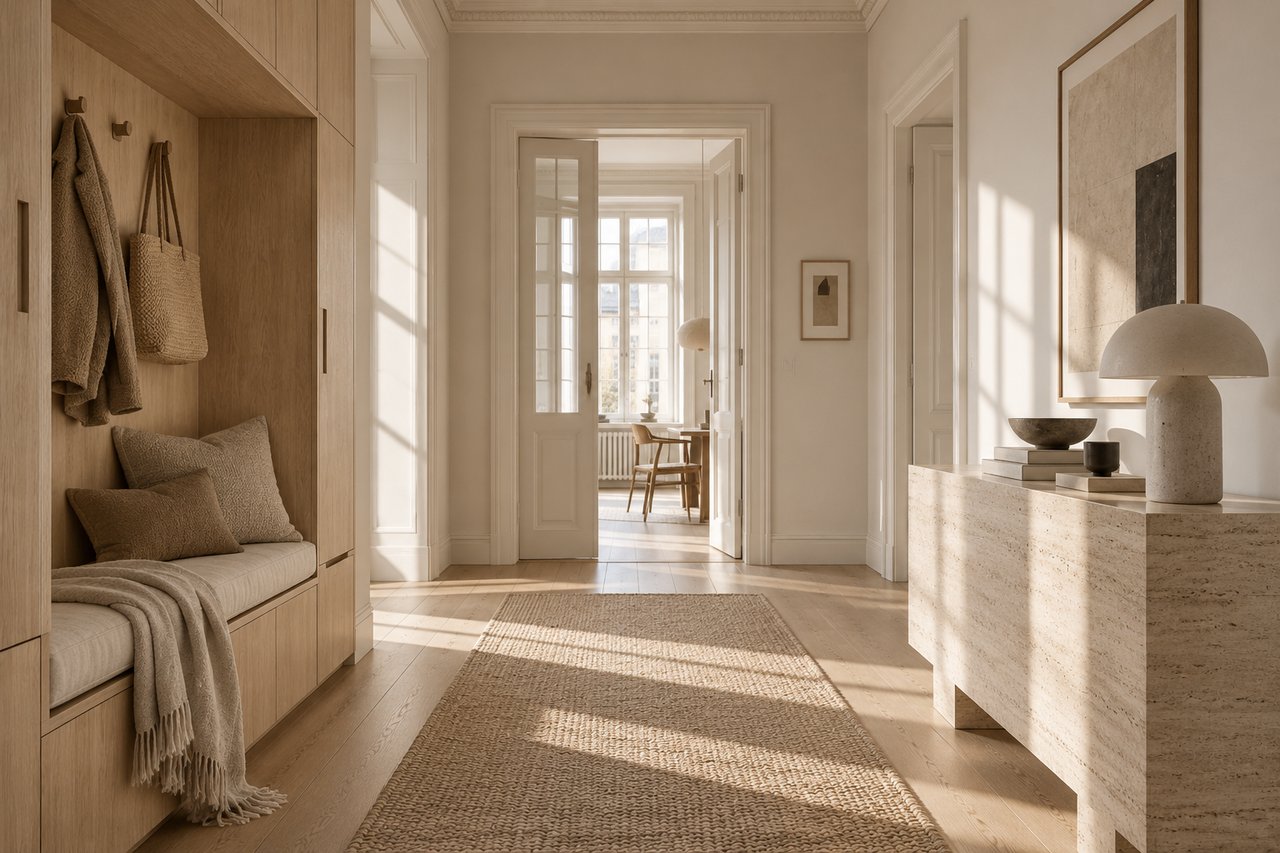
A floor-to-ceiling joinery solution often makes sense in a hall, since every centimetre counts and awkward dimensions are rarely catered for off the shelf. Freestanding storage is right when the hall is large enough to breathe, or when you want to be able to change your mind.
A hall floor meets grit, salt and melting snow. Porcelain and limestone handle it best and can be combined with underfloor heating that dries shoes. Timber works well if there is a hard-wearing zone nearest the door. A rug has to be washable, or it ends up in the laundry permanently.
A seat by the door is used every day — taking off boots standing up is difficult. A narrow shelf at roughly waist height catches keys, post and gloves and stops the kitchen counter becoming an extension of the hall.
The hall almost never has daylight, so the lighting has to do all the work. One or two wall lights beside the mirror give better light on the face than a ceiling fitting in the middle of the room. A tall mirror can make a narrow hall feel much wider and is one of the simplest improvements available.
Since the hall has no daylight, there is no reason to try to rescue it with white. A saturated, dark shade on walls and joinery turns the room into an intentional pause between outside and in — and makes the rooms beyond feel lighter as you step through.
Light, wood and function before decoration. What actually makes a room feel Scandinavian.
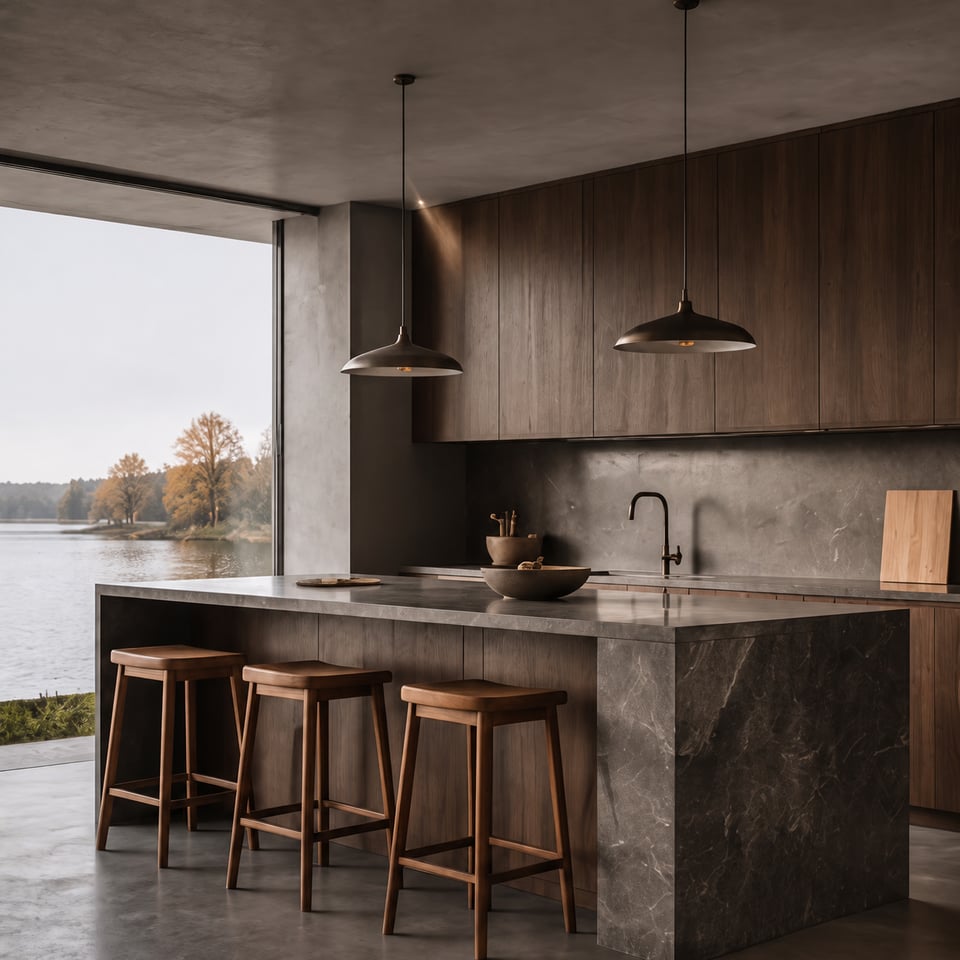
Muted colours, dark wood and pronounced materials. The Nordic tradition with depth instead of brightness.
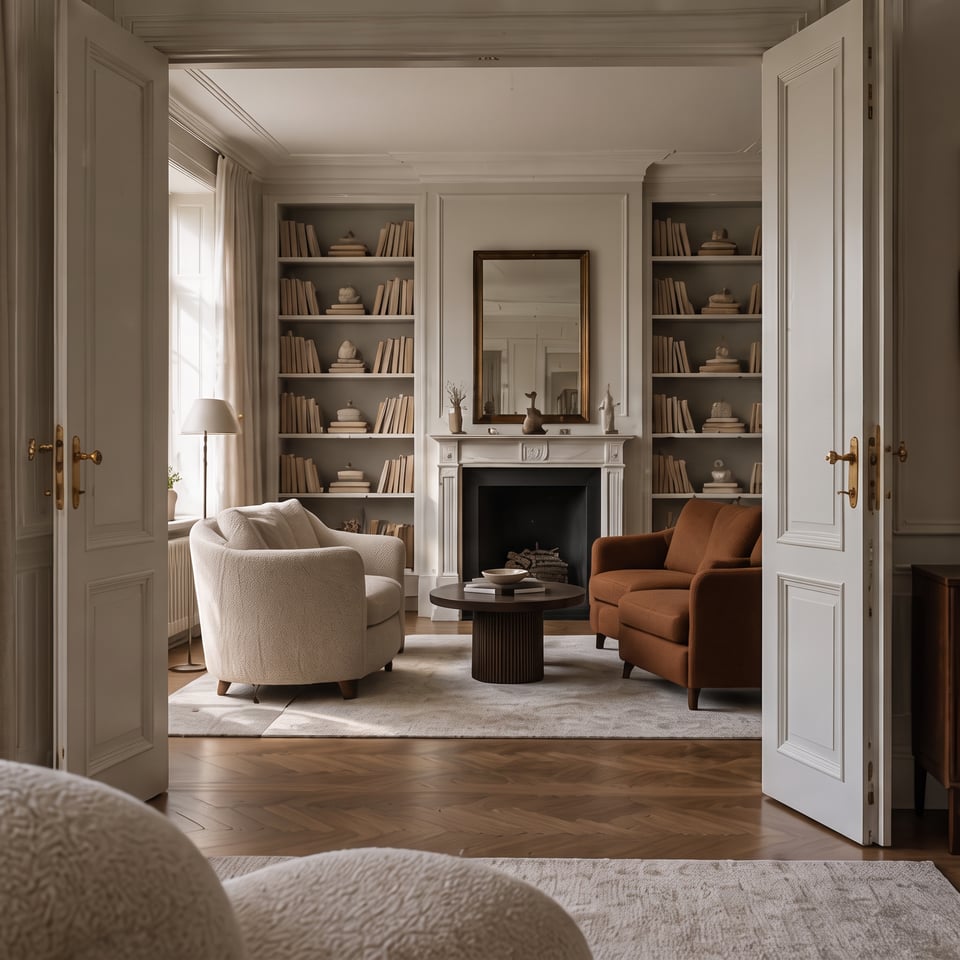
Stucco, panelled doors and herringbone parquet already do the work. The rest is about not competing with them.
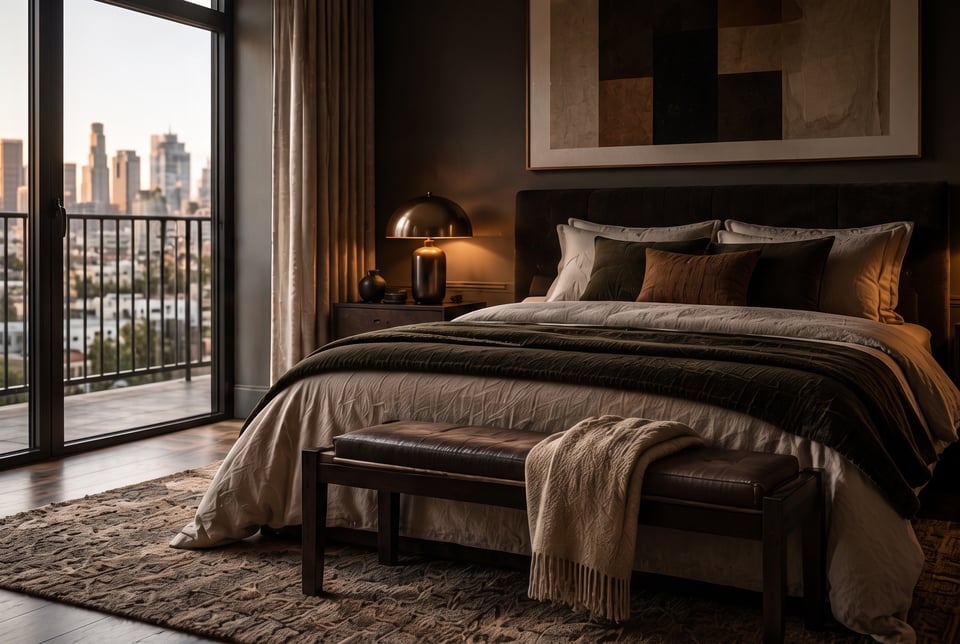
Brown brings warmth where black brings severity. How to use it across large surfaces without weighing down the room.
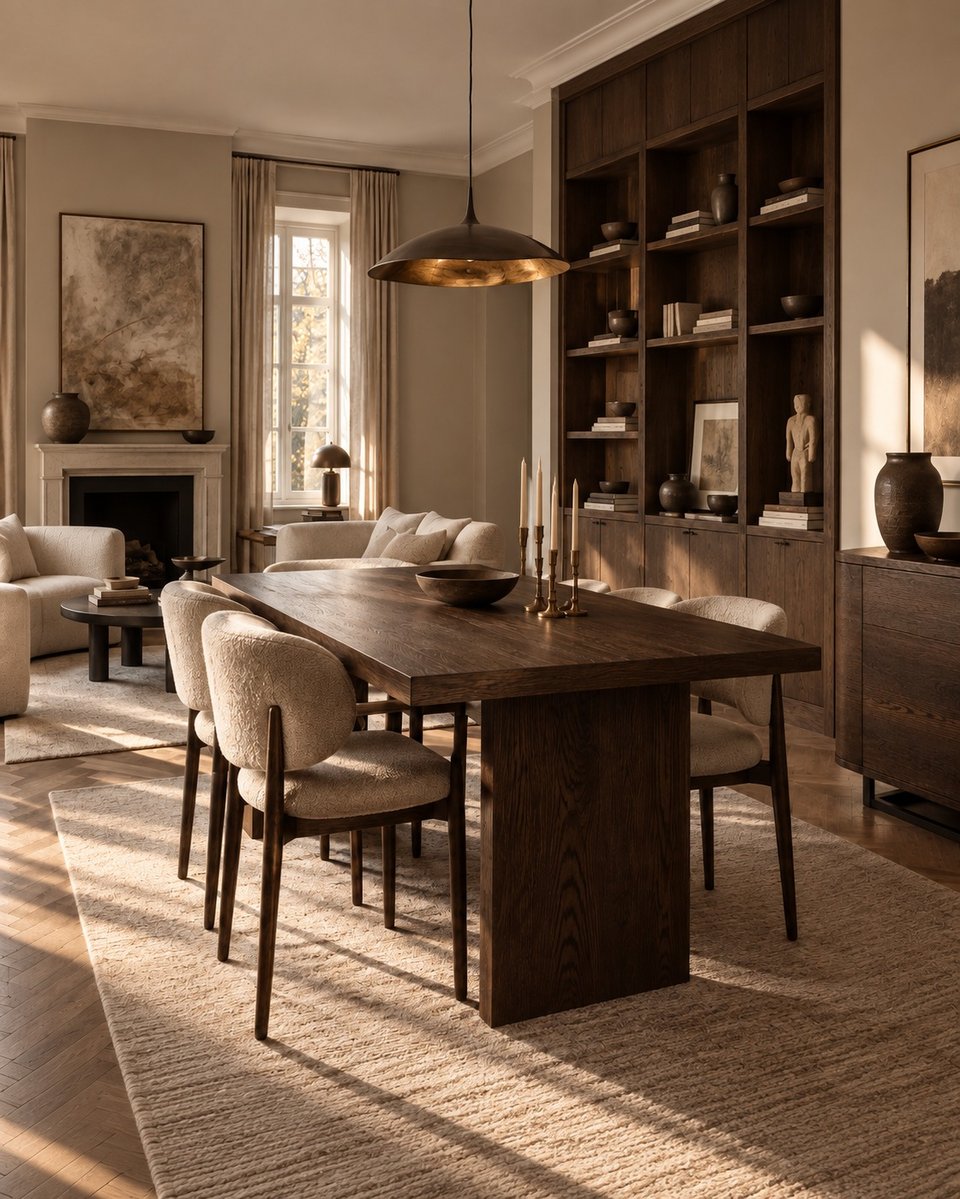
Visible grain, a hard-wearing surface and enough weight to anchor a room without making it dark. How to combine dark oak.
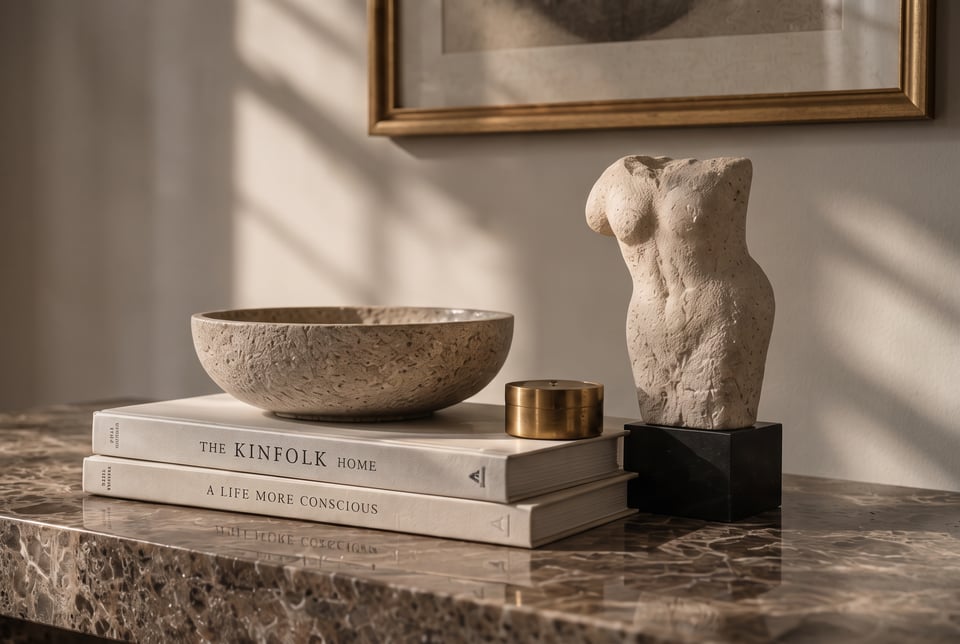
Travertine, limestone and marble belong to the same family but behave very differently. How to choose the right one.
Brown brings warmth where black brings severity. How to use it across large surfaces without weighing down the room.
Read the guideVisible grain, a hard-wearing surface and enough weight to anchor a room without making it dark. How to combine dark oak.
Read the guideStucco, panelled doors and herringbone parquet already do the work. The rest is about not competing with them.
Read the guide