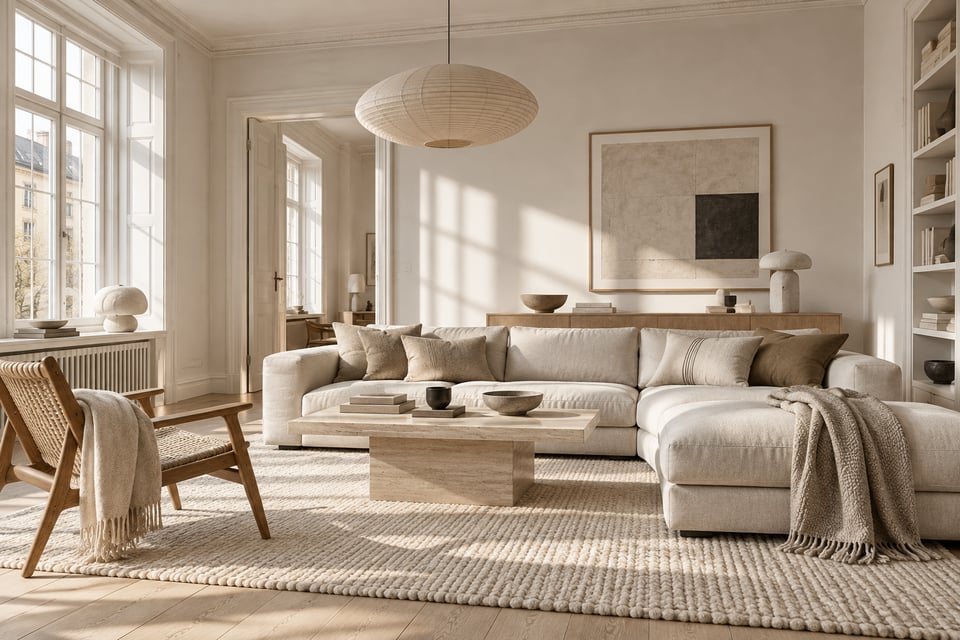
Style guide
Scandinavian interiors – light comes first
Light, wood and function before decoration. What actually makes a room feel Scandinavian.
Tile format, grout colour and lighting at the mirror shape the room more than accessories do. A guide to the fixed decisions in a bathroom.
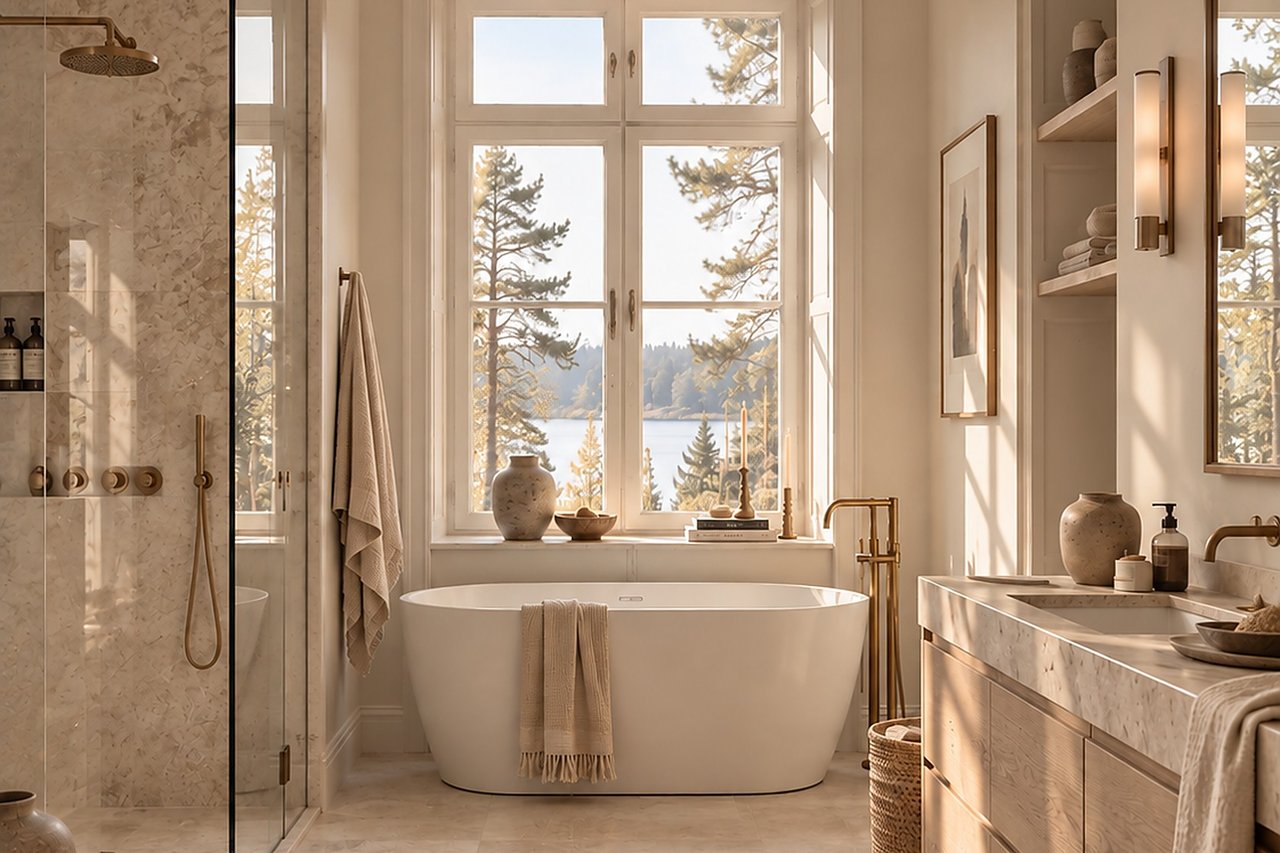
The bathroom is the room where decisions are hardest to change. Almost everything that shapes the impression is fixed: tile, grout, floor, the position of the drain and the light. Decorative details come last and cannot rescue poor fixed choices.
Plan drainage, underfloor heating, sockets and the position of the shower before you choose colours. A bathroom where the vanity stands wherever the pipes happened to sit always feels temporary. This is also where the budget is decided — moving pipes costs more than better tile.
The same tile looks entirely different depending on how it is laid. A horizontal half-bond is calm and traditional, a vertical stack makes the room feel taller, and a small format with pronounced grout gives a graphic surface. Grout colour is an active choice: tone on tone hides the pattern, contrasting grout makes it the main motif of the room.
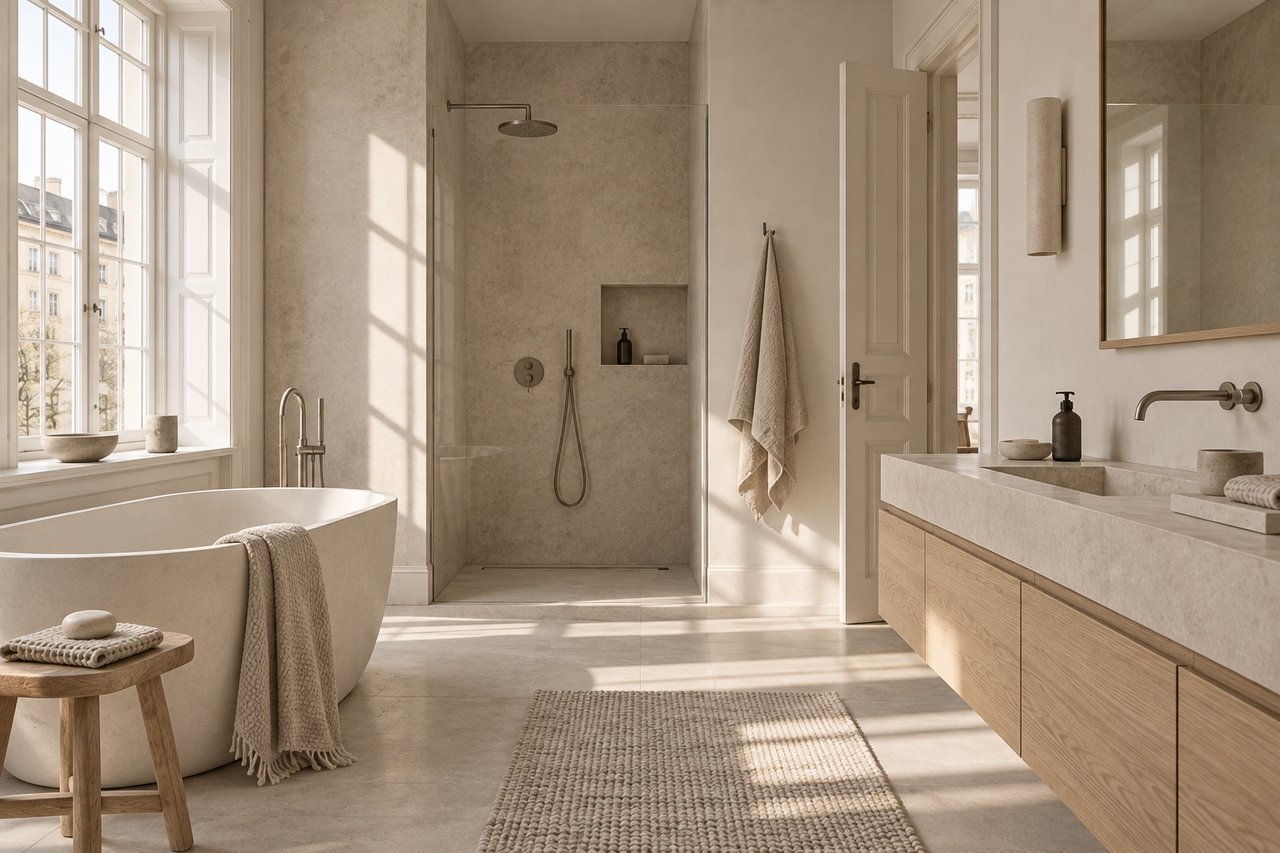
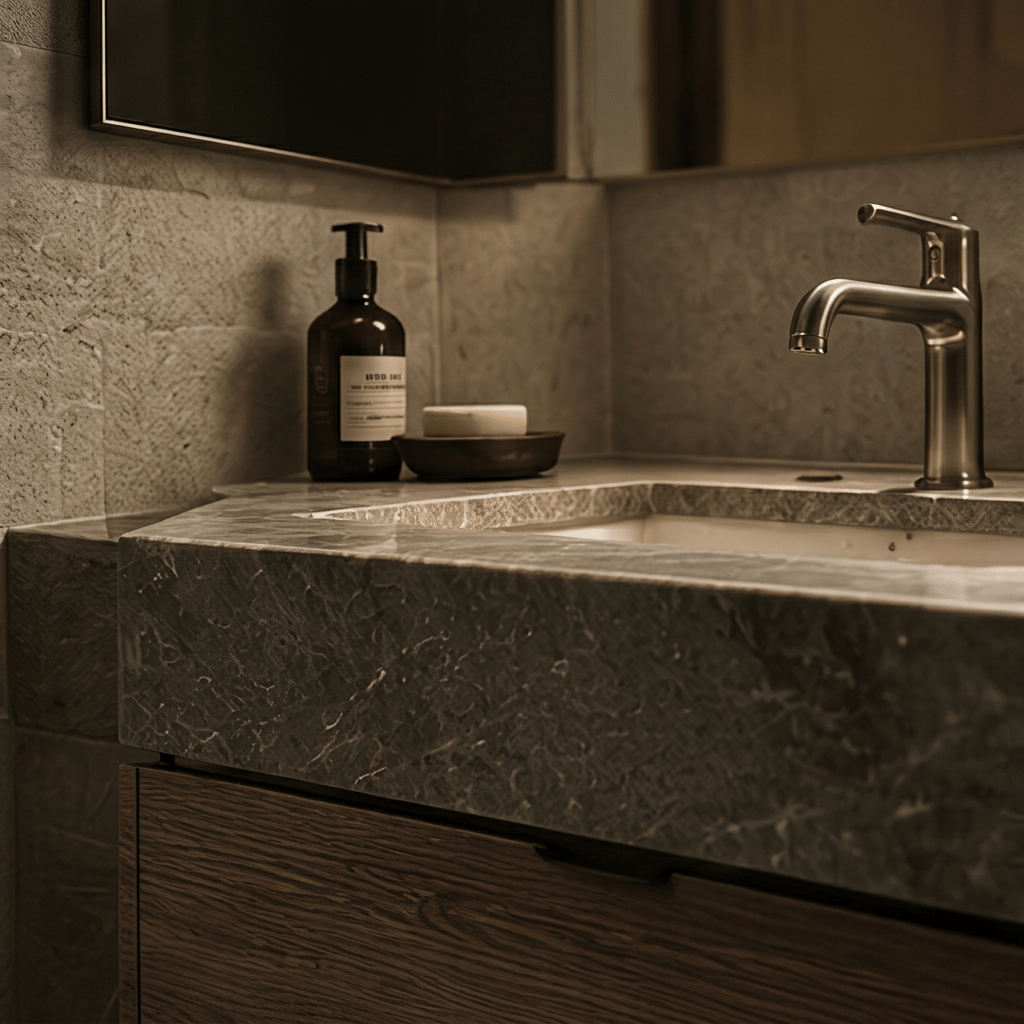
Limestone and marble give a bathroom calm and weight, but they are porous, do not tolerate acidic cleaners and need sealing. Expect patina. If you want the feel of stone without the upkeep, large-format porcelain creates much of the same effect.
The most important measurement in a bathroom is the clear surface beside the basin. Without it, everything ends up on the rim. A wall-hung vanity keeps the floor visible and the room larger; a higher counter, around 90 cm, is more comfortable than standard height for most adults.
Light straight from above casts shadows under the eyes. Place the light at the sides of the mirror, roughly at eye level, and add a general ceiling light. A dim night light near the floor is one of those details you appreciate most once you have it.
One consistent metal — all chrome, all brushed brass, all black — is the simplest way to make a bathroom feel coherent, and is almost always right in a small room. But deliberately mixed metals work too: keep one metal dominant in taps and visible fittings, and let the other return at a couple of smaller points, such as handles or hooks. What tends to jar is not the mix itself, but two metals in similar tones that look accidental.
In a few square metres you gain space by going wall-mounted: vanity, WC and hooks without legs. A shower behind clear glass rather than a curtain keeps the room visually whole. Fewer materials and fewer visible surfaces give a small bathroom more calm than pale colour does.
Light, wood and function before decoration. What actually makes a room feel Scandinavian.
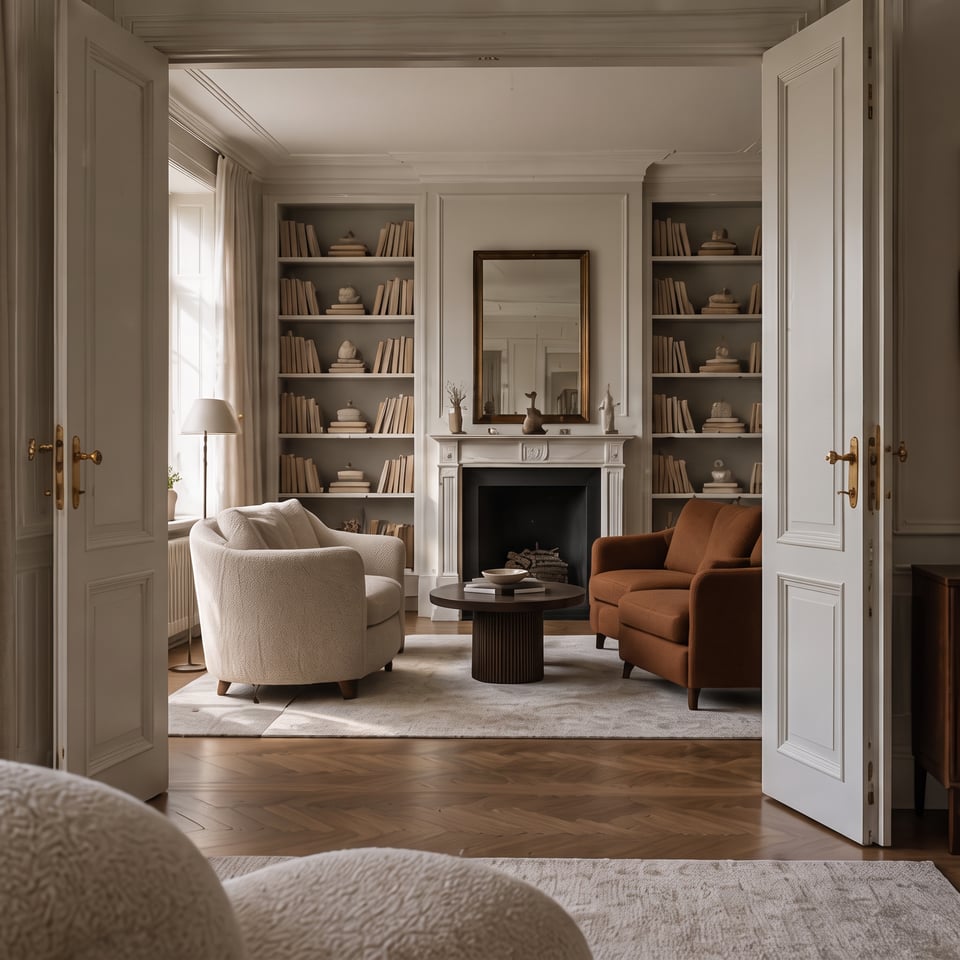
Stucco, panelled doors and herringbone parquet already do the work. The rest is about not competing with them.
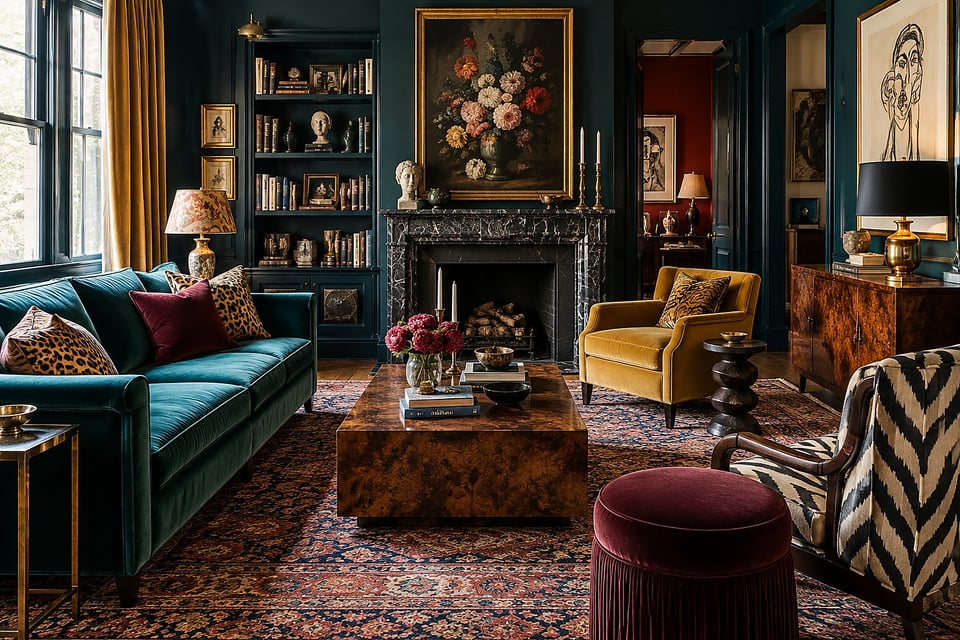
Inherited pieces, finds and new purchases in the same room. What holds it together is rarely the style — it is the palette.
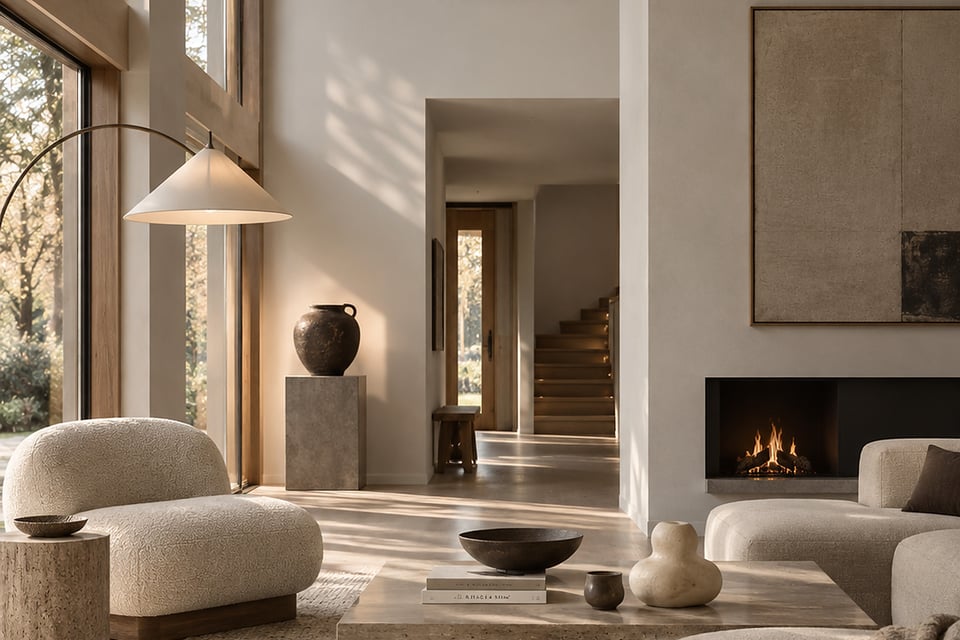
Minimalism is rarely about owning little. It is about choosing what is allowed to remain visible.
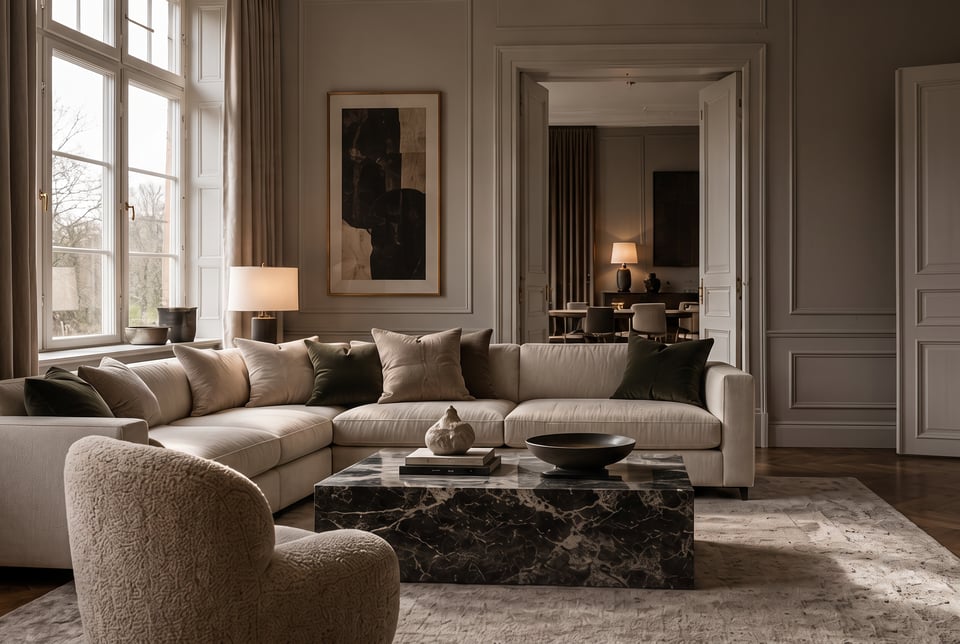
One of Sweden's most common interior colours is also one of the hardest to get right. Three levels of lightness are enough to create depth.
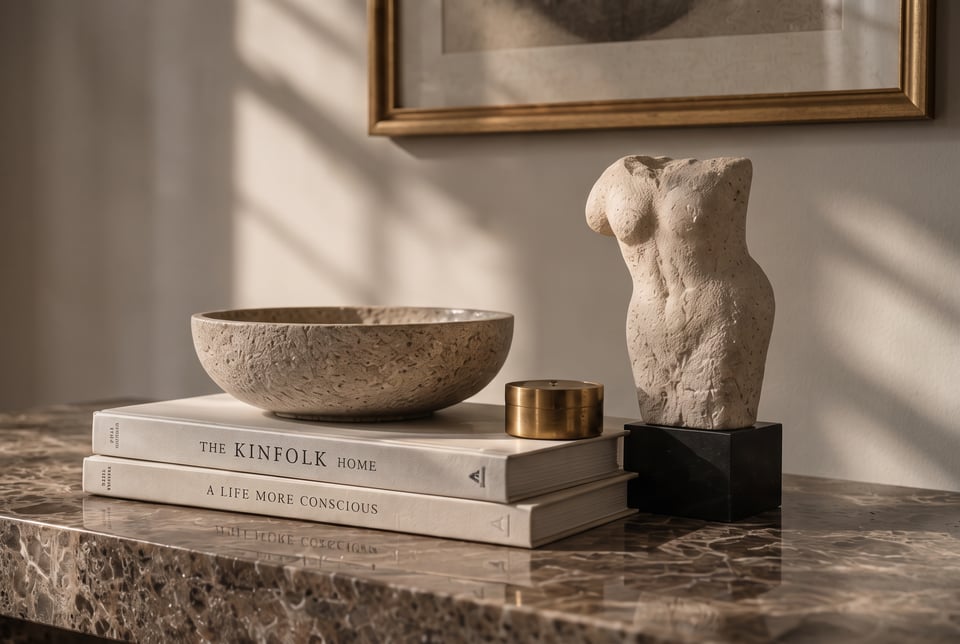
Travertine, limestone and marble belong to the same family but behave very differently. How to choose the right one.
Travertine, limestone and marble belong to the same family but behave very differently. How to choose the right one.
Read the guideStucco, panelled doors and herringbone parquet already do the work. The rest is about not competing with them.
Read the guideOne of Sweden's most common interior colours is also one of the hardest to get right. Three levels of lightness are enough to create depth.
Read the guide