Prestaged fixes
How to give a new-build home more character
Smooth walls, rows of spotlights and standard cabinet fronts. New builds are rarely ugly — they are neutral.
Read the guideThe difference between inexpensive and expensive shows in materials, finishes and details. Many of them can be changed.
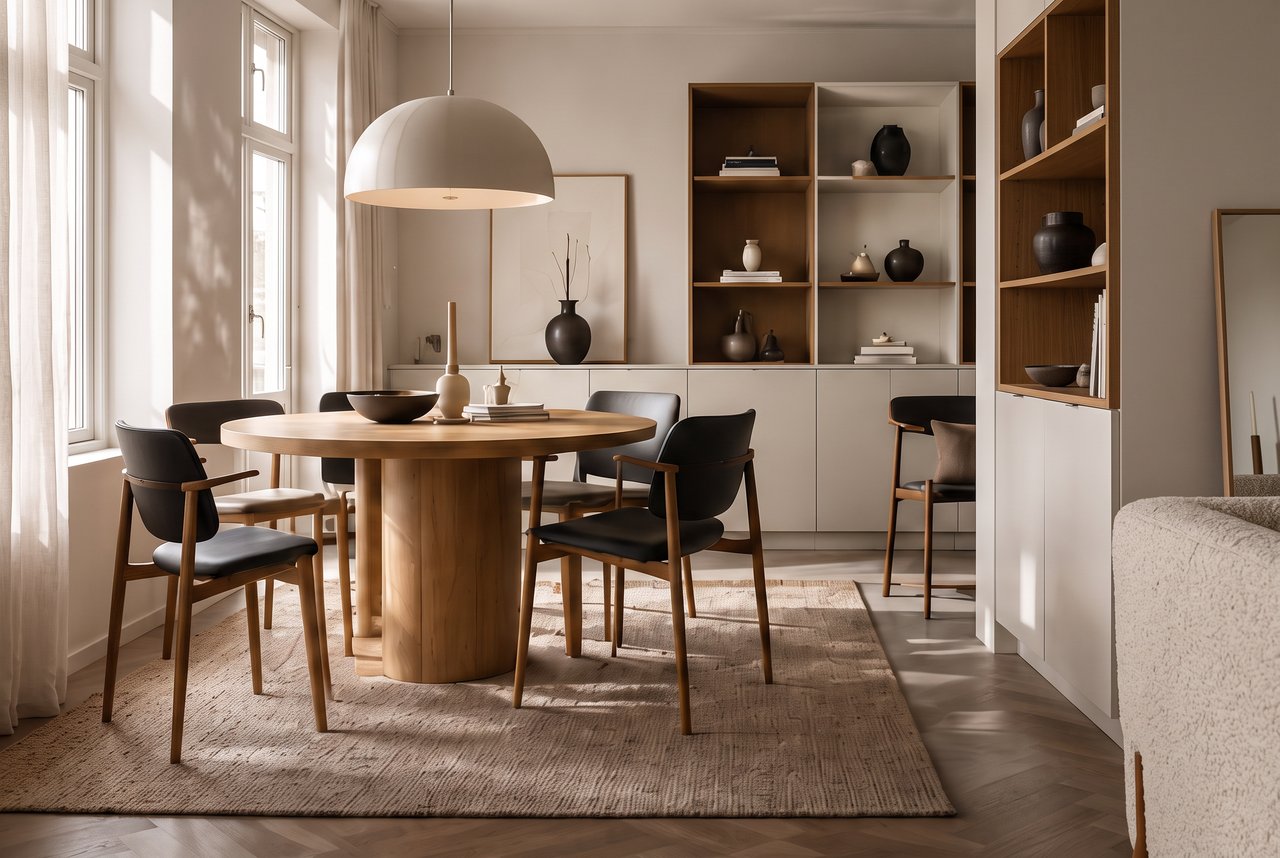
The difference between inexpensive and expensive furniture is rarely in the basic shape. It shows in the materials, finishes and details — and several of those can be changed.
The single most effective move. Solid handles in brass, steel or wood can lift an entire range of standard furniture. They cost relatively little and take minutes to replace.
Plastic feet or simple screw-in legs can be swapped for turned timber legs or tapered metal ones. A chest of drawers or sofa can change completely.
A worktop, shelf or table surface in solid wood or stone over a simple base adds weight — both visually and physically.
Glossy lacquered white is one of the quickest finishes to read as inexpensive. Matt surfaces, painted MDF or a matt-textured foil tend to age better and draw less attention to themselves.
One high-quality piece per room — a lamp, armchair or rug — can elevate everything around it. Spend the money on what is most visible and most used.
Visible logos, stickers and decorative branding can go. It costs nothing and makes an immediate difference.
Smooth walls, rows of spotlights and standard cabinet fronts. New builds are rarely ugly — they are neutral.
Read the guideOak, walnut and an inherited teak piece in the same room. Undertone, quantity and contrast decide whether it works.
Read the guideVisible grain, a hard-wearing surface and enough weight to anchor a room without making it dark. How to combine dark oak.
Read the guide