Guide
How to mix old and new
Inherited pieces, flea-market finds and new furniture in the same room. The palette holds the mix together — not the period.
Read the guideHow to find flea-market pieces worth taking home
The best flea-market find is rarely the one that looks most impressive on the shelf. More often it comes down to material, proportion and craftsmanship – or to seeing the potential behind a scratch, the wrong colour or a layer of dust.
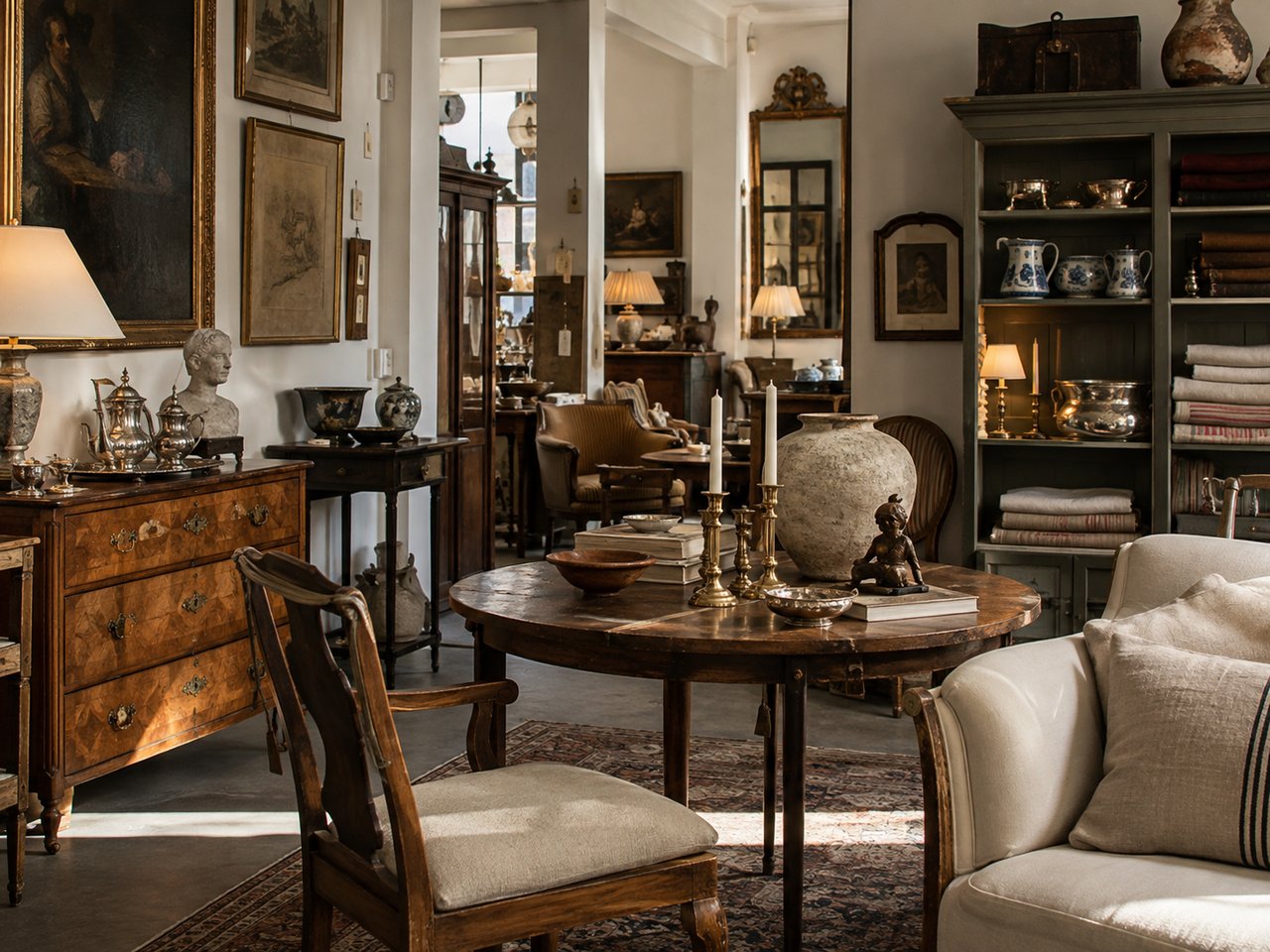
The best flea-market find is rarely the one that looks most impressive on the shelf. More often it comes down to material, proportion and craftsmanship – or to seeing the potential behind a scratch, the wrong colour or a layer of dust. This is Prestaged's guide to what we look for before anything comes home with us.
Try to look past colour and surface and ask instead: what is the piece actually made of?
Solid wood, stone, glass, metal and well-made ceramics often age in a way that becomes more beautiful over time. A less attractive finish can sometimes be changed, too.
On furniture, look at the underside, the insides of the drawers and the edges. They often reveal more than the visible front.
Prestaged notes: A scratch in solid wood can be less of a problem than a flawless surface on a badly built piece.
Not everything old needs to look new.
Small marks, darkened edges, faded timber, oxidised metal and light wear can give a piece character.
Be more cautious with:
The question is not always "can it be fixed?", but "is it worth the work?".
Check whether chairs and tables wobble, look at the joints, open drawers and doors, and look for earlier repairs.
An old piece of furniture may well carry traces of its life. The construction, however, should still work.
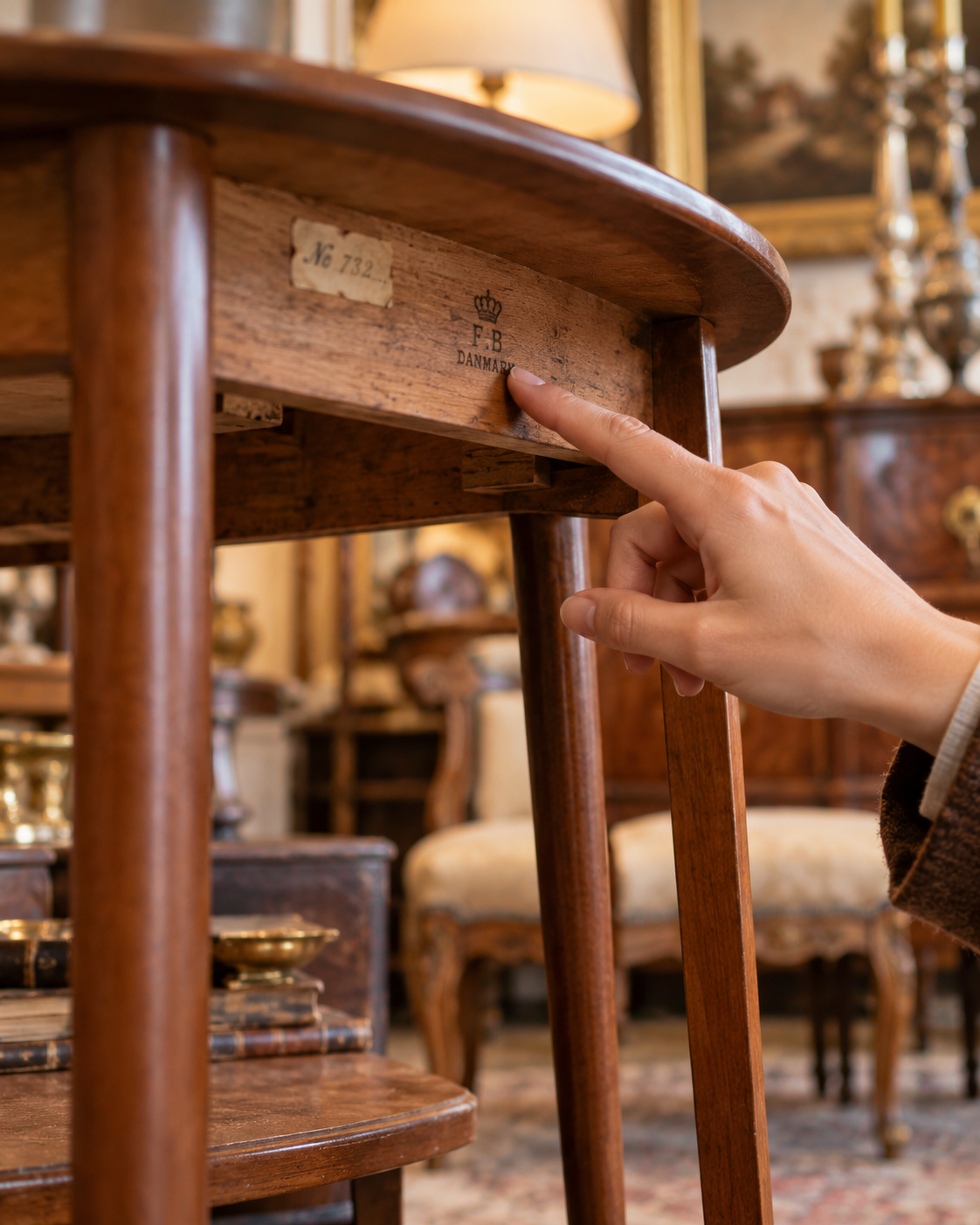
Many very fine older pieces are veneered and can be far better built than modern furniture in cheaper materials.
Look at:
Ask: does the piece have good proportions even if I ignore the colour?
It is often the form that keeps a flea-market find relevant many years later.
A chair with a fine silhouette, a table with the right balance or a lamp with a beautiful shape can be worth considering even if the finish is not perfect.
Old lamps can be wonderful second-hand finds.
Check:
If you are unsure about the electrics, have someone with the right expertise check the lamp before use.
Factor any rewiring into the real cost.
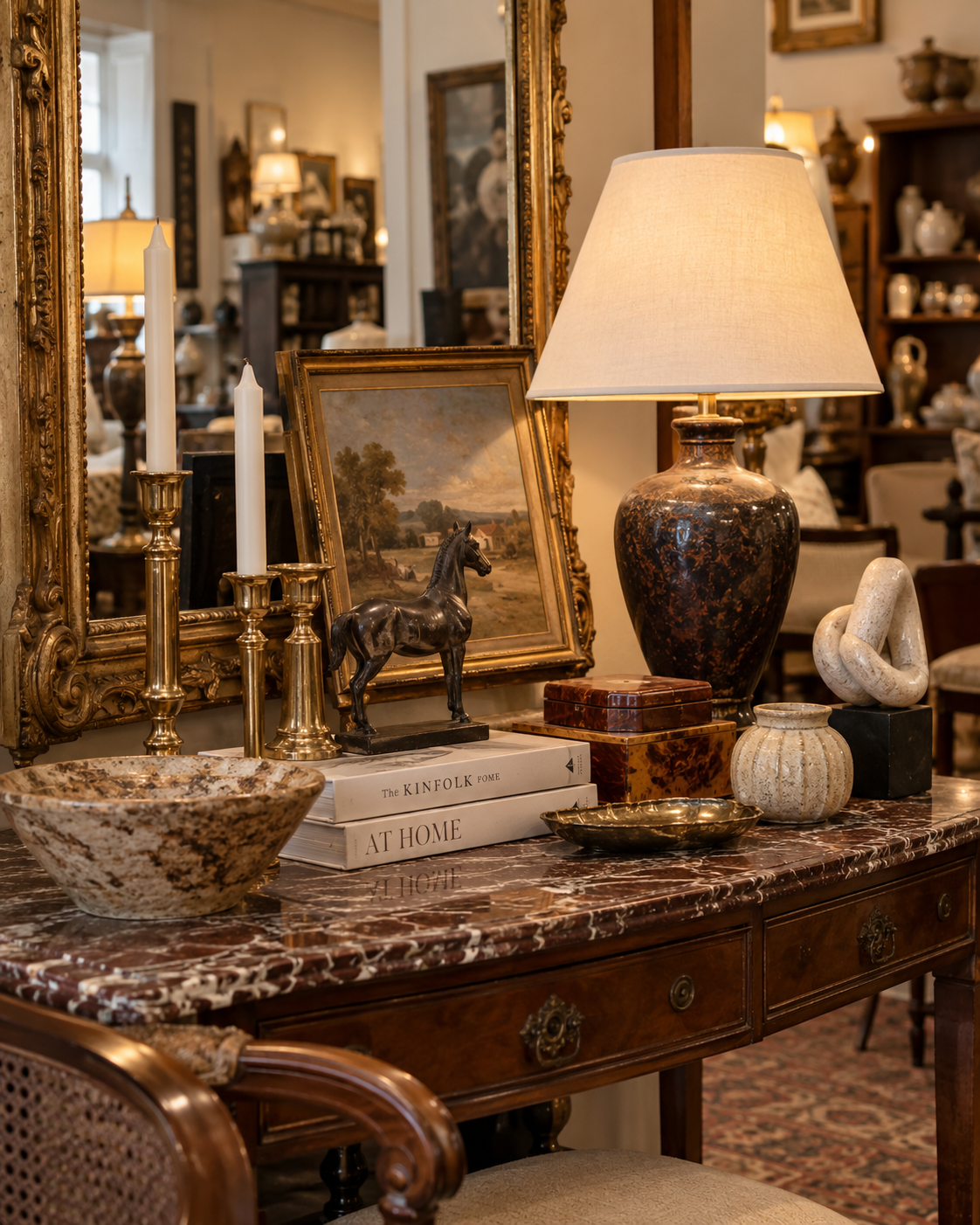
Always turn the piece over.
Look for:
An unsigned piece can still be a far better find for your home than something well known that you do not actually like.
Turn the piece over and look for hallmarks.
But do not buy for the metal value alone.
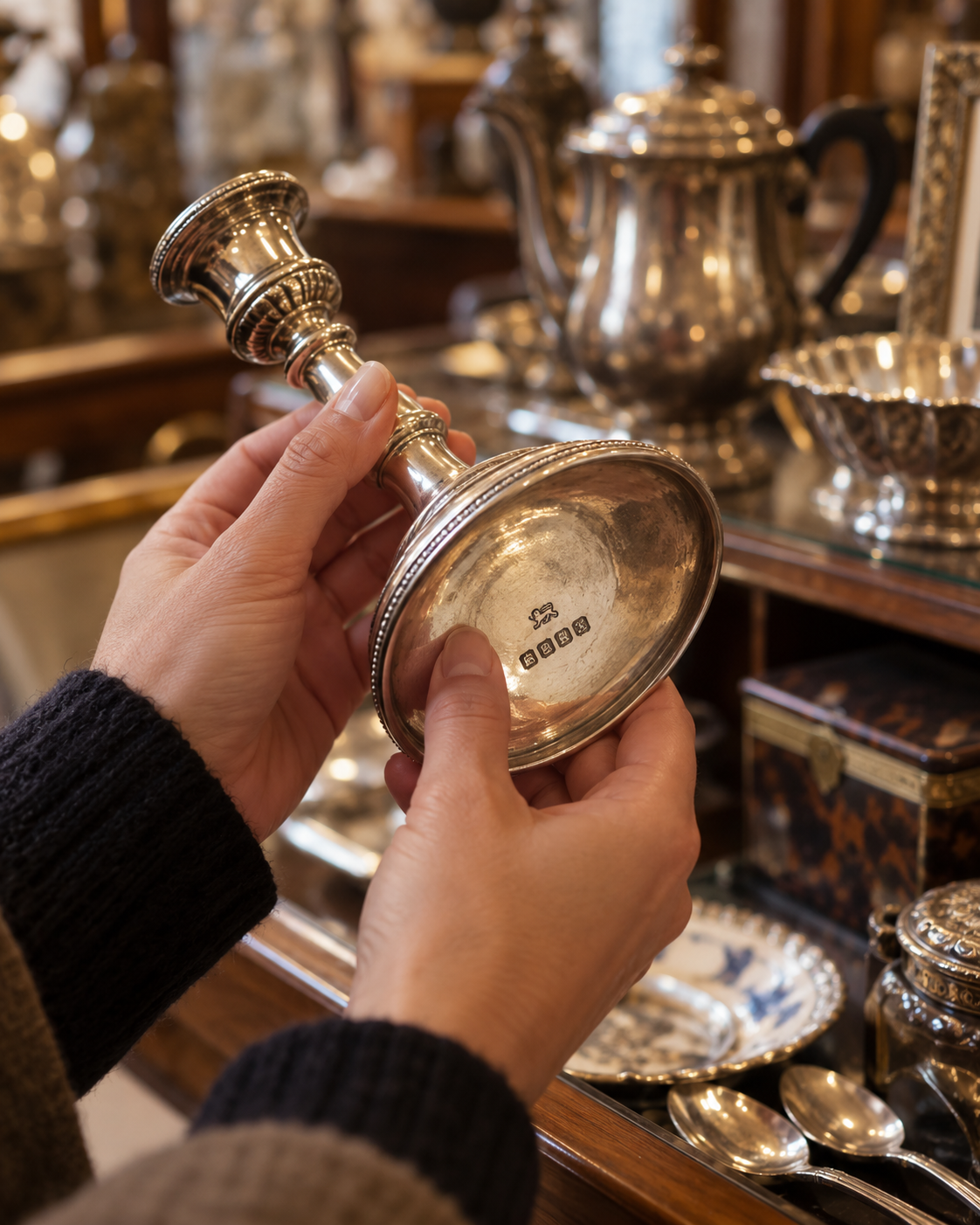
A beautiful silver-plated tray can be a better find for your home than a piece in sterling silver that you do not really like.
Be especially critical.
Check:
An armchair with a superb frame can still be worth buying if you budget for reupholstery.
Keep key measurements saved on your phone:
A piece may be cheap at the flea market but still need:
So judge what the piece will cost once it is finished, not just the price tag in the shop.
The wrong colour. An ugly lampshade. Brass that has darkened. A table standing in entirely the wrong setting.
Try to imagine the piece without everything around it.
A flea market is rarely a particularly good stylist.
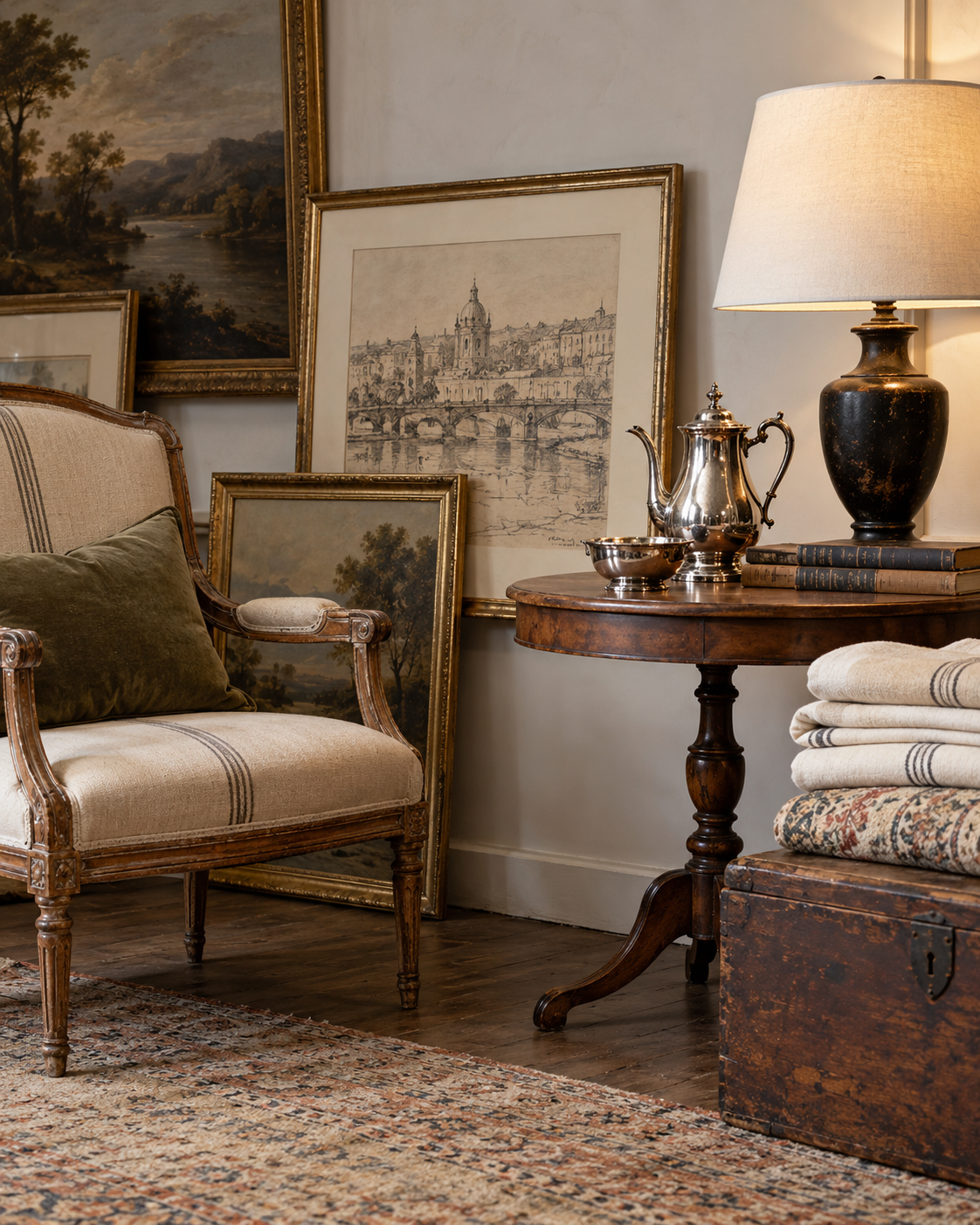
The finest find is not always the most expensive or the rarest. It is the one you saw something in before anyone else did.
Inherited pieces, flea-market finds and new furniture in the same room. The palette holds the mix together — not the period.
Read the guideArt changes a room more than almost any other detail – but its placement determines whether a work feels inevitable or slightly wrong. It is less about fixed rules than the relationship between art, furniture and empty space. Prestaged's guide moves from one large work to a personal gallery wall.
Read the guideInherited pieces, finds and new purchases in the same room. What holds it together is rarely the style — it is the palette.
Read the guide