Colour & materials
Beige without going flat
One of Sweden's most common interior colours is also one of the hardest to get right. Three levels of lightness are enough to create depth.
Read the guideCohesion comes from a few things that repeat — not from making every room look the same.
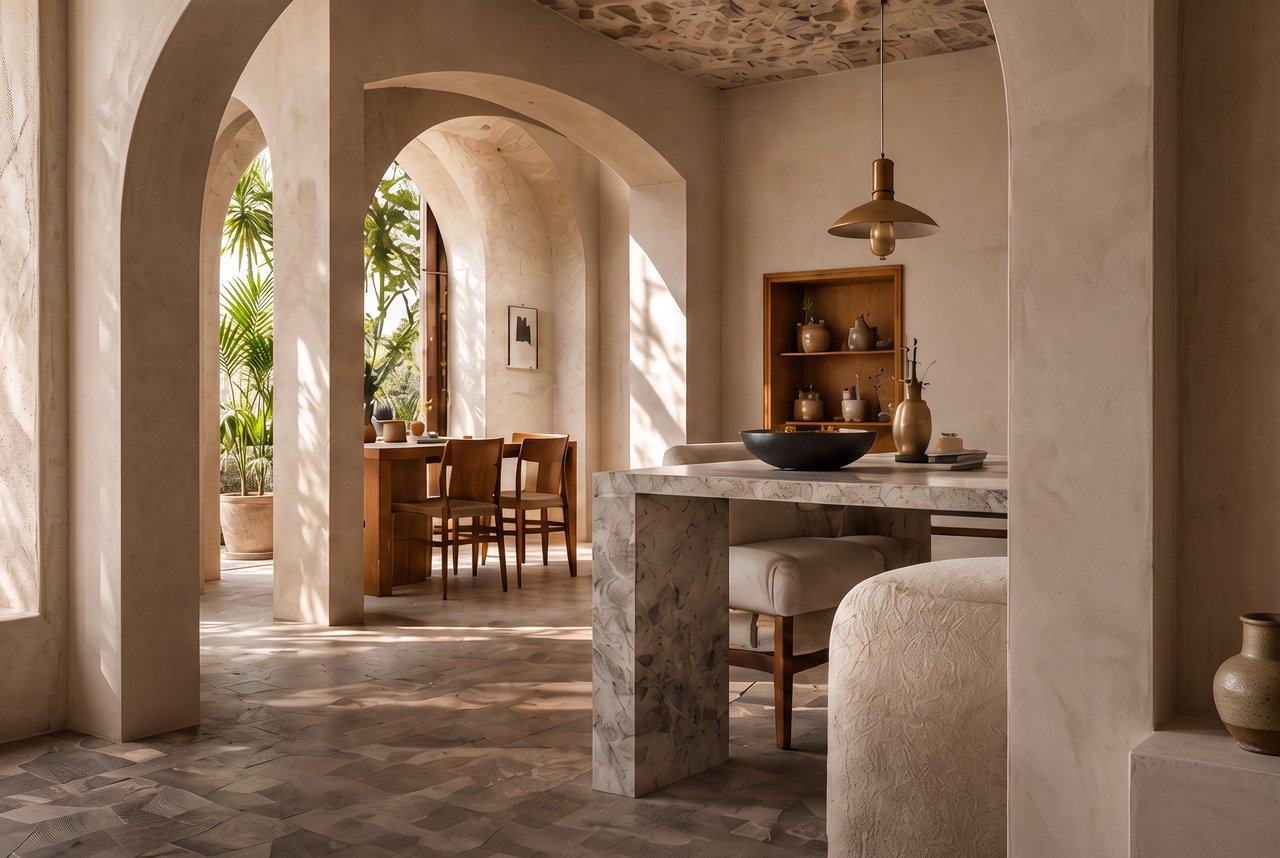
Every room can be beautiful on its own and the home can still feel disconnected. Cohesion comes from a few things that repeat — not from making every room look the same.
Choose a colour that appears in every room: on the walls, the woodwork or as a recurring base tone. It does not need to dominate, but it should be present throughout the home.
Different whites on doors, skirting boards and ceilings are one of the most common reasons a home feels pieced together. One white used throughout creates immediate cohesion.
Brass, black metal, oak or linen — a material that appears in several rooms ties them together even when the colours change.
Stand in the hall and look into the next room. Anything you can see at the same time needs to work together. Rooms that are never visible together can differ much more.
Cohesion is not sameness. The bedroom can be darker and the living room lighter, as long as the base colour and recurring material remain consistent.
One of Sweden's most common interior colours is also one of the hardest to get right. Three levels of lightness are enough to create depth.
Read the guideThe hallway has the least floor space and the most functions. How to solve storage, hard-wearing floors and lighting in just a few square metres.
Read the guideThe furniture works beautifully on its own, yet the room still feels unfinished. Seven recurring reasons — and what to do about them.
Read the guide