Prestaged fixes
How to make a bare room feel more inviting
Without filling it with things. Textiles, light and materials do more for the atmosphere than extra furniture.
Read the guideSmall changes, greater atmosphere.
How to shift your home for the new season with light, textiles, deeper tones and a few carefully chosen details.
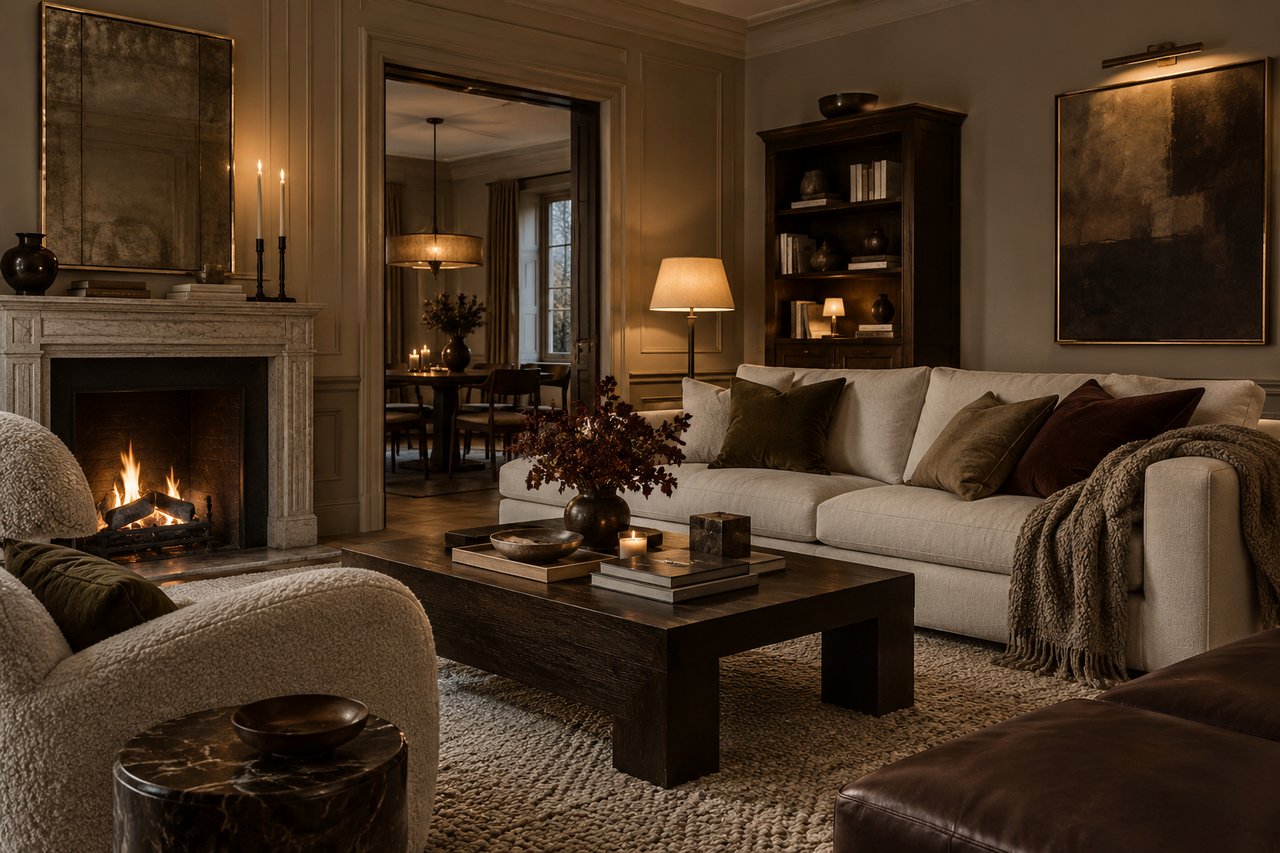
When the light changes, the rooms change with it.
What felt airy and effortless in June can suddenly feel thin as the days grow shorter. But a home does not need to be remade for the season. Often, a few adjustments are enough: how the light falls, which textures are allowed to take up space, how the palette deepens and how objects are grouped.
The best autumn rooms are not decorated for the season. They simply feel a little deeper, softer and more composed.
As the evenings grow darker, lighting becomes a larger part of the interior itself.
The aim is rarely to make the room brighter. It is to create more layers of light.
In a living room, three to five smaller light sources often work better than one strong ceiling light doing all the work. A table lamp on a sideboard, a floor lamp by an armchair, a smaller lamp near the sofa and a soft light in a bookcase can make the room feel both gentler and more alive.
Let the light come from different heights. When everything sits at ceiling level, the room can easily feel flat. When light exists high up, at mid-level and close to the floor, the interior gains more depth.
Choose shades in textile, opal glass, smoked glass or other materials that filter the light rather than throwing it harshly into the room.
Prestaged note: Warm light should feel soft, not orange. A low, comfortable glow is better than an exaggerated yellow cast.
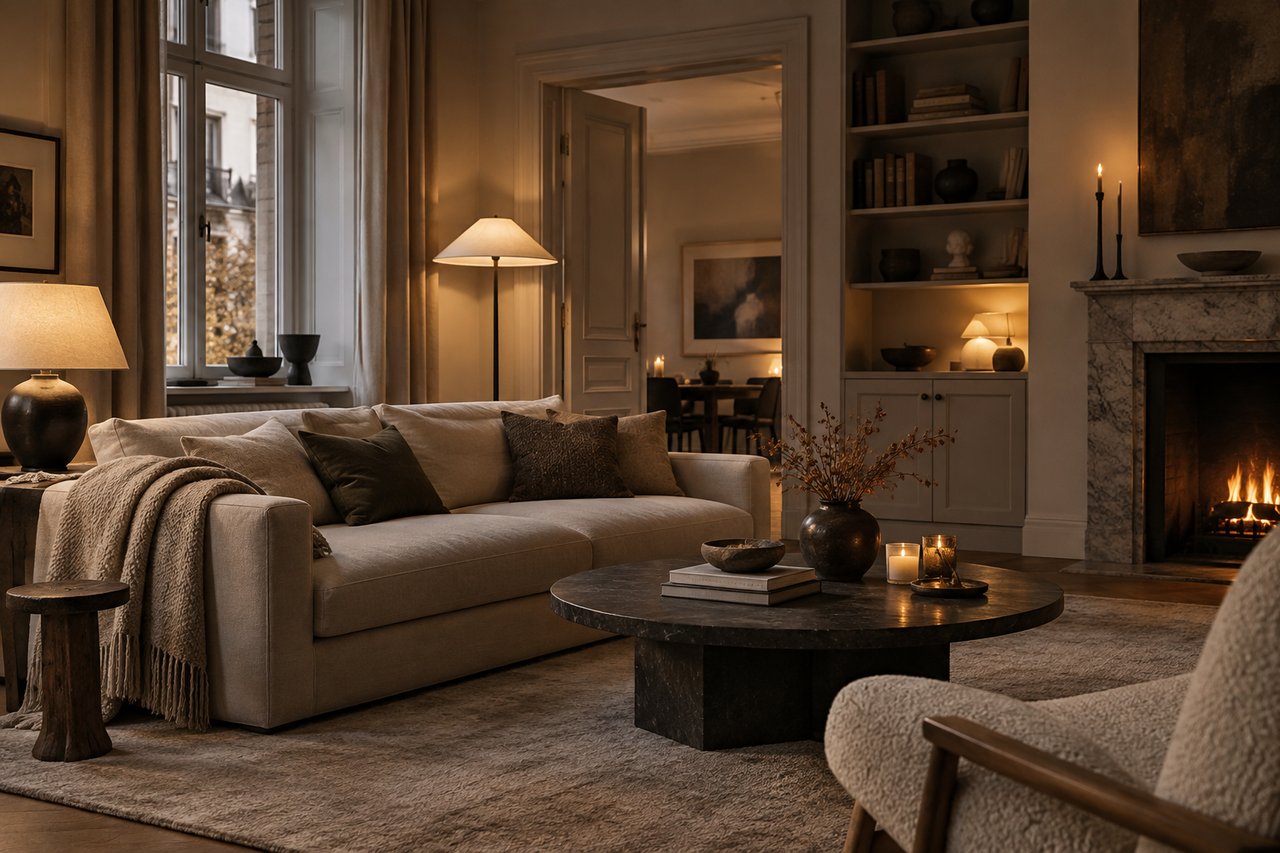
Candles can transform a room immediately, but they can easily become decorative in the wrong way if there are too many, they are too similar or they feel too themed.
On a coffee table, small pillar candles often work best when they stay low and grouped together. Two or three candles at different heights are usually more elegant than a row of identical ones.
On a dining table, tall taper candles are often better. They add height without taking up much room and keep sightlines open across the table. Two or four candlesticks create more rhythm than one dense cluster.
On a sideboard, a small group of three candles can work beautifully, particularly when placed with one larger object such as a vase, bowl or a pair of art books.
Keep the candles themselves within a calm palette: off-white, dark brown, burgundy, muted green or a warm neutral.
Avoid seasonal motifs, rows of small lanterns and too many different shapes in the same room.
Prestaged note: Candles should strengthen the room, not become the decoration themselves.
It is easy to fall into the habit of changing cushion covers with the seasons. A more considered approach is to work with material, size and weight.
On a larger sofa, a good base might be two larger cushions in a calm material, complemented by one or two smaller cushions with a clearer texture. If you want an accent, one darker tone is often enough.
Good combinations include linen and wool, velvet and linen, bouclé against smooth cotton, or dark wool against a lighter linen texture.
Do not make everything match exactly. Cushions in the same colour family but with different surfaces feel more relaxed and sophisticated than a ready-made set.
You do not need to introduce a new palette. Deepen what is already there. Beige can be joined by chocolate brown, grey by inky blue, green by olive, and neutral tones by burgundy or plum.
Prestaged note: If the sofa is already soft and voluminous, it often looks better with fewer, larger cushions than with many small ones.
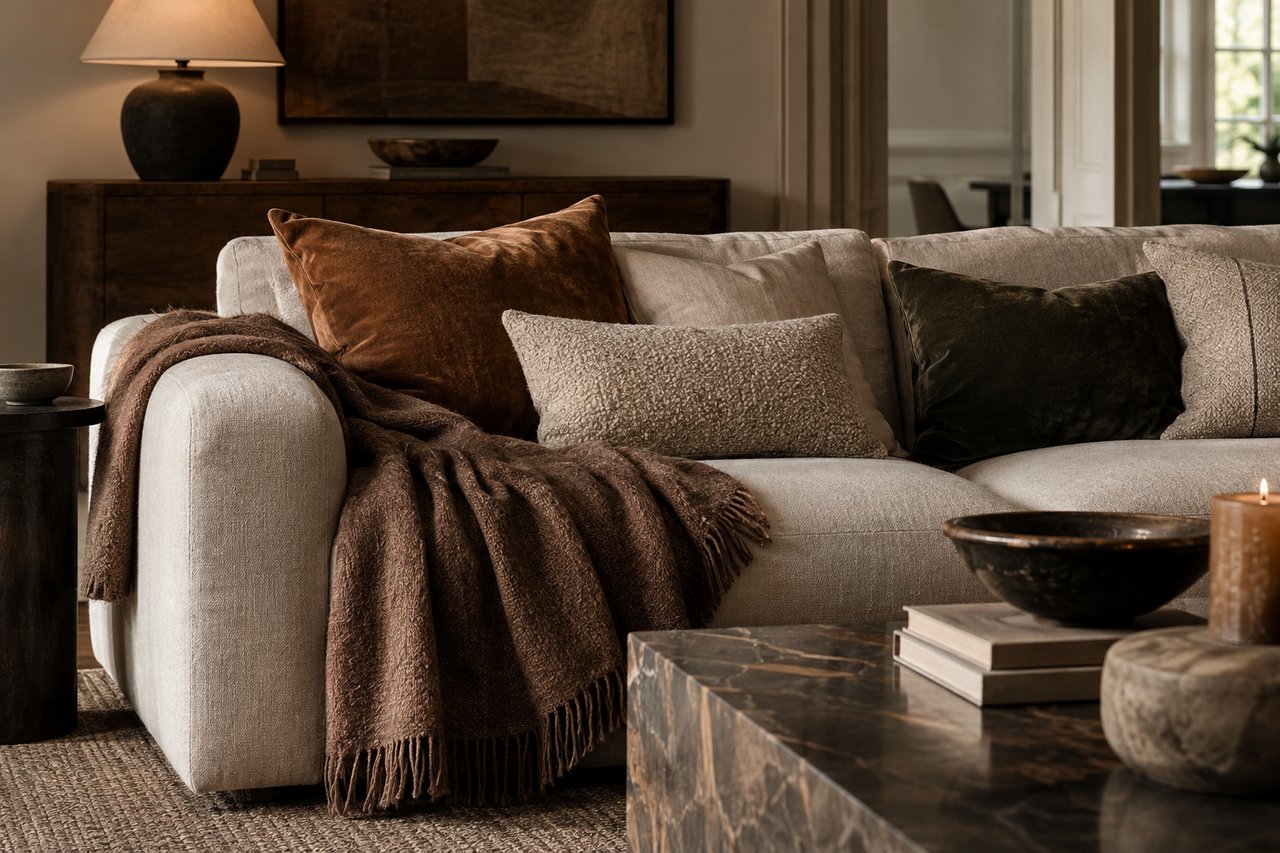
A throw can change the feeling of a room without demanding attention.
In autumn, materials with more body work particularly well: wool, brushed wool, heavier linen or a soft bouclé blend.
The placement does not need to be complicated. Let it fall loosely over an armrest, fold it across the back of the sofa or drape it over one side of the seat.
Avoid making it too perfect. When everything is precisely folded and symmetrical, the room can start to feel styled for a photograph rather than lived in.
Do not match the throw exactly to the cushions either. Let it be a step darker, coarser or softer.
Prestaged note: The heavier the textile, the more space it needs around it.
A dining table does not need to be laid to feel complete.
It usually works best when you choose one clear direction rather than several small decorations at once.
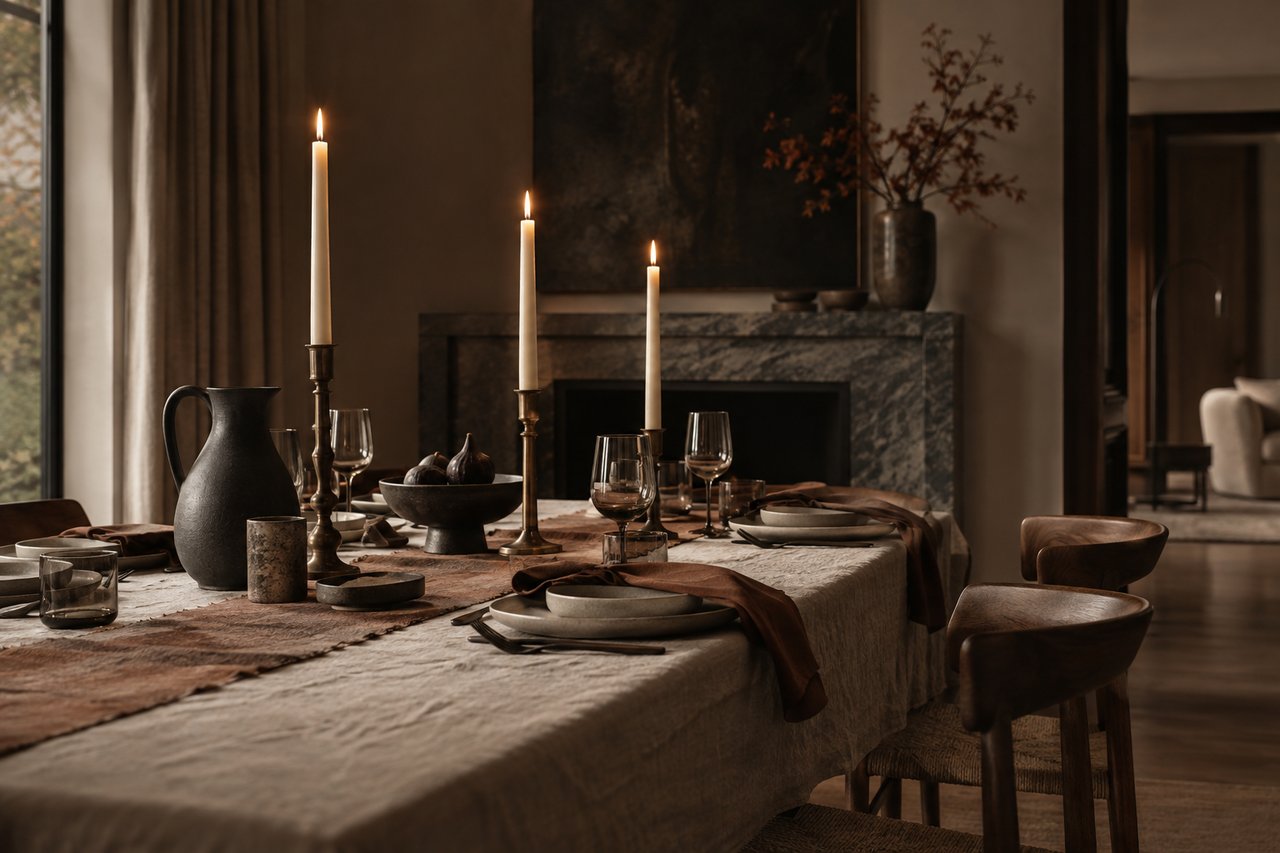
This works particularly well on wood, stone and other table surfaces that are beautiful in themselves. Two slim candlesticks and a low bowl can be more than enough.
Linen or heavier cotton in off-white, taupe, dark brown or muted green adds softness without making the table feel formally dressed. A full tablecloth brings more calm and weight, while a runner leaves more of the tabletop visible.
A low bowl, a larger vase or a simple arrangement of branches can create more presence than many small items.
If you want to bring in natural material, choose dark branches, seed heads or simple greenery rather than obvious autumn decorations.
Prestaged note: A dining table often looks more considered with one clear idea than with many decorative objects.
Do not treat cushions, throws, rugs and curtains as separate purchases.
Instead, look at the whole textile picture: the rug, sofa, cushions, throw, curtains and any upholstered chairs.
They do not need to match, but they should relate to one another.
A simple way to create cohesion is to let one colour repeat, one texture provide contrast and one material carry more weight than the rest.
A pale linen sofa, for example, can take a dark wool throw, a velvet cushion and a rug with a pronounced wool texture. It is the contrast between the materials that makes the room feel rich, not the quantity.
Autumn does not mean the home has to turn orange.
Often, it is enough to introduce one or two deeper shades: chocolate, oxblood, plum, olive, dark cognac, inky blue or aubergine.
Use them as small anchors in a cushion, lamp shade, vase, artwork, a few book spines or candles.
That shifts the mood of the room without losing its underlying identity.
Prestaged note: A dark tone does not need to dominate to change the whole.
When a room feels too thin, it is often material — not colour — that is missing.
Darker wood, brushed brass, chrome against soft textile, ceramics, smoked glass, stone and surfaces with patina can give a room more weight without making it dark.
It does not need to mean a major purchase. A dark ceramic bowl on a pale table, a small stone object or a table lamp with a dark base can be enough to shift the balance.
The aim is not to make everything heavier. It is the contrast between lighter and weightier materials that makes the room feel more complete.
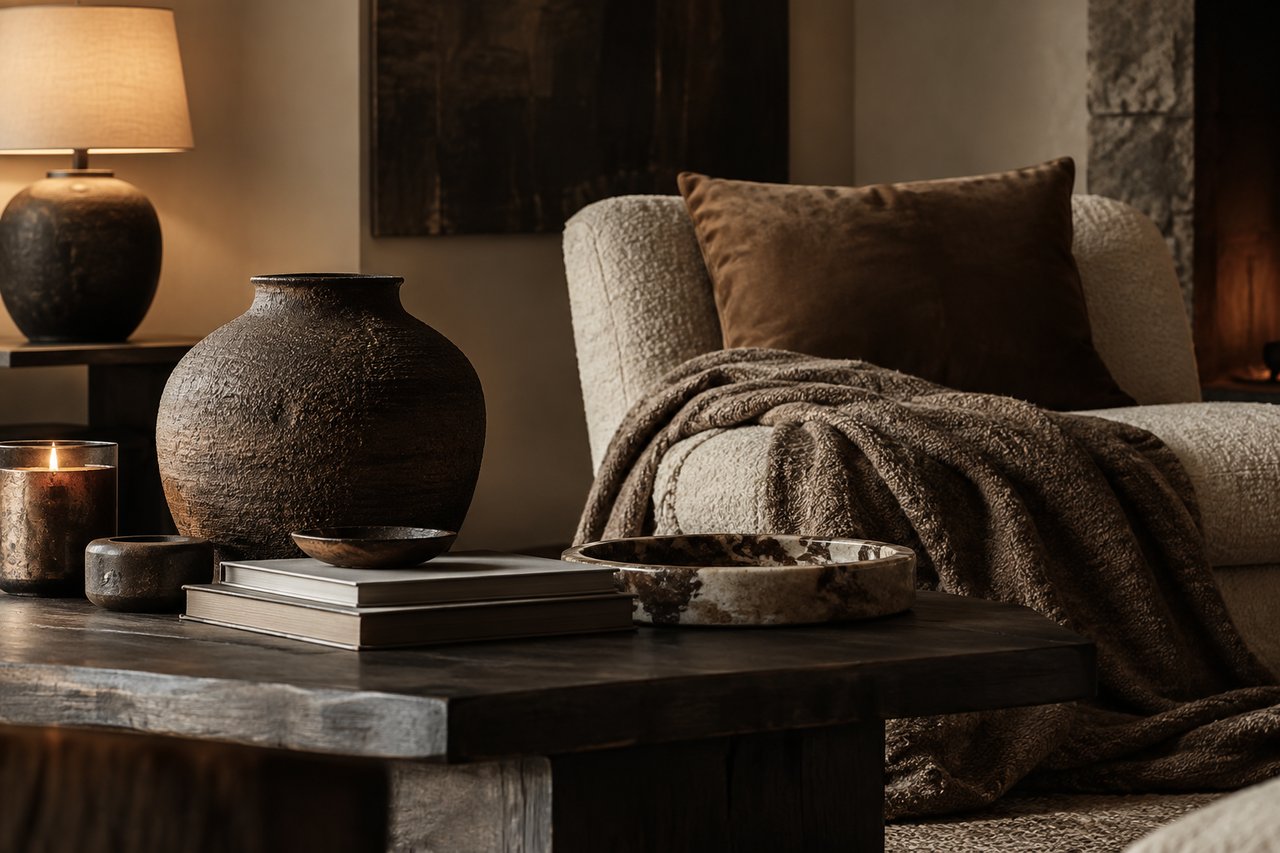
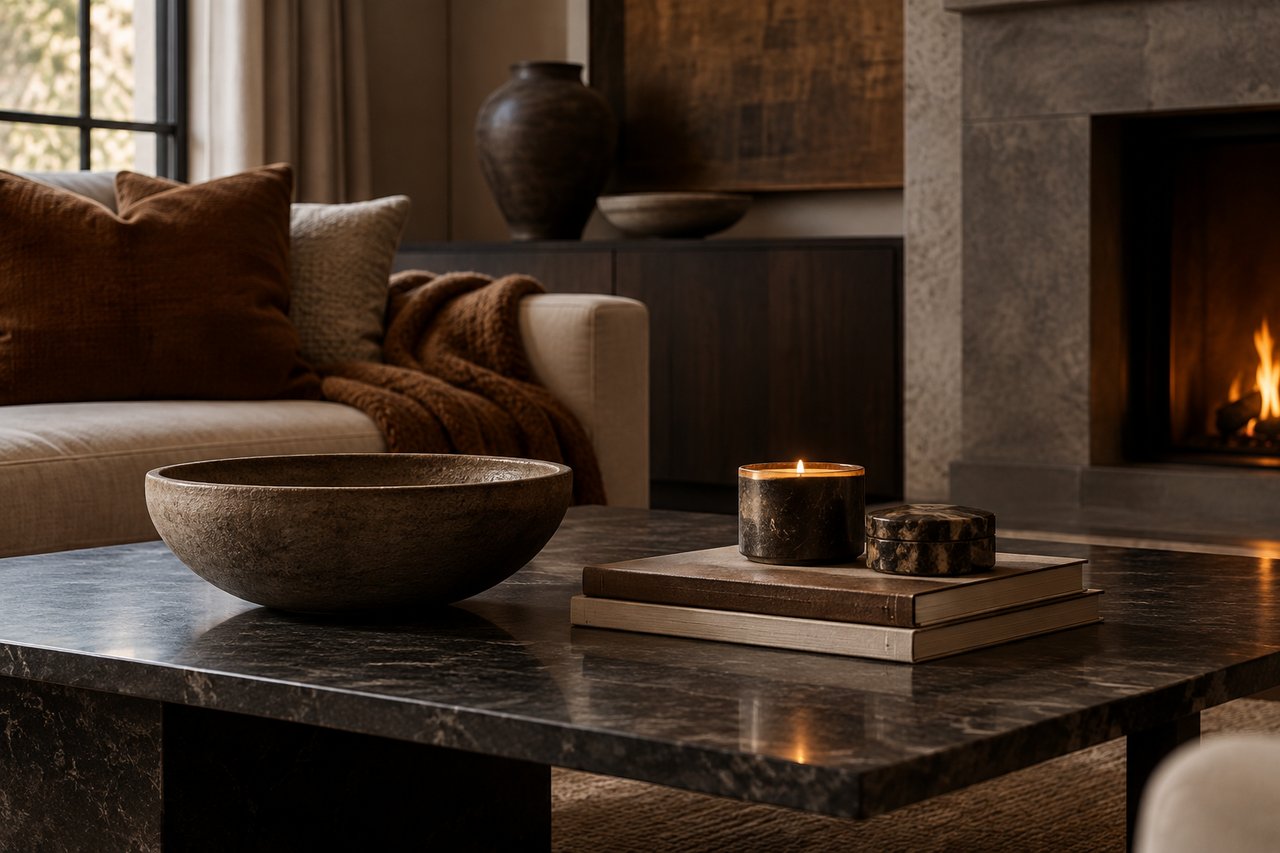
Coffee tables are one of the places where a room can start to feel cluttered very quickly.
Think in a few simple levels instead: something low, something with a little height and something that contrasts in material or shape.
That might be a low bowl, one or two books and a candle or small vase.
Always leave part of the table empty.
It is the empty surface that makes the rest feel deliberately chosen.
Prestaged note: If everything on the table is roughly the same small size, it easily reads as clutter. One larger object can do more than five small ones.
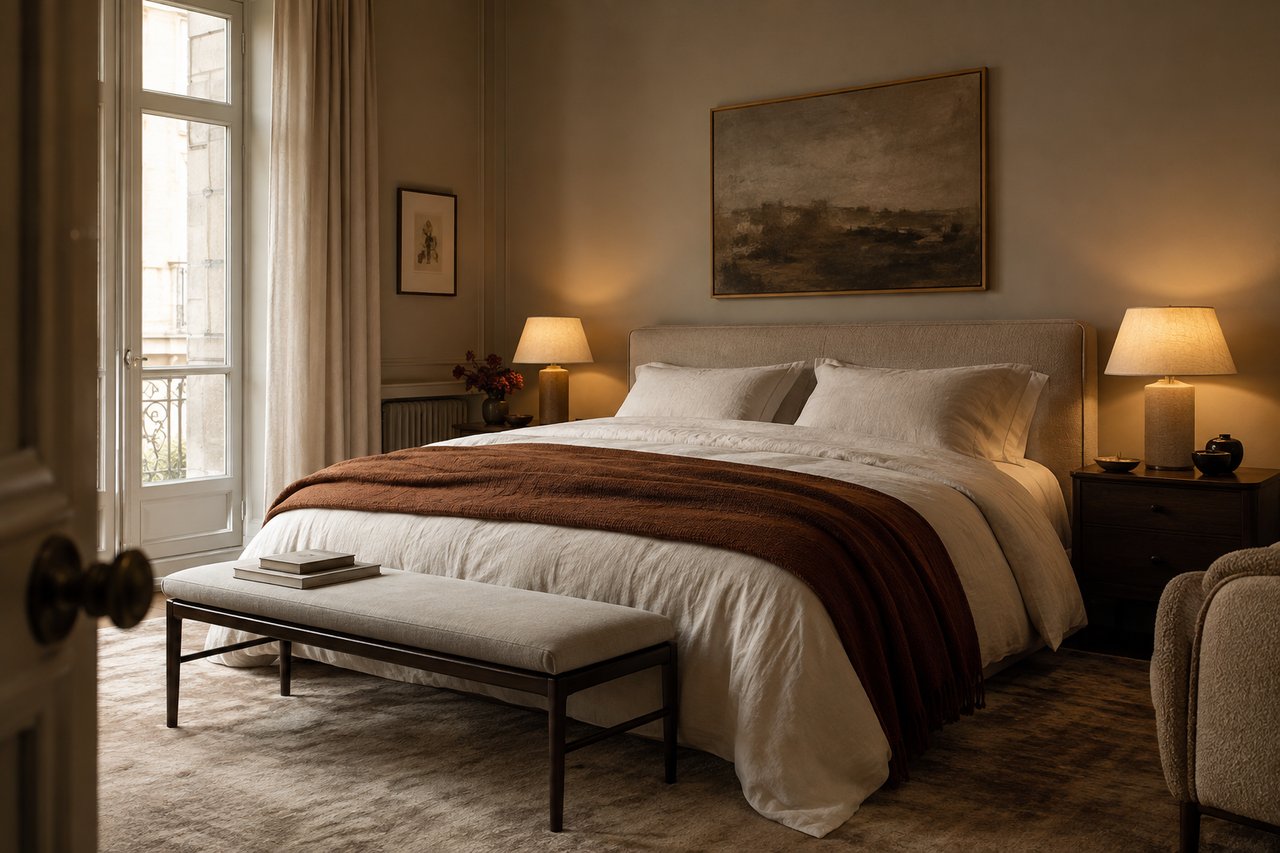
The seasonal shift is often simplest in the bedroom.
Keep the existing bedding and add one layer at the foot of the bed, one larger accent cushion or a slightly darker textile tone. Rather than changing the whole room, swap a harsh bedside light for a softer lamp shade.
Often, that is enough.
Avoid building an elaborate hotel-style bed with lots of decorative cushions unless it suits the room. A more relaxed look often feels more sophisticated and is easier to live with.
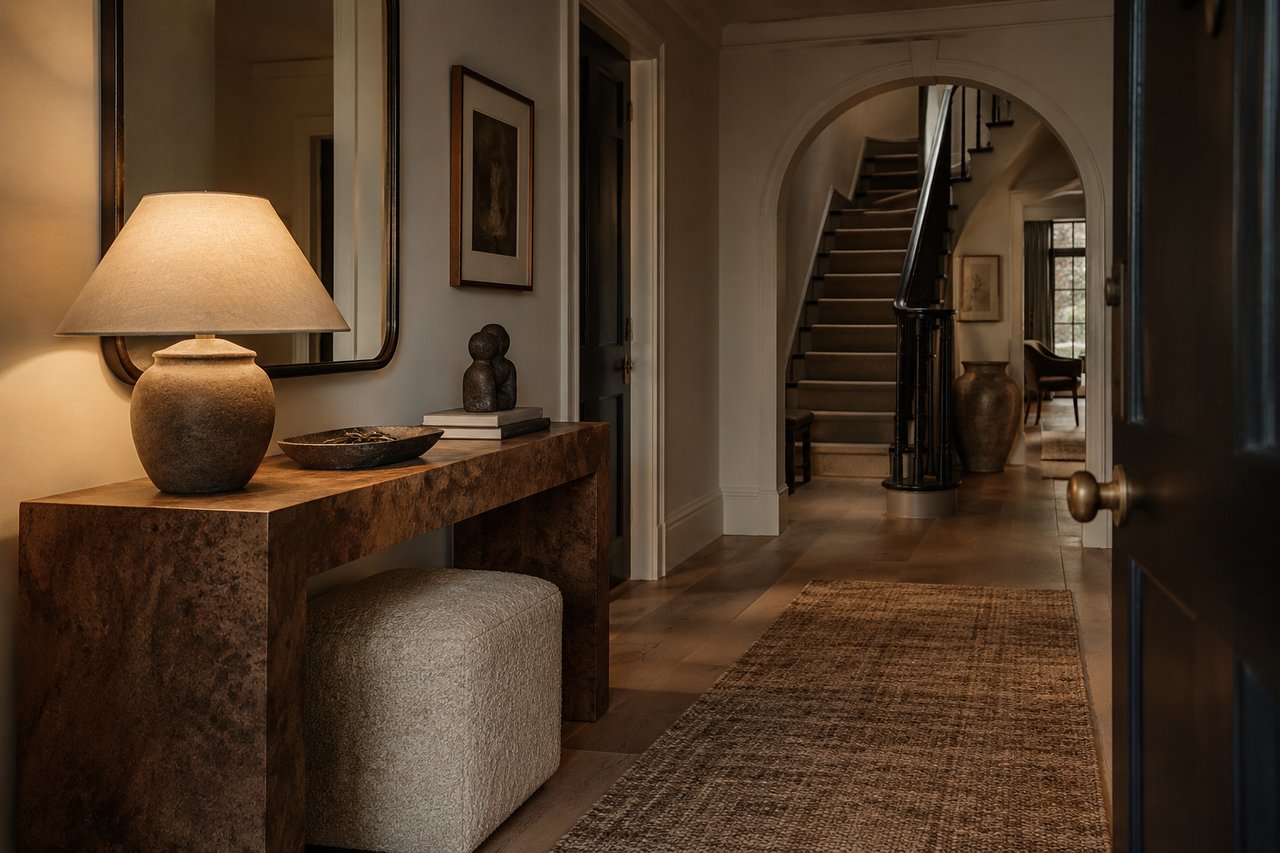
The hall is often overlooked, yet it is one of the easiest rooms to change.
A small table lamp can make a significant difference when you come home in the evening. A rug with more texture, a darker wood, a bowl for keys or one larger object can give the small space more presence.
Because the hall is usually compact, every choice is more visible. That makes it even more important not to fill every surface.
As the textiles become heavier, the colours deeper and the light softer, the room often needs fewer things, not more.
Add a throw, but remove two small objects from the coffee table.
Add a dark cushion, but keep the rest of the sofa calm.
Add one clear candle arrangement, but keep the rest of the sideboard sparse.
Balance is what makes the result feel sophisticated.
Autumn does not need to appear through symbols of the season.
It can be felt in softer light. A darker tone. A wool throw against a linen sofa. A table with fewer, better-chosen objects.
Small changes can be enough.
Not to make the home look autumnal.
But to make it feel right for the new season.
Without filling it with things. Textiles, light and materials do more for the atmosphere than extra furniture.
Read the guideThe answer to flat neutrals is rarely more colour. It is contrast in material, weight and texture.
Read the guideSeating, lighting and a correctly sized rug matter more than colour. How to plan a living room that works all week.
Read the guide