Inspiration/Guides & advice/How to light a room – layers, direction and contrast that make a room feel right
Guide
How to light a room – layers, direction and contrast that make a room feel right
Good lighting is not about making a room as bright as possible but about hierarchy, direction, contrast and depth. Prestaged's guide to layered light at the right heights and the right colour temperature, with room-by-room advice and a checklist for your own home.
Good lighting is not about making a room as bright as possible. It is about hierarchy, direction and contrast: which light takes the lead, what it falls on and what is allowed to rest in shadow. This is Prestaged's guide to lighting a room so that it feels right, from the four layers of light to a simple checklist for your own home.
1. Think hierarchy, not maximum brightness
A room lit by one strong ceiling light can be thoroughly illuminated and still feel flat. The eye needs variation to read depth. When everything is equally bright, nothing guides your gaze and the room loses its shape.
So rather than asking "how much light do I need?", start with "what should the light be doing here?".
Prestaged notes: A room rarely needs more lamps to feel better lit. More often the light simply needs to come from more levels and do different jobs.
2. The four layers of light
A considered room is built from several layers, each with its own purpose.
General light sets the base level. It lets you move about and find things, but it should seldom carry the whole mood.
Task light is aimed at something you are doing: reading, cooking, applying make-up, working at a desk. It needs to be bright enough and come from the right direction.
Accent light draws attention to something: a painting, a wall, a shelf, a sculpture. It creates focal points.
Mood light is the soft light that makes a room pleasant in the evening: table lamps, wall lights, a lamp in the window.
Trouble starts when a single fitting is asked to do everything. A ceiling light expected to provide general, task and mood light at once is usually too harsh for the evening and too weak for the task.
3. Light at different heights
A room comes alive when light arrives from several levels: high, at eye level and low.
High: ceiling lights, pendants and flush fittings that give an overview.
Middle: wall lights and table lamps, roughly at eye level when seated. This is where most rooms fall short.
Low: floor lamps that throw light downwards, lighting within shelving, or a small lamp on a low chest.
A room lit only from above gives shadows beneath the eyes, furniture that looks heavy and corners that disappear. Bring some of the light down to seated height and the room immediately feels more enveloping.
4. Direction: down, up and sideways
Direction shapes how a room is read, often more than brightness does.
Downlight gathers. It creates pools of light over a table, a bench or a reading chair and makes a room feel intimate.
Uplight expands. Light bouncing off the ceiling and upper walls makes a room feel taller and airier.
Side light sculpts. Light arriving at an angle gives volume to faces, furniture and materials.
Wall washing lights a wall evenly, usually from fittings set a little away from it. The room reads as larger because the walls seem to recede.
Grazing places the light close to the wall so that it skims the surface. It brings out the texture of plaster, brick, panelling and stone, along with any imperfections.
Lighting the walls is one of the most underrated moves there is. A room with dark walls and a bright floor feels smaller than it is. Light even one or two walls and the proportions change.
Prestaged notes: Side light reveals materials. Light from the front tends to flatten them.
5. Diffuse or concentrated light
A fabric or opal glass shade spreads light softly in every direction. A spotlight or a metal shade gathers it into a clear cone.
You need both. Diffuse light makes a room friendly and even; concentrated light brings drama and direction. A room with only diffuse light can feel hazy, while a room lit only by spots quickly becomes sharp and fragmented.
6. Use shadow on purpose
Shadow is not a failure. It is what makes the light visible.
An evenly lit room recalls an office or a shop. A room with bright and darker passages recalls a home. Let a corner stay dim, let the ceiling rest and let the light gather where life actually happens.
Prestaged notes: A well-lit room is rarely evenly lit. The contrast between light and dark is part of the composition.
7. Lead the eye through the room
Light works as a map for the eye, which always goes to the brightest area first.
Use that. A lit painting at the end of a corridor draws you in. A lamp on a side table in the far corner makes the room feel deeper. A pool of light over the dining table shows where people gather.
Notice what you see first when you walk in. Is it what you want people to see? If art is the most important element in the room, read our guide How to hang art and let the light follow the same logic.
8. How light changes materials
The same material can look luxurious or tired depending on the light.
Wood turns warm and alive in low, warm side light. In cool light from directly above it can look yellowish or lifeless.
Stone and marble need side light for the veining to show. Polished stone also mirrors light sources, so think about where the lamps appear in its surface.
Metal lives on reflections. Brass and chrome sparkle under point sources but go flat in wholly diffuse light.
Textiles such as velvet, wool and linen gain depth in grazing light. Velvet even shifts colour with the angle of the light.
Dark surfaces absorb light. A room with dark walls needs more light sources, ideally softer and more directed, rather than a brighter ceiling light.
9. Colour temperature
Colour temperature is measured in kelvin (K). The lower the number, the warmer and more golden the light.
Around 2200–2400 K: very warm, close to candlelight. Lovely for evening mood light in living rooms and bedrooms, but too dim and amber for tasks.
2700 K: the classic warm domestic light. A safe choice for most lamps in living rooms, bedrooms and hallways.
3000 K: a touch more neutral and crisp. Works well in kitchens, bathrooms and work surfaces where you need to see detail, without feeling cold.
Avoid mixing too many temperatures in one room. A 2700 K lamp beside a 4000 K one makes the first look orange and the second look blue. Stay within a range and make any departures deliberate.
10. Colour rendering: CRI and Ra
Colour rendering is given as CRI or Ra, on a scale up to 100. It describes how naturally colours appear under the light.
Choose CRI/Ra 90 or above wherever colour matters: around art, textiles, wood and stone, in kitchens where you see the food, and in bathrooms where you see your own skin. The difference between 80 and 90+ shows most clearly in reds and warm tones, which otherwise turn muddy.
11. Glare and visible light sources
Glare is the most common flaw in otherwise lovely rooms: a bare bulb at eye level, a spotlight shining straight at the sofa, or a pendant hung so that you see the bulb when seated at the table.
Check from the places where you actually sit and lie. Can you see the light source directly? Choose a deeper shade, raise or lower the lamp, or angle it away.
Consider reflections too, in mirrors, glass, television screens, polished stone and glossy surfaces. A mirror opposite a bright lamp doubles the light source. A screen reflecting a ceiling light becomes hard to watch. Moving the lamp by half a metre is often enough.
12. Dimmers: useful, but not the whole answer
A dimmer lets the same lamp work by day and by night. It is almost always worth fitting to ceiling lights and key lamps.
But a dimmer does not replace layered lighting. A dimmed ceiling light still comes from the same direction and the same height. The room becomes darker, not better. Atmosphere comes from more directions, not simply less light.
Prestaged notes: The most considered lighting is often the kind you do not notice at first. You simply sense that the room feels right.
13. Room by room
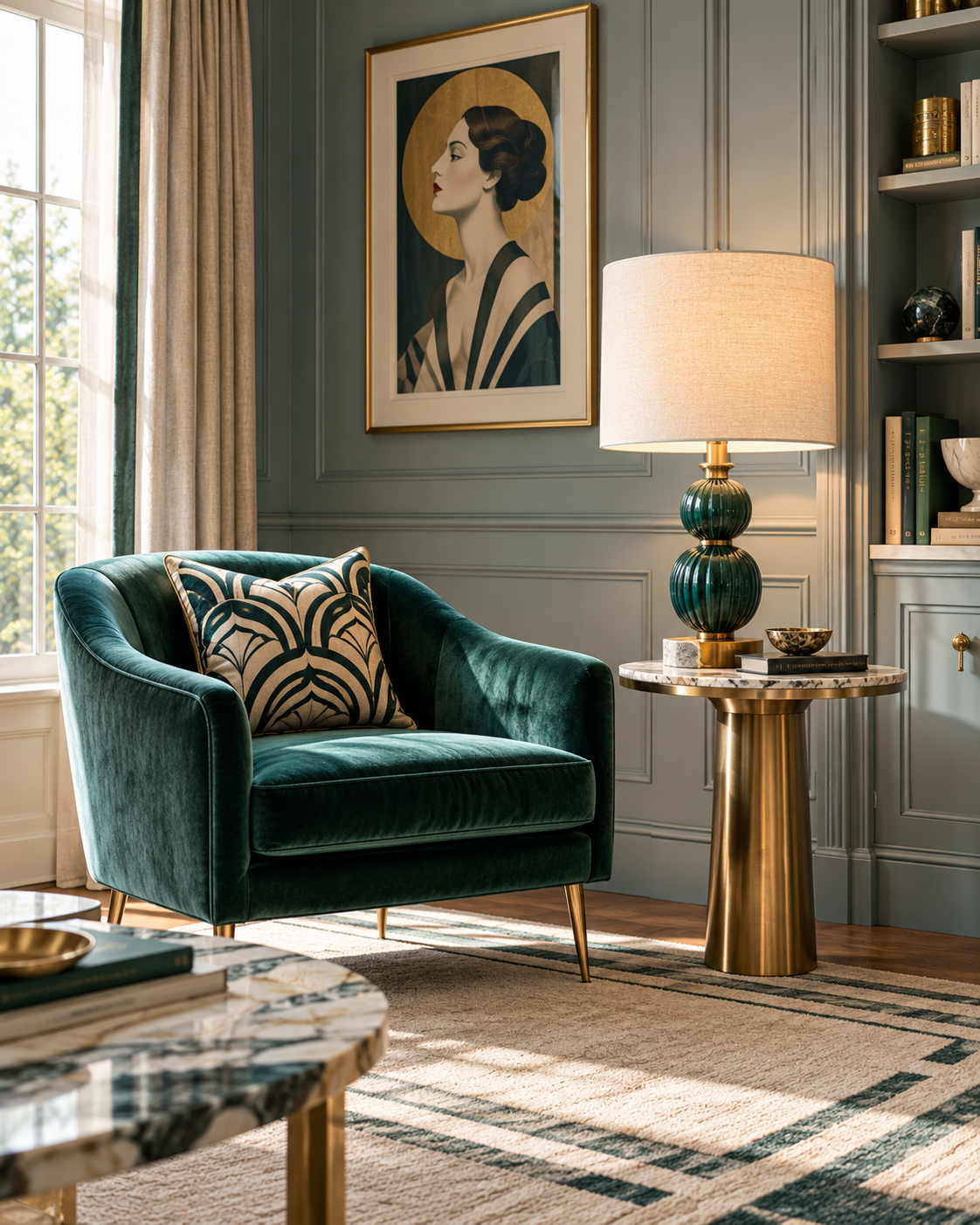
Living room. Aim for at least three or four light sources at different heights: table lamps by the sofa, a floor lamp by the reading chair, accent light on art or shelves, and general light on a dimmer. Place lamps so that light reaches several corners, not just the middle of the room.
Dining area. The pendant over the table is the protagonist. Hang it so the light falls on the tabletop rather than into people's eyes, often around 60–75 cm above the table depending on the fitting. Add softer light elsewhere so the table is not a lone island in the dark.
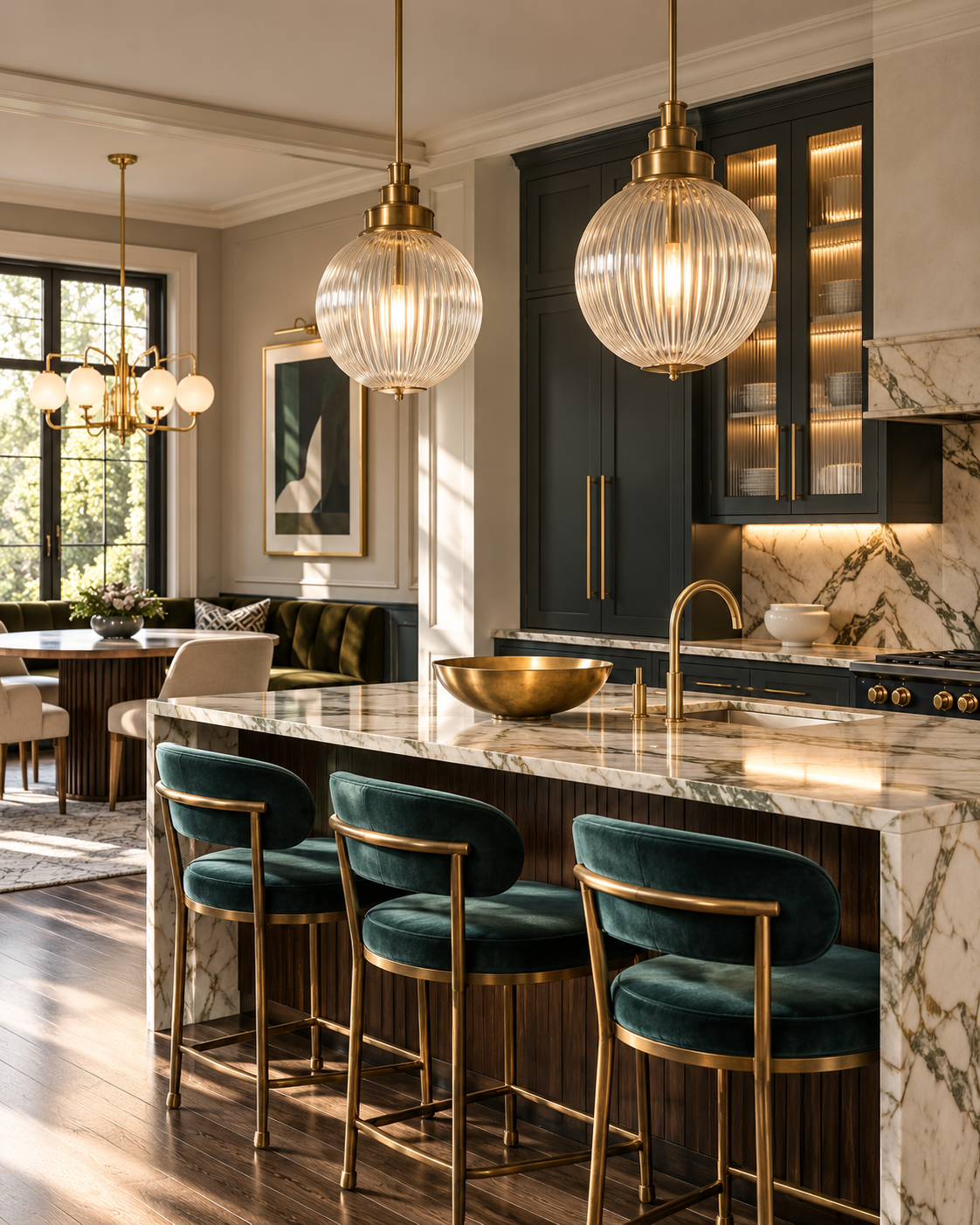
Kitchen. The kitchen needs clear task light over the worktops, ideally beneath the wall cupboards, so you are not working in your own shadow. Pendants over an island give both task light and character. Add a warmer mood light for the evening so the kitchen stops feeling like a workplace once dinner is ready.
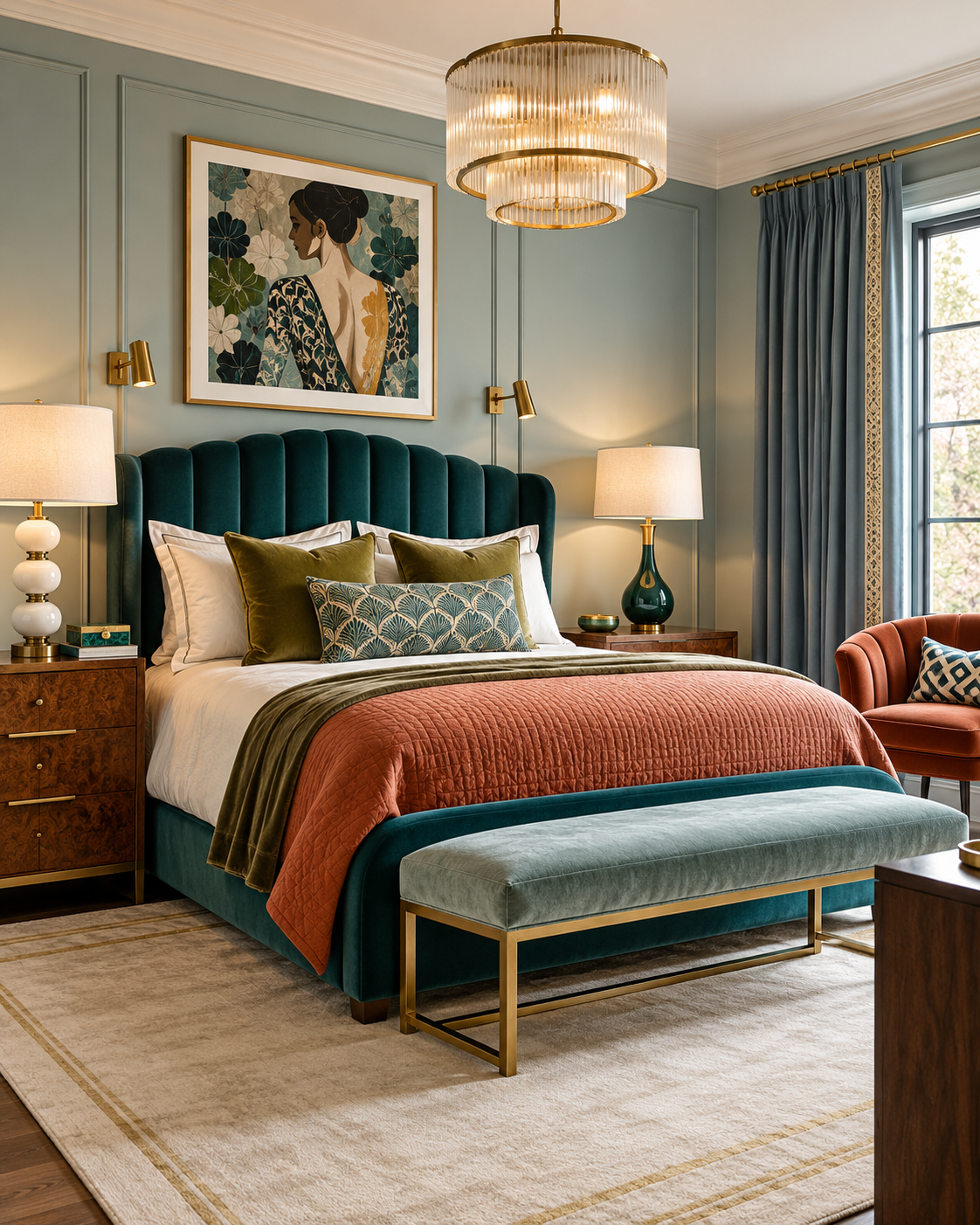
Bedroom. Warm, low light is the foundation. Bedside reading lights should be directed so that one person can read while the other sleeps. A ceiling light is mainly for cleaning and dressing, and benefits from a dimmer.
Hallway. The hallway is the first impression. A wall light, a lamp on a console or a lit picture does more than a lone ceiling fitting. Light on the wall beside the mirror lets you see yourself without harsh shadows.
Bathroom. Mirror lighting should come from the sides or the front, not straight overhead, or the face picks up shadows. Choose high colour rendering and around 3000 K. A dimmable mood light turns the bathroom into more than a functional space in the evening.
14. A checklist for your own lighting
Walk through the room one evening with every lamp switched on and ask:
Is there light at three or more different heights?
Does every important spot, where you read, cook or get ready, have its own task light?
Is something in the room given extra light that draws the eye?
Is any wall lit, or are all the walls dark?
Can you see a light source directly from the sofa, the bed or the dining table?
Is any lamp reflected distractingly in the television, a window or a mirror?
Do the lamps in the same room share roughly the same colour temperature?
Can you lower the light in the evening without the room turning dark and flat?
Are there areas left dim on purpose?
If the answer to several of these is no, you rarely need more wattage. You need more light sources, better placed.
Art changes a room more than almost any other detail – but its placement determines whether a work feels inevitable or slightly wrong. It is less about fixed rules than the relationship between art, furniture and empty space. Prestaged's guide moves from one large work to a personal gallery wall.
Elegance does not have to mean restraint. How to mix patterns with a clear hierarchy: one dominant design, three levels of scale, colours that connect and calm surfaces that let the patterns breathe.